Cane, Wind, Oxen
Sugarcane & Molasses
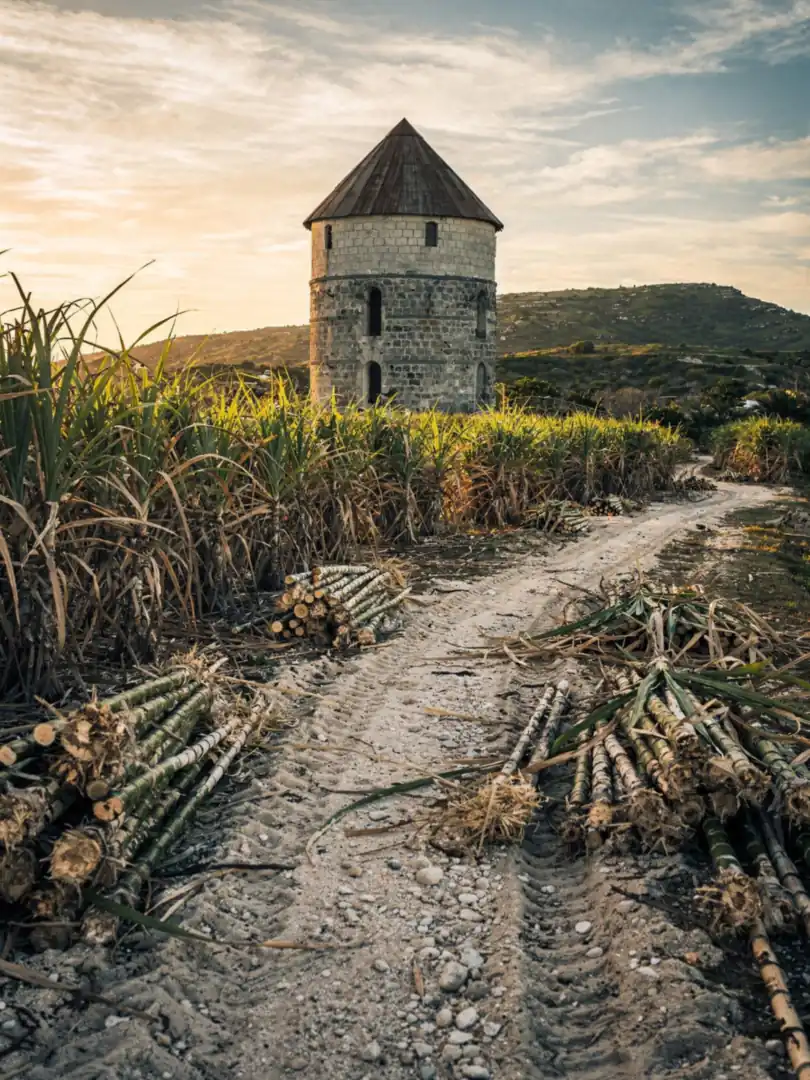
On Marie-Galante, sugarcane is still carted to the mill today on carts pulled by oxen. The animals matter so much to the farmers that they are celebrated in a colorful procession. Anyone wanting to understand the island's rhum agricole should start with this cane, since it is made from nothing else.
The island has a gently arched shape. Behind the coast, the land rises to the Hauts, a plateau averaging 150 meters in elevation, reaching its highest point at Morne Constant at 204 meters. Beneath lies limestone. The Père Labat distillery states that its cane grows without artificial irrigation, relying solely on rainfall.
In the past, the trade winds pressed the juice. They turned the sails of the mill towers, and the sails moved the rollers that crushed the stalks. Today, motors do this work. Bielle presses, according to its own account, with two mills.
The fresh juice is called vesou in French, and it is in a hurry. The island's distilleries press the cane, by their own account, within 24 hours of cutting, because sugar is quickly lost once the stalk lies cut. For this reason, distilling takes place only during the harvest campaign, which on Marie-Galante runs roughly from February to June.
The distiller fundamentally has three raw materials to choose from. Juice is the fresh pressed cane juice. Syrup is thickened juice. Molasses is the thick, dark residue left after the sugar has crystallized out. On Marie-Galante, all three houses make rhum agricole, meaning rum from juice. This gives the white spirit a freshness rarely found in molasses rum: freshly pressed cane, pepper, citrus, and a mineral note, as described by Père Labat.