Warm and Brisk
Fermentation
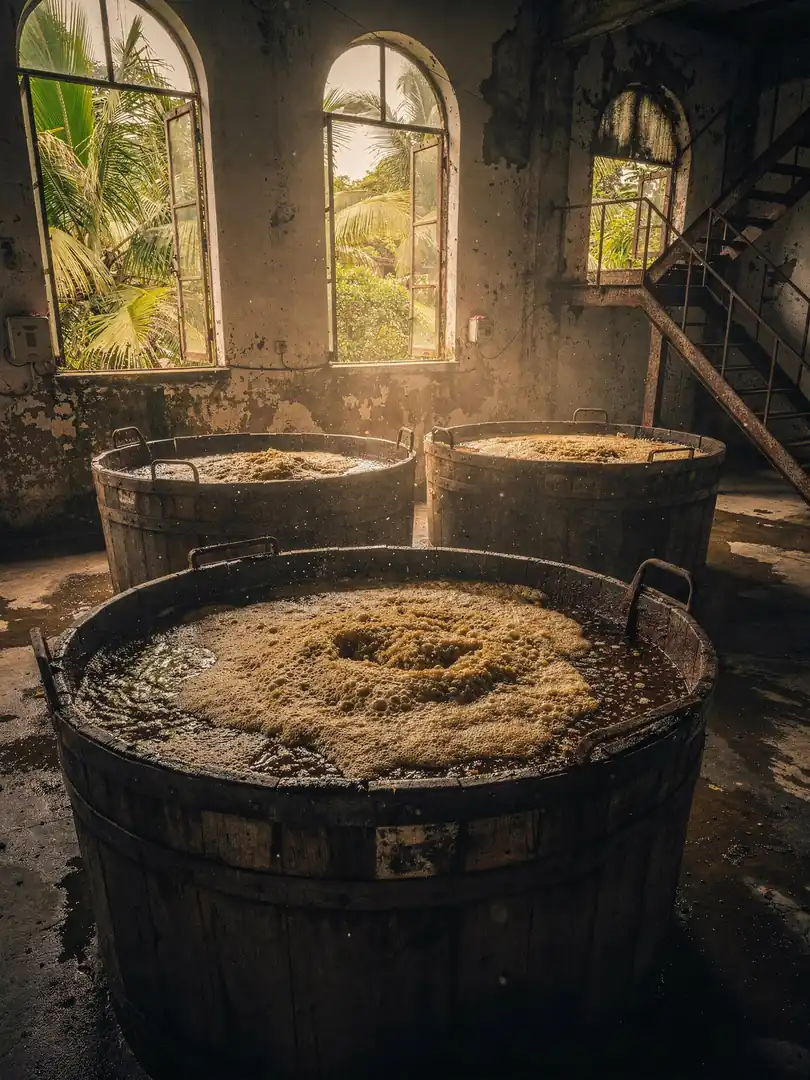
The fermented molasses is meant to reach six to eight percent alcohol by volume before it goes into the still in Guyana, at a fermentation temperature around 32 degrees Celsius. That's how the geographical indication specification for Demerara Rum puts it. For what's called the mash — fermented molasses — that's warm, and it explains why fermentation proceeds briskly in the tropics.
Yeast feeds on the sugar in the diluted molasses and turns it into alcohol and carbon dioxide. That part everyone knows. Alongside this, small amounts of acids and higher alcohols form, and when acid and alcohol combine, esters are created. They smell of fruit, solvent and glue, depending on quantity and type.
Based on these congeners, the specification divides rum into three body classes, measured in grams per hectolitre of pure alcohol. Light rum falls below 30, medium lies between 30 and 300, and heavy rum is above 300. In heavy rum, esters exceed 50 grams. These figures are not determined in the copper or wood of the still, but already in the fermentation vat.
How long Port Mourant, Enmore and the other estates let their mash ferment varies from operation to operation and is hard to verify from the outside. As a rule of thumb: the shorter the fermentation, the lighter and cleaner the rum; the longer it lasts, the more acids and esters develop. The heavy marques from the wooden stills traditionally belong to the latter category.
Fermentation, then, determines how much aroma can even make it into the distillate. What ends up in the glass afterward is decided by the still: whether it's wood, copper, or a column. This is precisely why in Guyana people talk about marques rather than distilleries.