Esters as a Trade Mark
Fermentation
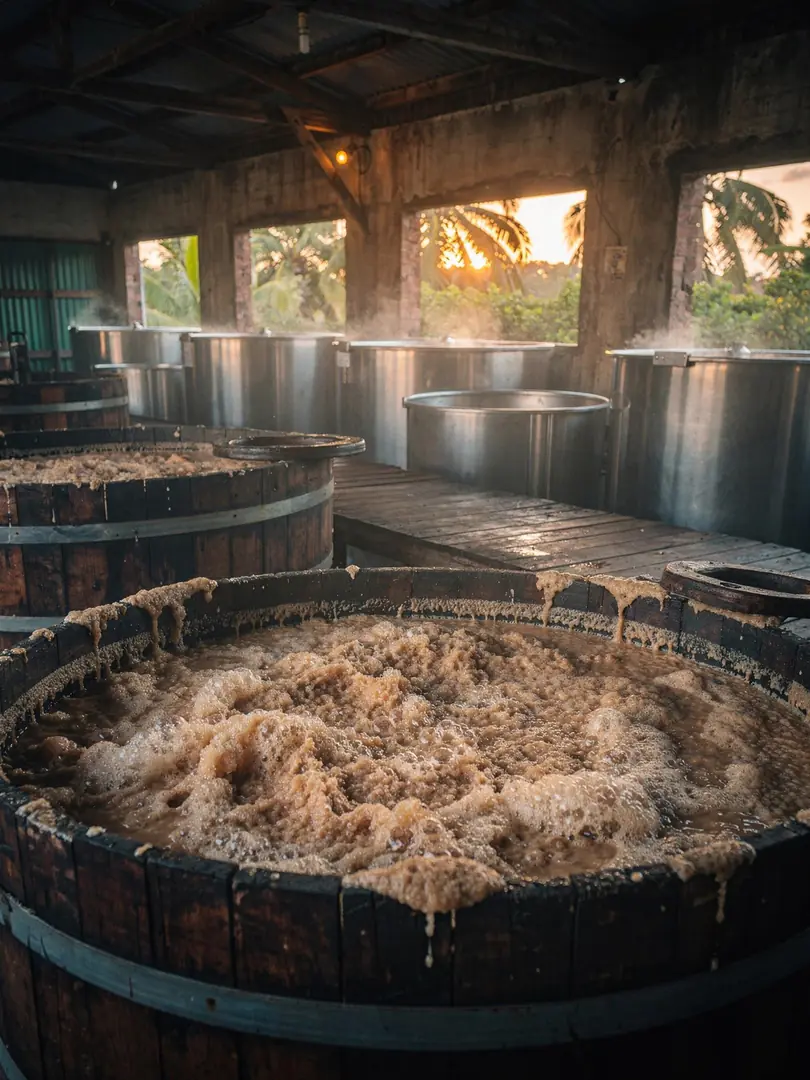
What are esters in rum? They're aromatic compounds that form during fermentation, when alcohol and acids combine. They smell of ripe fruit, of banana and pineapple, and sometimes of glue.
The longer and wilder the mash ferments, the more esters tend to build up. Jamaica has turned this into a trading system. Distilleries market their rums under marks that denote an ester value, measured in grams per hectolitre of pure alcohol. These marks are registered with the Spirits Pool Association, the distilleries' umbrella organisation.
The classic tiers are Common Clean at 80 to 150, Plummer at 150 to 200, and Wedderburn at 200 to 300. Above these come the Continental Flavoured rums at 700 to 1,600. These are historic trade names, not official standards.
According to trade publications, 1,600 is the highest value permitted for export under Jamaica's rules. Such rums serve mainly as flavouring rum for blending. They're shipped to Europe, where they're used, among other things, in baked goods and confectionery.
Drinking rum usually lies far below these figures. A high ester value therefore says nothing about quality, only about its intended use.
From a trading perspective, fermentation is essentially a label: it determines which tank, which cask, and which market a rum belongs to. The counterpart to the ester heavyweight is the light, clean rum from a short fermentation, which tastes more restrained and serves as a base in many blends.
The blenders at J. Wray & Nephew also work with rums of varying ester strengths, since pot-still and column-still distillate differ markedly in this regard.