Molasses as a Trade Commodity
Sugar Cane & Molasses
How does sugar cane become molasses? At the sugar factory, the pressed juice is boiled down until the sugar crystallises. What remains, thick and dark brown, is molasses, and it still contains plenty of fermentable sugar.
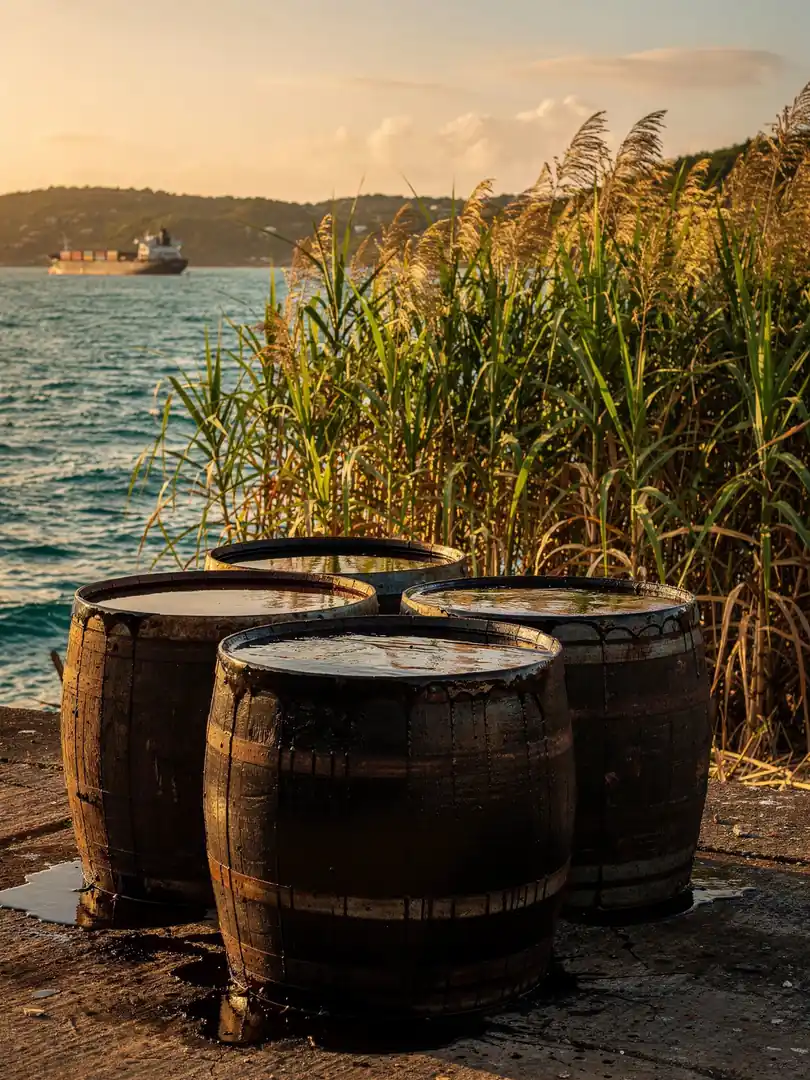
For trade, it has one great advantage. Fresh cane juice must be processed quickly, or it begins to ferment on its own. Molasses, by contrast, can be stored and shipped in barrels or tanks. That's what turned it into a trade commodity. Kingston Harbour, the bay in front of the capital, is a sheltered natural harbour from which sugar, molasses, and rum could be shipped out.
A third option is syrup, thickened cane juice that was never processed into sugar. EU law recognises all three raw materials: molasses, syrup, and juice. Distilling from beet sugar, however, doesn't produce rum. Under the rules of its geographical indication, Jamaica Rum must be made from sugar cane, and in practice molasses is the standard choice.
The Spirits Pool Association handles molasses purchasing on behalf of the distilleries collectively. By its own account, it sources the raw material for all members at the best price, both on the domestic market and worldwide.
Molasses smells sweet and bitter, somewhat like liquorice and burnt sugar. Only part of this depth survives into the distillate, but it shapes the underlying character that sets molasses rum apart from grassier cane-juice rum.
It's worth remembering whose labour lay behind this raw material. Until the abolition of slavery in the 19th century, Jamaica's sugar and molasses were built on the forced labour of enslaved people, and the port of Kingston was one of the places where that cargo was shipped.