Bourbon, Tropics, Years
Cask & Climate
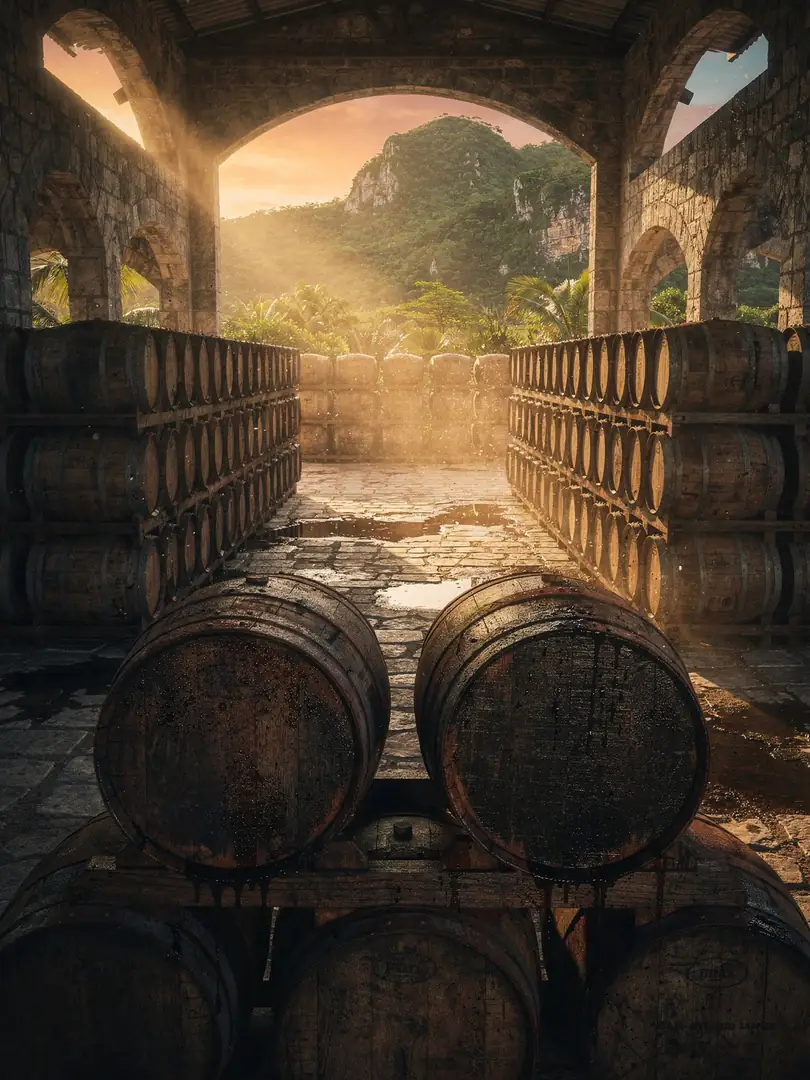
What casks does Appleton Estate mature in? According to the estate, American white oak barrels that previously held bourbon. The wood imparts vanilla and spice without overpowering the rum. The Jamaica geographical indication allows casks up to 250 litres and requires that maturation take place on the island.
The climate speeds up the wood's work. The house states that rum matures roughly three times faster in the tropics than in a cooler environment. This rule of thumb is often cited, though it can't be precisely verified chemically.
The price paid is the angel's share, the portion that evaporates through the wood. Trade publications cite seven to ten percent annually for the Caribbean, compared to around two percent in Scotland. Wait twelve years, and there's significantly less rum left in the cask than at the start.
According to the estate, Joy Spence and her team select each cask individually. The blend is created from casks of varying ages. What appears on the label follows the EU rule that only the age of the youngest component may be stated.
An Appleton Estate 12 Years Rare Casks, according to the estate, consists of rums at least twelve years old. Dark doesn't mean old: caramel colouring, permitted only for colour consistency, can darken young rums too. Age is revealed solely by the number on the bottle. Anyone comparing bottles should therefore look at the number, not the colour.