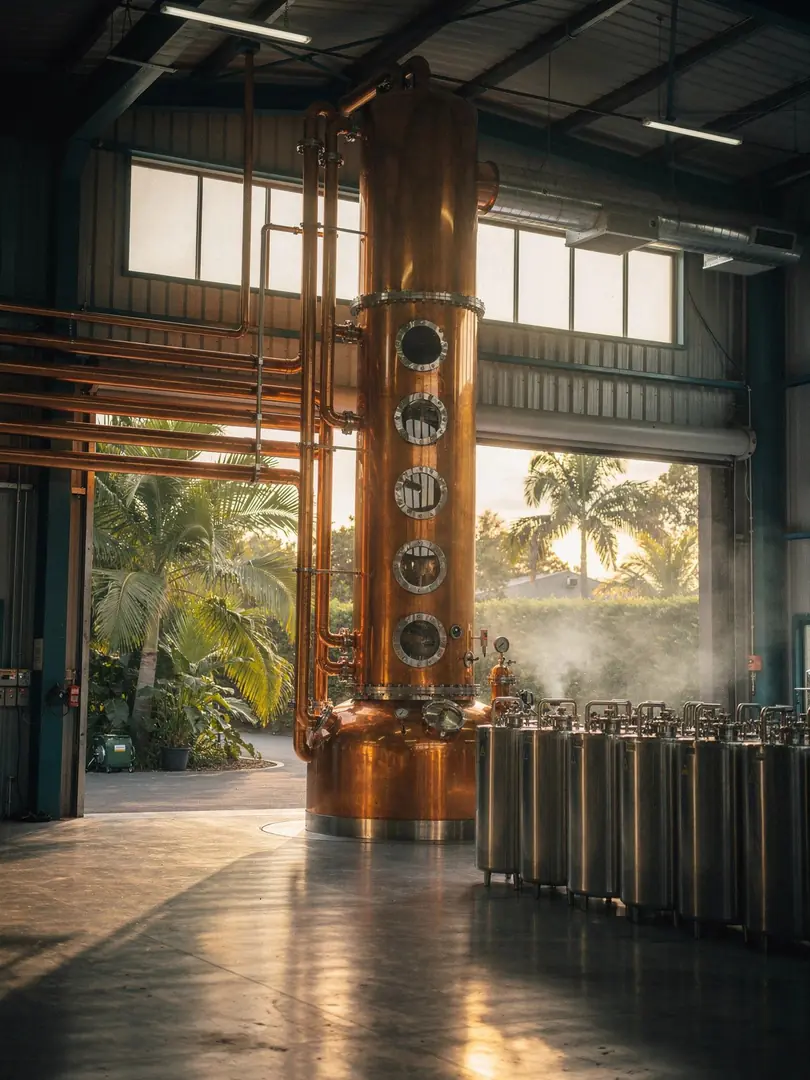
Column Instead of Kettle
Distillation
In 1862, Facundo's distillery housed a copper and cast-iron pot still. With it, according to the company history, he produced two distillates that he later blended into a mild, clear rum. A pot still heats the fermented mash and recaptures the vapor. It yields spirits with plenty of character.
Today, Cuba works with continuous columns. A column is a tall tower with plates where vapor and liquid repeatedly meet, so that the alcohol migrates upward while heavier flavor compounds remain below. It is fed continuously with mash and produces a lighter, cleaner spirit than a pot still.
The "Cuba" specification recognizes two distillates. The first, the aguardiente, comes off the still at 74 to 76 percent alcohol and is aged first. The second, a very pure "destilado para ron" under 96 percent, is filtered through activated charcoal. The two are later blended with water to produce the ron base.
Put simply, the aguardiente contributes body and cask-ageing potential, while the finer spirit contributes purity. This blend creates the character one associates with Cuban rum.
On this foundation, the brand Ron Santiago de Cuba is produced in Santiago de Cuba, in the factory that belonged to Bacardí until 1960. According to travel guides, Ron Caney and Varadero are produced in the same facility. The factory thus remains one of the places where the history of the Bacardí brand stays tangible.