Lean and Clean
Fermentation
Yeast was Facundo Bacardí's most closely guarded trade secret. According to the company's history, he spent roughly ten years perfecting his own yeast culture and a charcoal filtration method before his light, pale rum went on the market in Santiago de Cuba in 1862. This is the house's own account, but it reveals what mattered to him: cleanliness rather than power.
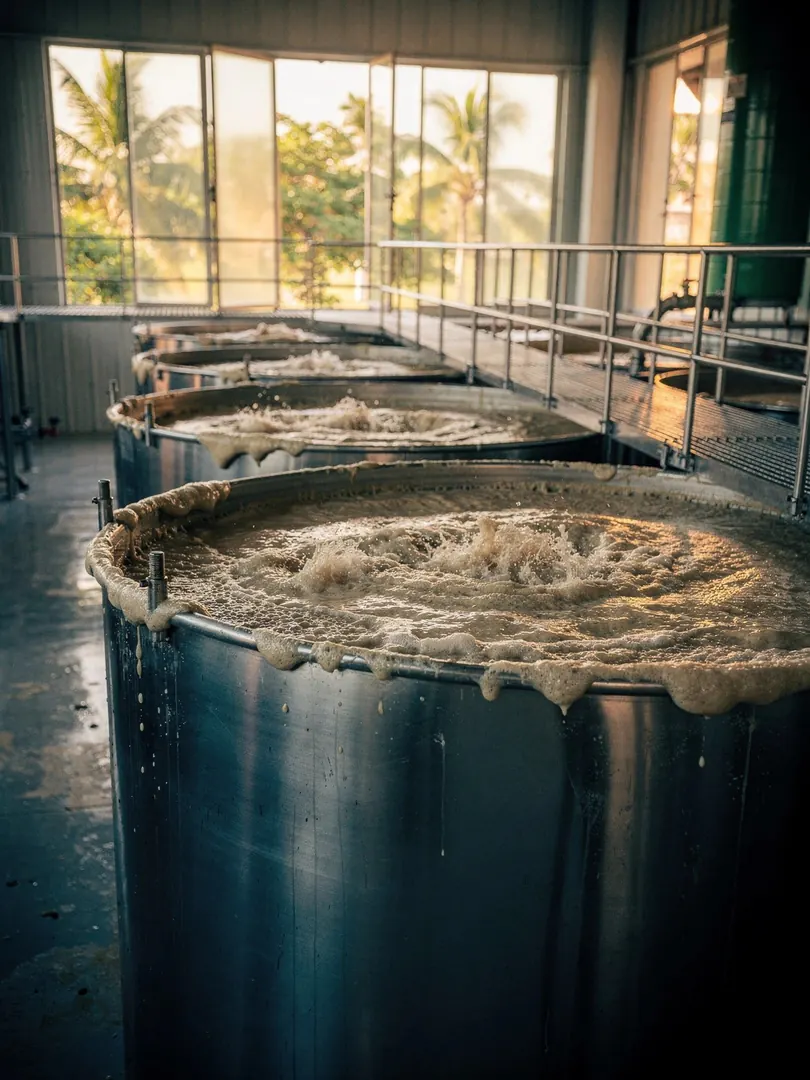
What does yeast actually do in the vat? It feeds on the sugar in the molasses and converts it into alcohol and carbon dioxide. Along the way, it produces flavor compounds, the esters, which smell of fruit, blossoms, or solvent. The longer the fermentation runs and the more wild microbes join in, the more intense they become. Jamaica's pot-still distilleries traditionally let the mash work for many days.
Cuba takes the opposite approach. The specification for the "Cuba" designation calls for a fermentation time of 24 to 26 hours, roughly a single day. Within this short span, the flavors stay lean: a touch of fruit, little acidity, hardly any sharpness. A cultivated single yeast strain, as Facundo is said to have used, also ensures that every batch turns out much the same. Wild yeasts would deliver something different each time.
How much fermentation time shapes flavor becomes clear in comparison. A rum fermented for just one day tends to smell of ripe apple and cotton candy, while one fermented for ten days leans more toward banana, pineapple, and glue. Both are legitimate; they're simply different styles.
This lean beginning serves a purpose. A light rum is meant to be filtered through charcoal later and rounded out over years in the cask, and an overly loud aroma would only get in the way. With Ron Santiago de Cuba, the rum's character therefore doesn't begin in the vat but later, in the barrel.