Sugar Country Oriente
Sugarcane & Molasses
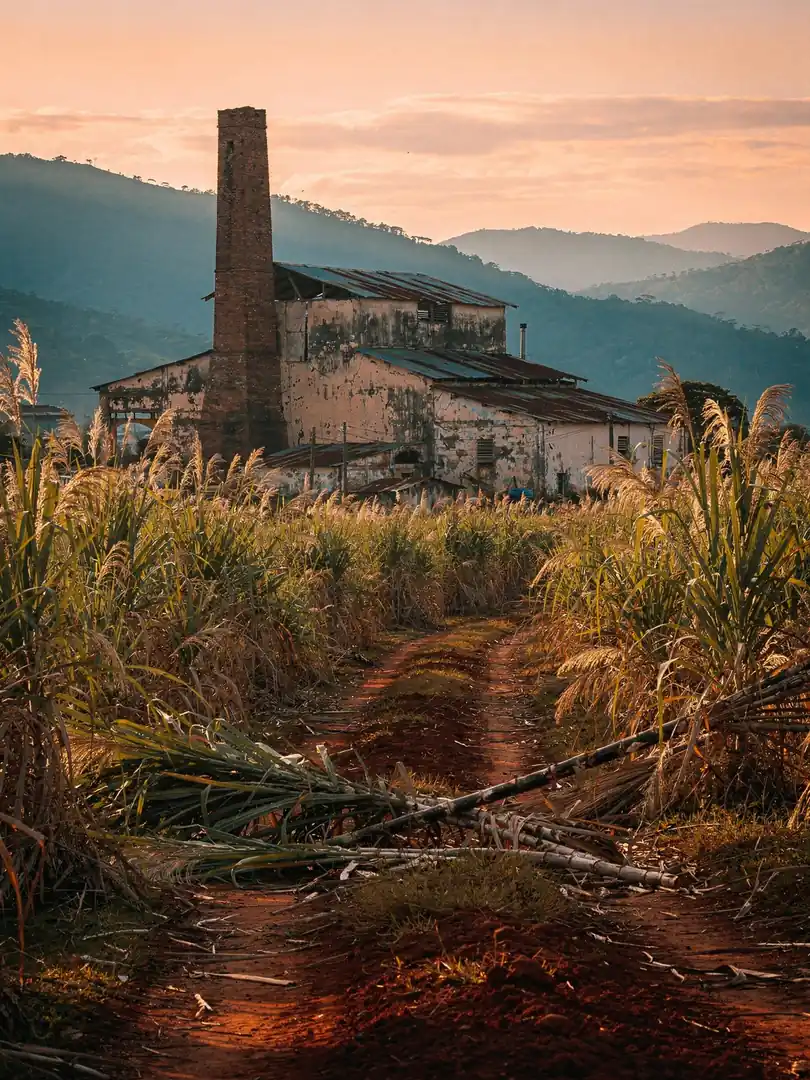
Where does the rum from Santiago de Cuba come from? From what was left over in the sugar mills of the surrounding area. Eastern Cuba was long sugar country. Until 1976, the province of Oriente, with Santiago as its capital, made up the entire eastern half of the island, after which it was split into five provinces: Las Tunas, Granma, Holguín, Santiago de Cuba, and Guantánamo.
A count from 1943 lists 40 sugar mills, the centrales, for Oriente. Of these, 13 belonged to Cubans and 17 to Americans, with five Canadian, three Spanish, one English, and one French mill rounding out the total. The cane was thus grown on a large scale and processed in relatively few places.
The mill presses the cane, boils down the juice, and lets the sugar crystallize out. What remains as a dark, viscous residue is molasses. It still contains sugar that crystallization can no longer extract, which makes it a good feedstock for yeast. The planned "Cuba" designation of origin specifies only molasses from Cuban cane as the raw material.
Harvesting takes place during the zafra, the sugar campaign in the drier half of the year. During these weeks, the mills run almost without pause, and molasses is produced in large quantities. Distilleries like the one in Santiago live off this byproduct stream.
Molasses, syrup, and cane juice are, in fact, three different things. The EU permits rum made from molasses or syrup from cane sugar production, but also from fresh sugarcane juice. Beet sugar or honey do not yield rum. The French overseas territories use juice for their rhum agricole, while Cuba sticks with molasses.