Five Days of Sugarcane Wine
Fermentation
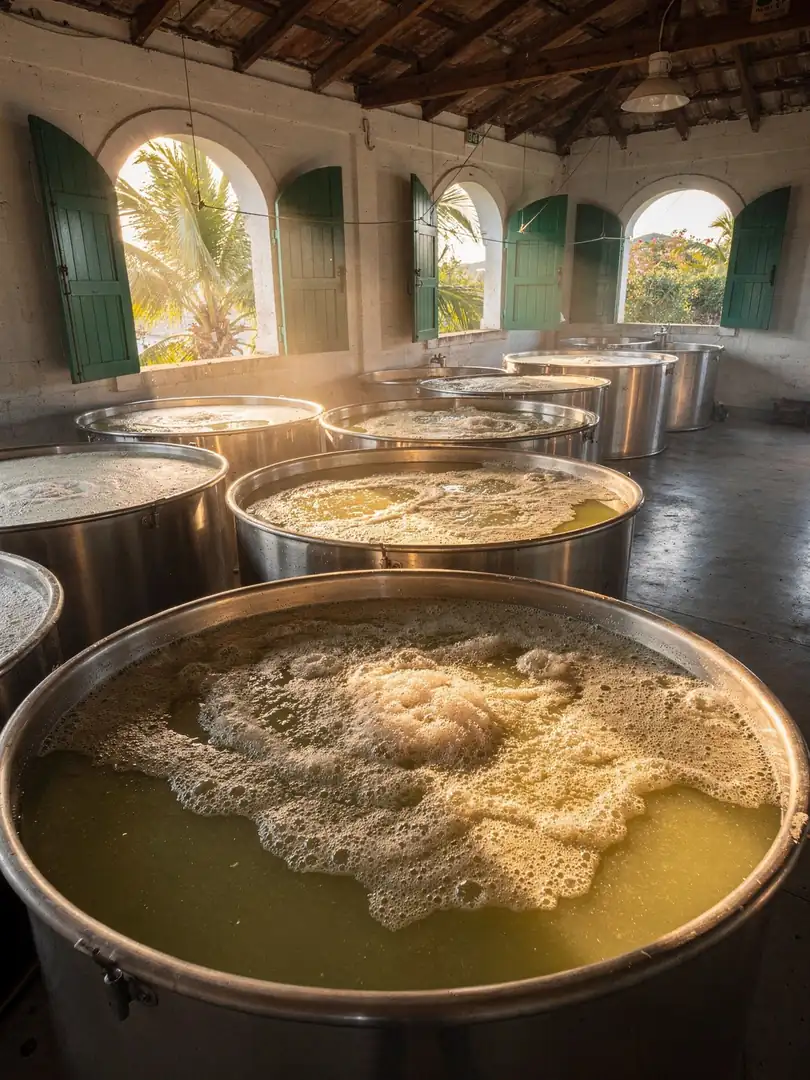
How long does the sugarcane juice ferment for rhum agricole? At Neisson in Le Carbet, four to five days; at Depaz, around 48 hours, according to trade press reports. Both fall well under the AOC Martinique's upper limit of 120 hours—exactly five days.
The juice ferments in open vats, which must not exceed 500 hectoliters and must be made of a material that doesn't alter the juice. The result is a sugarcane wine, or "vin de canne," with a maximum of 7.5% ABV. It smells green and fruity, and bears little resemblance yet to the finished rum.
Neisson works with its own house yeast strains. After years of research, the house selected yeasts that occur naturally on its own sugarcane and now uses them deliberately. This places it between two approaches: wild fermentation leaves everything to whatever yeasts happen to be present in the juice, while cultured yeast comes from a lab and ferments evenly.
What does fermentation do to the flavor? Esters—the fruity aromatic compounds—form when acids and alcohol react with each other, and the longer the mash works, the more of them accumulate. Hampden in Jamaica historically ferments molasses for nine to ten days, giving it a bold, heavy character. The short, clean fermentation in juice, by contrast, keeps the rhum lean and grassy.
Nothing may be added to the juice during this process—no molasses, no syrup; the AOC expressly forbids it. Whatever develops in the vat comes solely from the cane grown on these slopes and the yeast that lives on it.