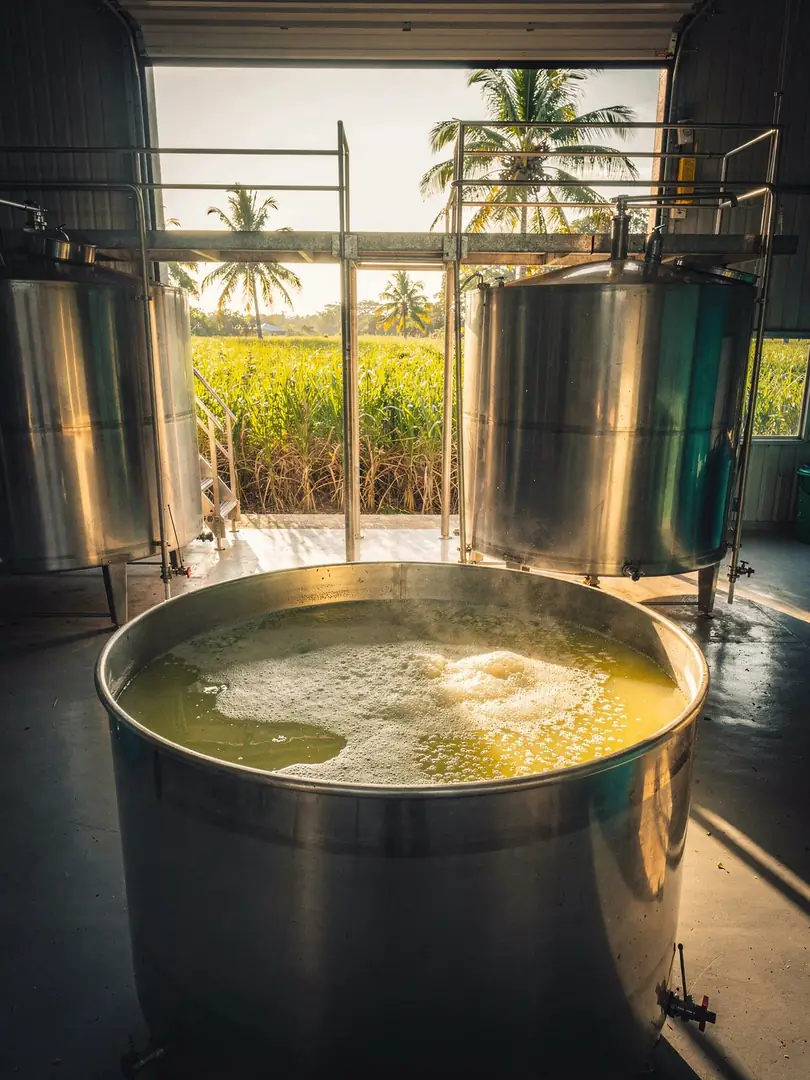
Juice in Steel
Fermentation
At Saint Aubin's microdistillery La Maison du Rhum, the juice ferments, according to the estate, in a single 5,000-liter stainless steel tank. That's a small scale compared with the vats of an industrial distillery, and it allows each batch to be closely monitored.
At Chamarel, the first pressed juice goes into steel tanks and is fermented with selected yeasts. These are cultured yeasts: strains chosen and propagated in the lab so that each fermentation proceeds similarly. The counterpart is wild yeast, which enters the juice naturally from the air and the cane and tastes a little different each year.
The houses don't give a uniform figure for fermentation length. As a rule of thumb, a juice mash ferments faster than a molasses mash, usually within a few days, because the juice is thin and contains few foreign substances. Mash refers to the fermented liquid that then goes into the still.
Fermentation produces not just alcohol but also esters, volatile aromatic compounds formed from acids and alcohol that smell of fruit and flowers. A short juice fermentation tends to produce relatively few of these. As a result, the rum stays lean and fresh, with aromas of sugarcane, green fruit, and flowers, rather than overripe banana and solvent.
Both houses use stainless steel, which is easy to clean and doesn't alter the flavor of the juice. Wood only comes into play later, once the finished distillate goes into the barrel. Until then, it's the freshness of the cane alone that determines how good the rum turns out.