Cane and Juice
Sugarcane & Molasses
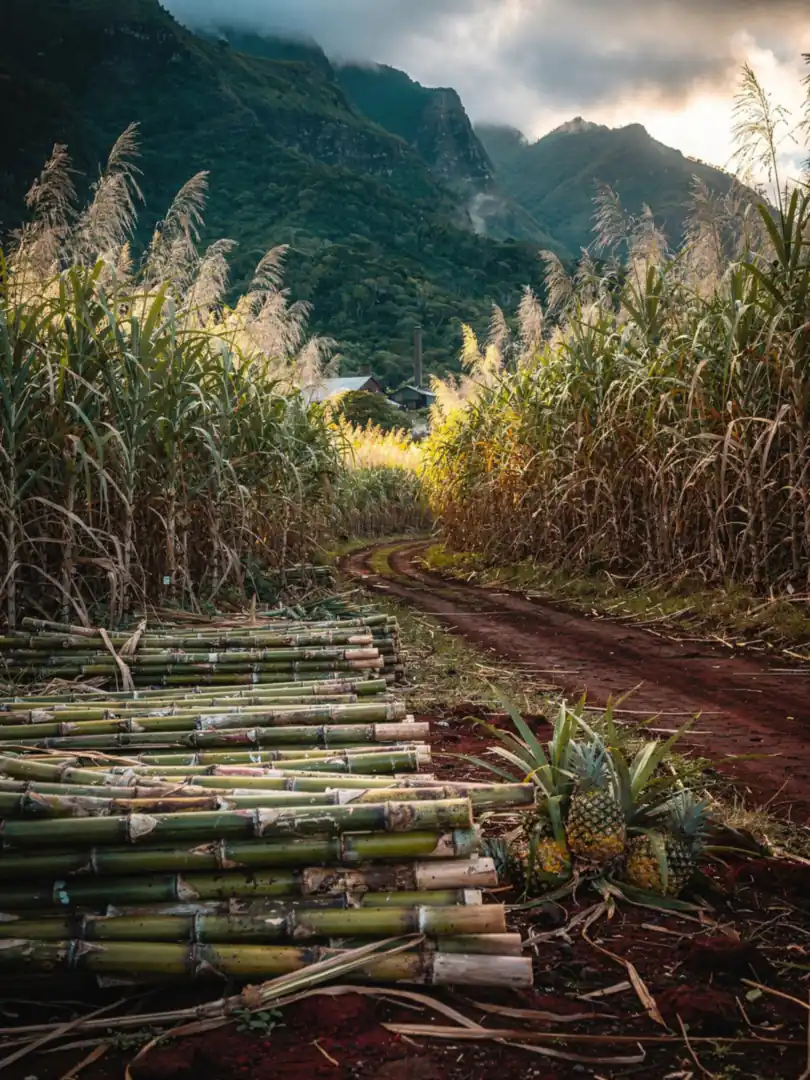
On the slopes around Chamarel, cane grows on volcanic soil, and the rum from this area is a juice rum. It's made from freshly pressed sugarcane juice, not molasses. That's a major difference: molasses is the thick, dark residue left over once a sugar factory has crystallized out the sugar. Juice, on the other hand, is the green, sweet pressed liquid straight from the cane, with no processing at all.
Harvest in Mauritius runs from June to December. An interim period follows until June, during which the cane regrows. According to the house, the Rhumerie de Chamarel hand-cuts its cane between July and December on an estate of around 400 hectares. It should reach the distillery within four hours, since juice begins fermenting quickly and soon loses its freshness.
The Saint Aubin estate in the south farms some 750 hectares by its own account, mostly with red cane that is hand-cut. Vanilla plants grow between the fields. At the small microdistillery La Maison du Rhum, a hand-operated mill presses the juice.
Molasses, by contrast, comes from the sugar factory. Until 2006, it was the sole base for rum on Mauritius, and Saint Aubin still produces a molasses rum alongside its juice rum. The third option is syrup, a thickened cane juice from sugar production.
EU law permits all three raw materials for rum: molasses, syrup from cane sugar production, and sugarcane juice. Sugar from beets or honey, however, does not count as rum. You can taste which raw material was used at the start: juice brings freshness and a grassy note, molasses tends toward warmth and depth.