About 36 Hours
Fermentation
The mash at Flor de Caña ferments for about 36 hours, according to the house. In Chichigalpa that's a tight window compared with the nine to ten days Hampden in Jamaica has historically used. The difference is deliberate and shapes the rum.
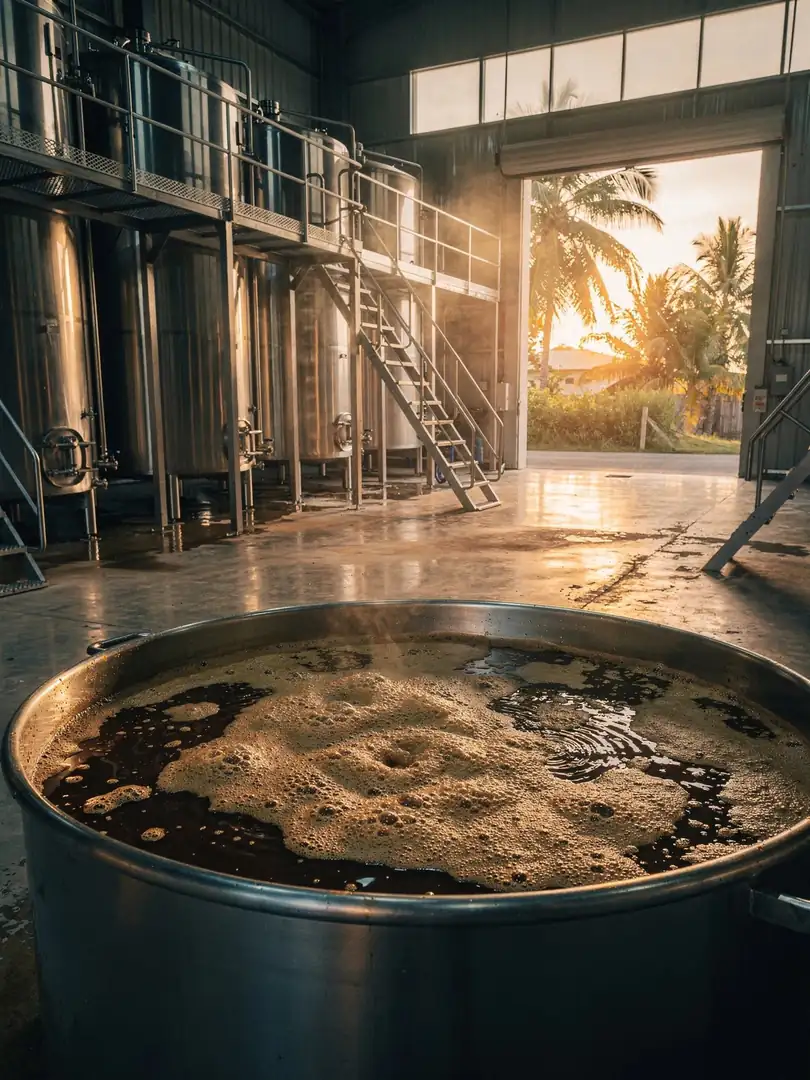
It all starts with molasses. It's pasteurized — briefly heated to kill off unwanted microbes — and diluted with water until it's no longer thick but flows like a dark, sweet liquid. Only then is yeast added. Yeast is a fungus that consumes sugar and releases alcohol and carbon dioxide in the process. The mash foams up and warms.
The house works with its own proprietary yeast strain, a cultured yeast it maintains itself. This keeps wild airborne yeasts, which would make every batch turn out differently, out of the equation. Fermentation takes place in both open and closed vessels. In the open vats, the foam is visible on the surface; closed vessels are better shielded from the air.
Short fermentation means fewer esters. These are the aroma compounds that form when acids and alcohol react with each other, and they can smell like banana, pineapple, or glue. They need time to develop. A fermentation of a day and a half therefore stays clean and light, without the heavy fruity punch of Jamaican pot-still rums.
That's no weakness. A lean distillate leaves room for the cask to later contribute vanilla and caramel to the rum, without fruity notes crowding in. It's also practical for volume: a vat is free again after a day and a half, keeping the columns steadily supplied. Anyone looking for Nicaraguan rum in the glass should expect less funk and more balance — and that starts right in the vat.