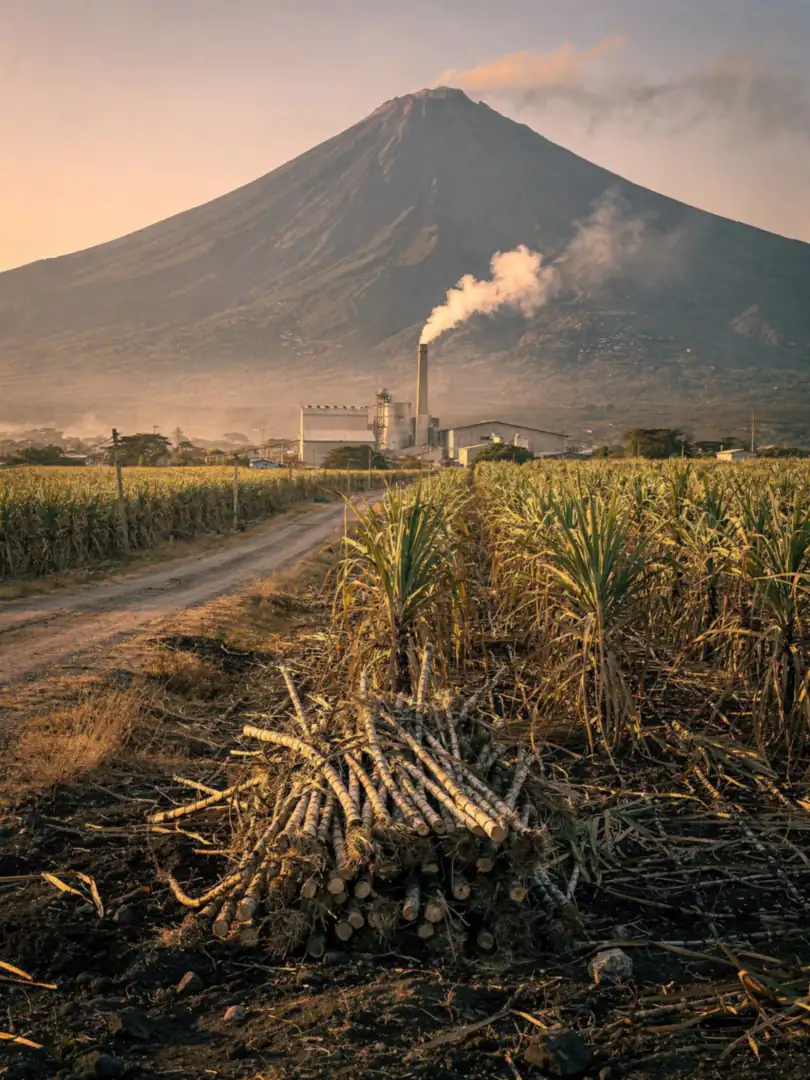
Cane and Ash
Sugarcane & Molasses
Flor de Caña begins as sugarcane grown on the plain around Chichigalpa. According to the house, the brand is a single-estate rum: cane, molasses, distillation, and aging all take place on the same grounds. The cane is first turned into sugar, and only what's left over becomes rum.
The soil is considered a key reason for this location. San Cristóbal belongs to the Cordillera de los Maribios, the volcanic chain that borders the Pacific lowlands of western Nicaragua. At roughly 1,700 meters, it's the country's highest volcano and still active. Its ash, according to the house, fertilizes the fields.
The climate is split into a rainy season and a dry season, which runs roughly from November to April. The dry season is when the zafra begins, as the sugar harvest is called in Latin America. The cane is cut, trucked to the Ingenio San Antonio, and pressed. The juice is boiled down until sugar crystals form. What the crystals leave behind is molasses.
Molasses, cane juice, and syrup are three different starting materials. Juice tastes fresh and grassy and must be processed immediately, since it spoils quickly. Molasses, by contrast, is shelf-stable, dark, and slightly roasted-sweet. In Chichigalpa it's the distillery's raw material, which is why Flor de Caña is not a rhum agricole.
Harvesting is grueling work in intense heat. In western Nicaragua, especially around Chichigalpa, many sugarcane workers have developed a chronic kidney disease of non-traditional origin, known as CKDnT. Studies point to heat stress, cutting cane during the dry season, and dehydration as risk factors, while pesticides are also under investigation. No single cause has been established. Workers in the region have been demanding treatment and compensation for more than twenty years.