Sugar, Family, Brand
Region & History
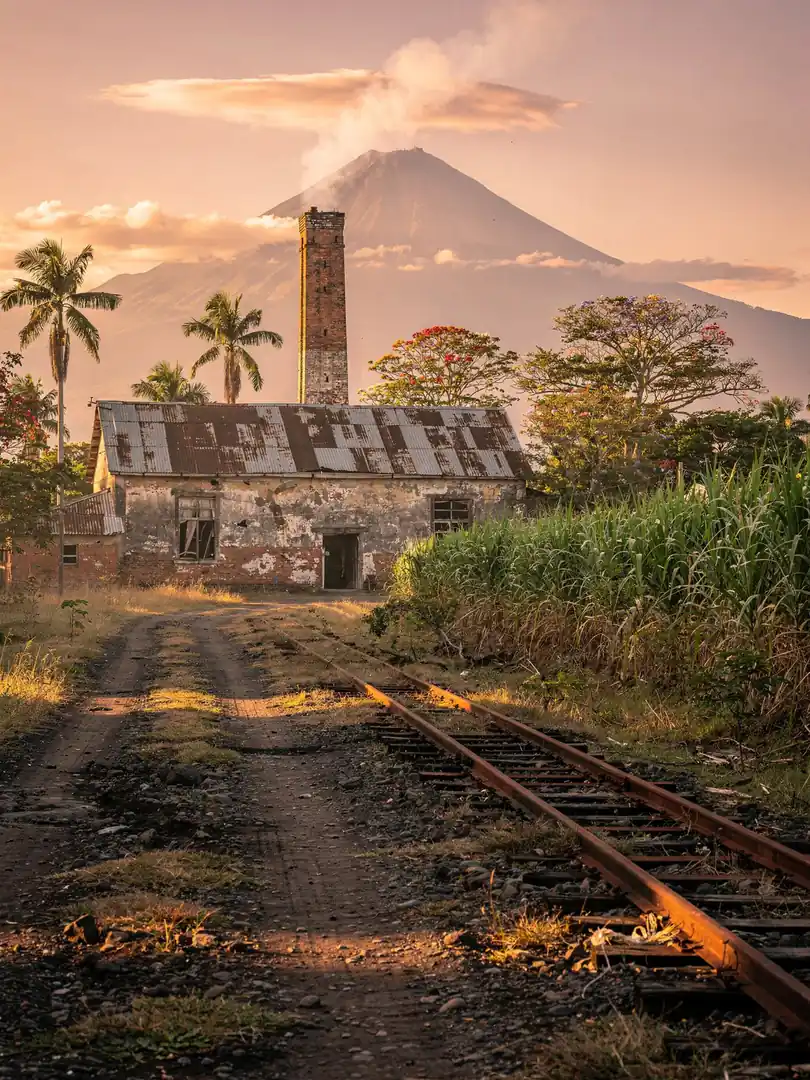
Flor de Caña, arguably the best-known rum from Nicaragua, is made in Chichigalpa, a small town in the Department of Chinandega on the Pacific side of the country. It's about 120 kilometers northwest of Managua, with the Pacific port of Corinto roughly 30 kilometers away. Anyone wondering where Nicaraguan rum comes from ends up in this hot, flat lowland between the volcanic chain and the coast. The San Cristóbal volcano towers over the fields.
The Spanish brought sugarcane to Central America. By the time Nicaragua Sugar Estates Limited was founded in Chichigalpa in 1890, slavery had long been abolished in the region, the Central American Federation having outlawed it in 1824. The largest shareholder was Francisco Alfredo Pellas Canessa, an Italian from Genoa who had come to Nicaragua in 1875 to run his father's shipping business. His sugar mill, the Ingenio San Antonio, remains the core of the operation to this day. According to the house, rum has been distilled there since 1890.
The rum only became a brand in 1937, when the name Flor de Caña, literally "the sugarcane flower," was registered. The first bottlings were called Etiqueta Amarilla and Etiqueta Roja, meaning yellow label and red label. In 1954, Alfredo Pellas Chamorro founded the Compañía Licorera de Nicaragua, which still produces the rum today, while the sugar mill continues to supply sugar.
The company has stayed in family hands. Today it belongs to the Pellas family and is run by Carlos Pellas Chamorro, the fifth generation. The distillery stands on the grounds of the Ingenio San Antonio, just a few steps from the fields that supply its raw material.
Nicaragua does not have a protected designation of origin with fixed production rules, unlike Jamaica or Demerara within the EU. What appears on the label is therefore governed mainly by the law of the country where the rum is sold — in Europe, for example, by the age statement rule explained in Station 5.