Volcano, Cask, Number
Cask & Climate
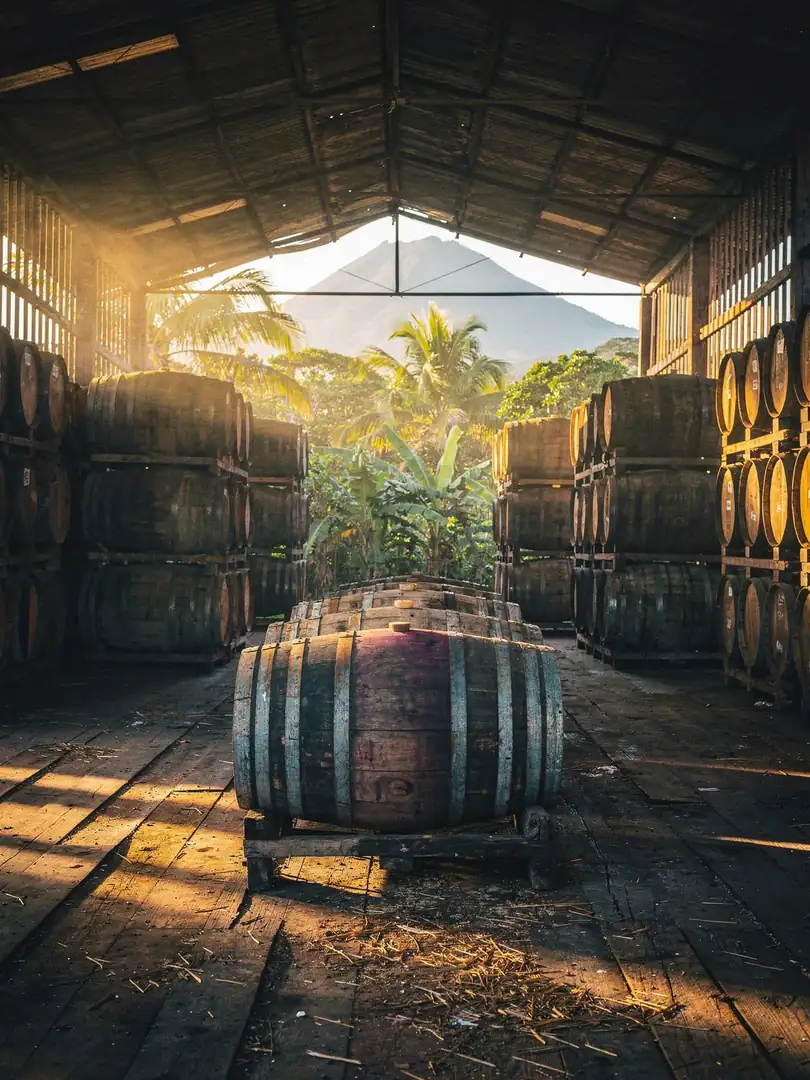
How old is Flor de Caña really, and what does the number on the label mean? First, the cask. According to the house, the rum ages in used American bourbon barrels made of white oak, which are freshly charred before filling. They're sealed with plantain leaves.
Around 320,000 barrels, according to the house, are stored permanently on the grounds at the foot of San Cristóbal. The warehouses stand in the lowlands amid tropical heat and humidity. The rum ages there under natural climate conditions, with no artificial cooling.
Heat speeds up what happens inside the barrel. The wood releases vanilla, caramel, and tannins, and part of the rum evaporates through the staves — in the tropics, at roughly 7 to 10 percent per year. This makes a rum age faster than it would in cool Scotland, even though the rule of thumb "one year equals three years" is nothing more than that — a rule of thumb.
Now to the number. In the EU, a rum may only be marketed with an age statement if that figure refers to the youngest component in the blend and the aging took place under government tax supervision. Other countries apply different standards; in some places, an average age or even the oldest component may be stated instead.
This led to controversy for Flor de Caña. Bottles used to carry numbers with the addition "Slow Aged," which buyers couldn't clearly read as an age statement. In 2021, a class-action lawsuit was filed in the US challenging these labels as misleading. According to trade press, newer bottles now carry the words "years old" after the number.