Cool and Unaged
Cask & Climate
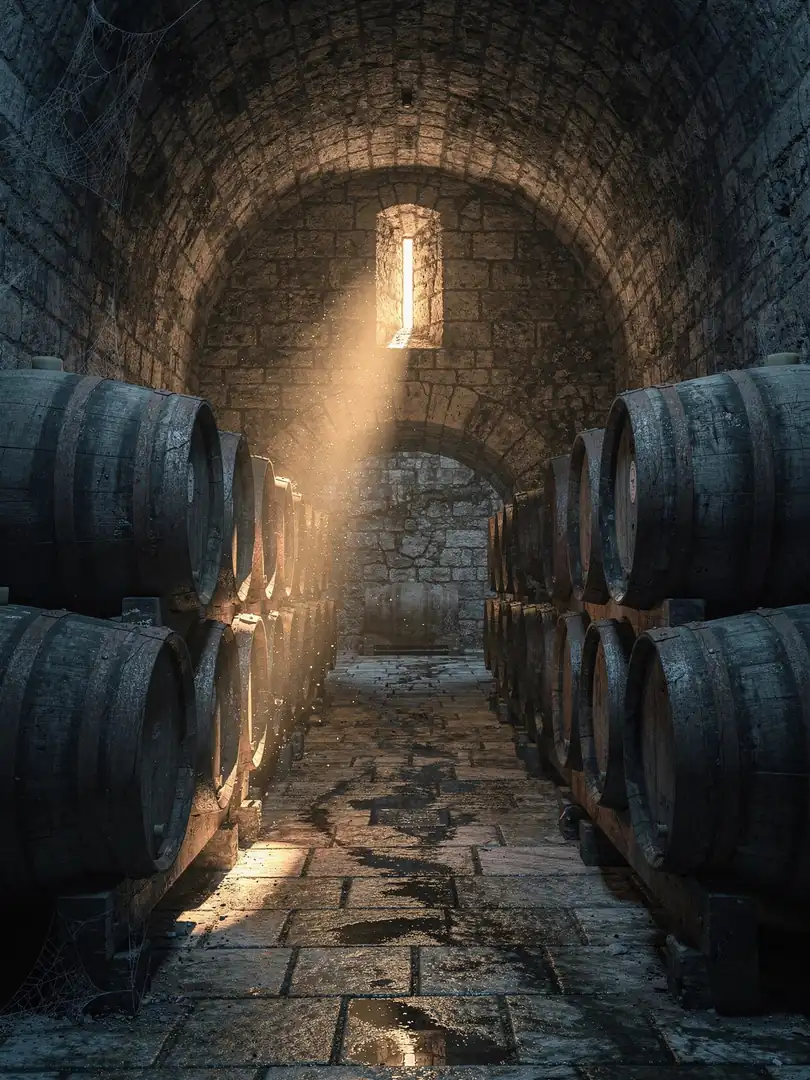
A cask is usually something you won't find with Inländerrum. The standard bottlings are unaged; the bottle reaches the market after blending and dilution. This sets it apart from rums that spend years in wood, picking up color, vanilla, and spice notes along the way.
Carinthia's climate wouldn't be a good partner for that anyway. With cold winters and moderate summers, wood aging proceeds much more slowly there than in sugarcane countries, where warm warehouses push the alcohol into the wood quickly. Achieving a comparable result would require many years of patience.
The vanilla and caramel notes usually associated with cask aging come, in Inländerrum, from the Inländerrum essence and the permitted bonificateurs. The characteristic smell is described as butterscotch and vanilla. This isn't a shortcoming but a different way of building flavor: it's blended, not aged.
The color also deserves a closer look. The earlier imitation rum got its color from caramel coloring, not from the wood. Today, as with any rum, the rule holds: dark doesn't mean old. More on this can be found in the article on white and dark rum.
Age statements for rum are subject to a clear rule within the EU. Anyone stating an age must mean the youngest component, and the aging must have taken place under the tax supervision of a member state. Inländerrum bottles usually carry no age statement at all, since an age can hardly be credibly assigned to a blend of rum and essence. Anyone who spots a bottle with a year on it should ask about its source.