The cut & copper
Heads, hearts, tails: what the distiller separates in rum production
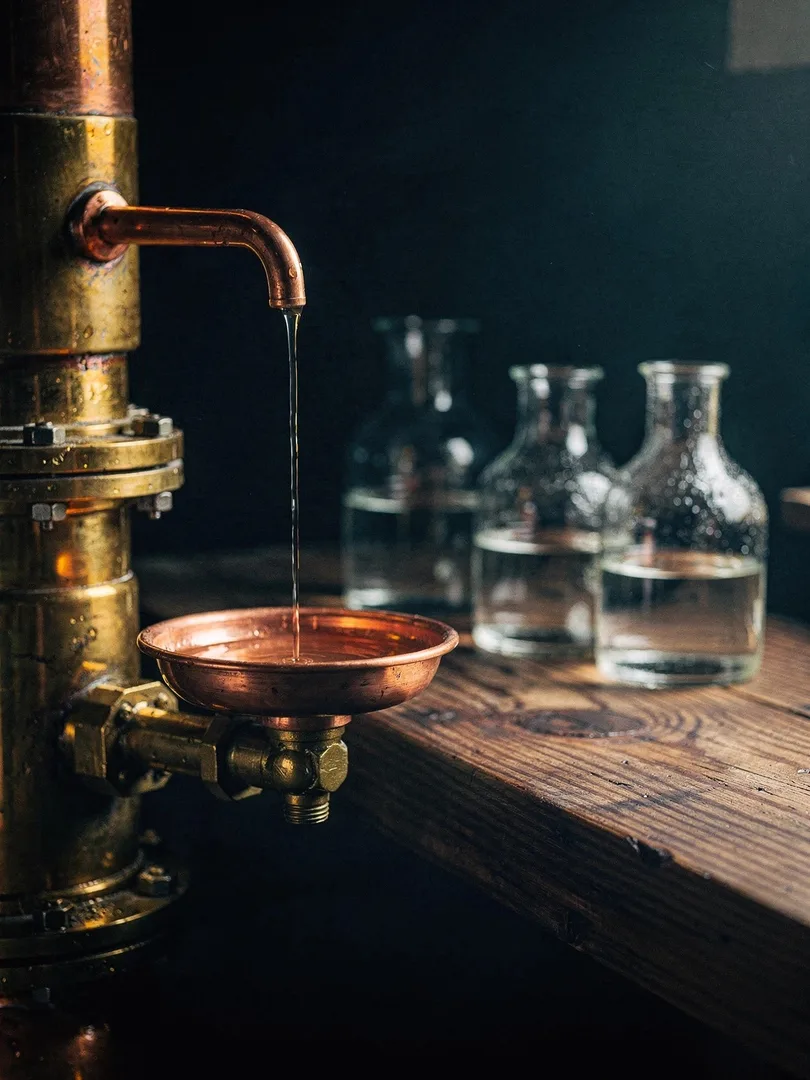
During distillation, the distiller splits the output into heads, hearts and tails: only the heart becomes rum, while sharp volatile compounds at the start and heavy oily ones at the end are cut away. Copper in the still and column helps with this, as it binds unpleasant sulfur notes.
What are heads, hearts and tails?
A distillate doesn't flow evenly out of the still. The most volatile compounds come first, evaporating already at low temperature. Distillers call this fraction the heads. It smells sharply of solvent and nail polish remover, because it is rich in acetaldehyde and ethyl acetate. Methanol (wood spirit) comes mainly from pectin, as found in fruit mashes. Molasses and sugarcane juice contain little of it, so with rum, the heads cut is mostly a matter of taste.
Next comes the heart, the middle run. It carries the desired alcohol and the aromas that define the rum. Toward the end, the alcohol content drops, and heavier compounds take over: higher alcohols, fatty acids and heavy esters. This fraction, the tails, smells of wet cardboard, sweat or old fat. In small amounts it adds depth; in large amounts it makes the rum dull and musty.
How does the distiller set the cut?
At the still, the distiller makes two decisions: when to switch from heads to heart, and when to switch from heart to tails. They go by alcohol content, temperature, smell and experience. An early cut to tails produces a clean, lighter rum. A late cut lets more heavy compounds through, making the rum fuller but also riskier. Distillers simply call this moment the cut.
Heads and tails aren't thrown away. They still contain alcohol and go back into the next run, or into the retorts in a Double Retort setup. This way, each run slightly influences the next. In column stills, there is no cut by the clock. Instead, separation happens spatially: light compounds at the top of the column, fusel oils to the side on certain plates, and the heart drawn off at a fixed point in between.
Why copper matters in pot stills and columns
Most pot stills and rectifying columns for rum are made wholly or partly of copper. There are chemical reasons for this. Fermentation produces sulfur compounds that smell of rotten eggs, rubber or cooked cabbage. Copper reacts with them and holds them back. A distillate without copper contact often comes across as sulfurous and impure, especially while young.
The AOC Rhum de la Martinique therefore requires the rectifying section of the Creole column to be made entirely of copper. The stripping section may include stainless steel, since its main job is to extract alcohol from the wash. Copper also acts as a catalyst, speeding up reactions that create fruity esters. Because the metal is gradually consumed in the process, distilleries must replace parts of their equipment from time to time.
One wash, many styles: what the cut changes in the glass
The same wash can taste very different depending on the cut. Those wanting an ester-rich, fruity rum keep more of the aromatic fraction near the heads. Those aiming for a light, Spanish-style rum make a tight cut and often filter afterward through activated carbon. The goal determines the cut, not a fixed number. That's also why there's no universal rule for exactly which alcohol percentage marks the switch.
For drinkers, the cut is invisible, yet unmistakable in the glass. A sharp, solvent-like edge points to a lot of heads; a heavy, musty finish points to a lot of tails. A well-made distillate feels clear, even when it's powerful. How to consciously recognize and name such notes is covered in the journey through tasting rum. It helps to smell two rums from different stills side by side.