Double distillation
Double-distilled like Cognac: the Charentais method in rum
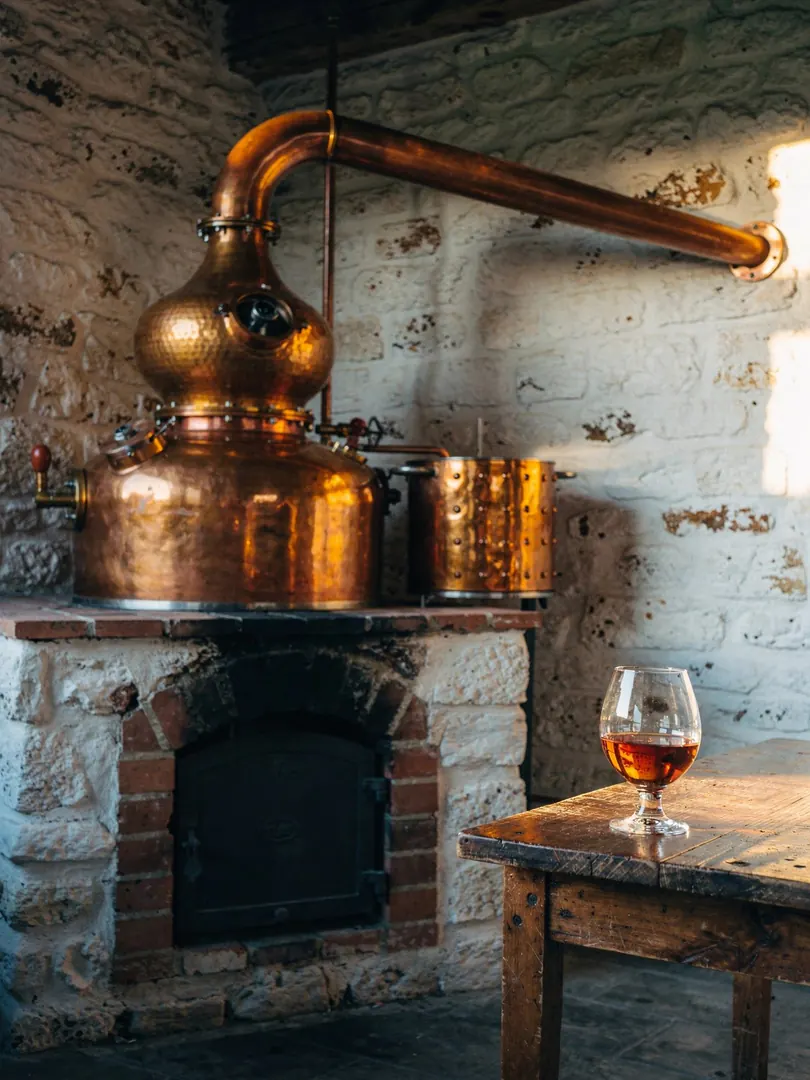
In the Charentais method, distillation happens twice in a copper pot still: the first run yields a weak raw distillate around 30 percent, the second the heart cut around 70 percent. This is how Cognac is made, and in Haiti, Barbancourt has drawn on this model since 1862.
What is the Charentais method?
The name comes from the Charente, the region around the town of Cognac in western France. There, wine is distilled twice in copper pot stills with onion-shaped heads. The first run is called the brouillis and yields a cloudy, weak distillate of about 30 percent. The second, the bonne chauffe (literally "good heating"), brings it up to around 70 percent. Both runs take place in the same type of still.
During the second run, the distiller separates very precisely. The heads at the start and the tails at the end are cut away and returned to later runs. Only the heart becomes the finished spirit. The process is slow and energy-intensive. In return, it yields a distillate rich in fruit and body, well suited to long cask aging.
Double-distilled or Double Retort: what's the difference?
At first glance, both methods aim for the same thing: bringing a pot-still distillate up to a high strength. But the path differs. The Charentais method heats the kettle twice and separates the fractions in a distinct second run. The Double Retort achieves the strengthening in a single pass, because the vapor flows through two pre-charged vessels. In doing so, it reaches higher strengths, often above 80 percent.
In the glass, the difference shows up less than you might think. Rums from double distillation often come across as soft and round, with ripe fruit. Double Retort rums from Jamaica, by contrast, often carry the loud, ester-rich character of their fermentation. This is due mainly to the raw material and fermentation, not the still alone. A still amplifies what was laid down in the fermentation vat; it doesn't invent the flavor anew.
Barbancourt: Haiti's rum with Cognac roots
In 1862, Dupré Barbancourt, who came from the Charente, founded a rum distillery in Haiti. He brought the knowledge of his homeland with him, and the house still links its rum to double distillation in the Charentais style to this day. Unlike most rums from the Caribbean, Barbancourt is distilled from sugarcane juice, part of which is thickened into syrup. It is aged in oak, in large foudres and in barrels made of French oak.
Expert sources describe today's setup differently. The rum portal Rhum Attitude mentions a still made of three columns, two of stainless steel and one of copper, producing a distillate of 92 to 93 percent. Other trade sources speak of a column followed by a second distillation in copper pot stills. For buyers, this means: the Charentais method describes the house's origins at Barbancourt. How much of that survives in today's operation can't be clearly determined from the outside.
Double-distilled rum today
Double distillation in pot stills is rather the exception in rum production. It mainly pays off for small houses that prioritize body over large volumes. Some young distilleries in Europe and North America work this way, often in stills originally built for fruit brandy, whisky or Cognac. Their labels often read "double distilled" or "pot still."
Some caution is warranted here. Double-distilled is not a quality seal; the term only indicates how many times the distillate has passed through a still. Even triple- or quintuple-distilled rum from column stills is marketed this way, even though distillation stages are counted quite differently there. Each plate of a column is, in essence, a small distillation. What matters is the distillation strength, the cut and the raw material, not the number on the bottle.