Distillation Explained
How Is Rum Distilled? Distillation in Five Steps
Rum is distilled by heating fermented molasses or fermented sugarcane juice, capturing the rising alcohol vapors, and condensing them back into liquid. Five steps carry the process from a thin wash of 6 to 8 percent alcohol to a clear distillate of 65 to over 90 percent.
What Happens During Rum Distillation?
At the start sits a liquid that smells more like sour beer than rum. Distillers call it wash: fermented molasses, fermented sugarcane juice, or fermented syrup. The protected designation of origin for Demerara rum from Guyana specifies fermentation to 6 to 8 percent alcohol, while in Martinique the fermented juice may reach no more than 7.5 percent. How this fermentation unfolds is explained in the journey through fermentation and esters. Here, the work at the still begins.
Distillation exploits a simple difference. Alcohol boils at about 78 degrees Celsius (172°F), water only at 100 degrees (212°F). When the wash is heated, vapors rise that contain significantly more alcohol than the liquid below. Cooling these vapors produces a stronger distillate. But alcohol isn't the only thing carried along: flavor compounds travel with it too, including esters (fruity compounds formed from acid and alcohol), aldehydes, and higher alcohols. The entire craft of distilling revolves around exactly these companions.
The Five Steps from Wash to Rum Distillate
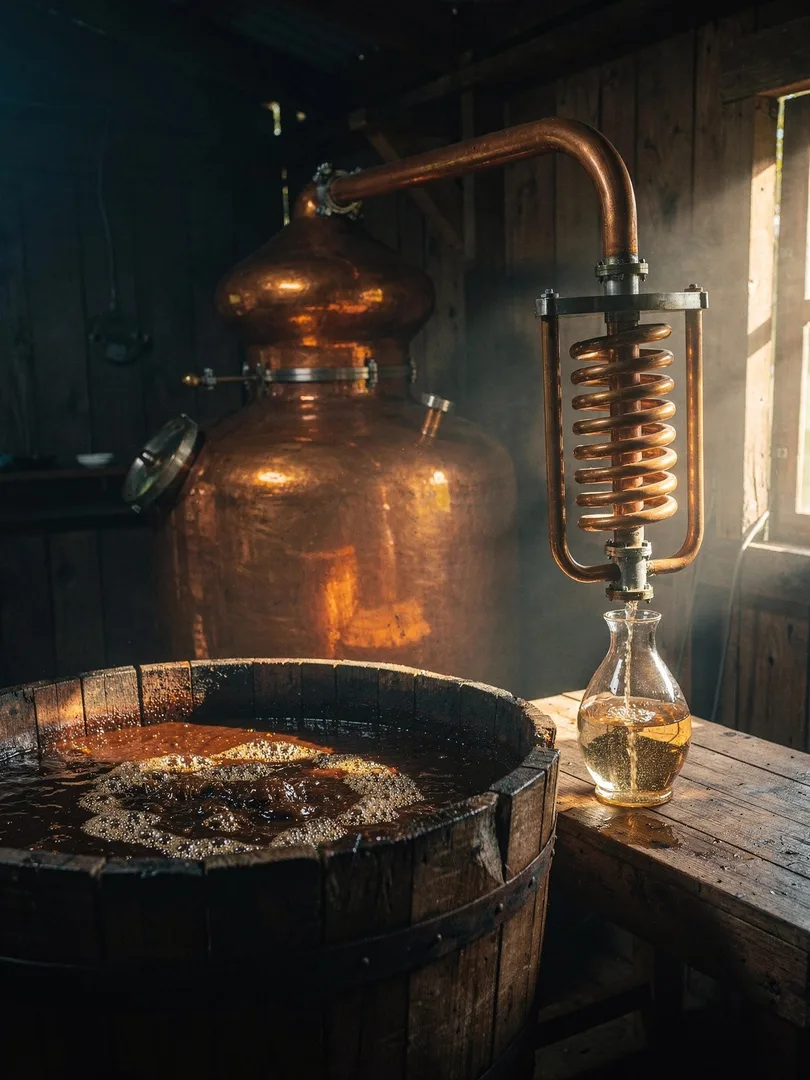
Step one is charging: the wash goes into a pot still, or flows without pause into a column. Step two is heating, today usually with steam, though in the past often with an open flame beneath the kettle. In step three, vapor separates from liquid. In a pot still, this happens once per run. In a column, it happens across many plates stacked on top of each other, each acting like a small distillation stage.
Step four is condensing. The vapor turns back to liquid inside a cooled coil or tube condenser. Step five is the cut: the distiller decides which part of the distillate goes into the rum and which doesn't. What remains in the still—the stillage (the nearly alcohol-free residue)—exits from the bottom. In Jamaica, some distilleries return a portion of this as dunder to the fermentation.
Pot Still or Column: The Key Difference
The pot still works in batches. It's filled, distilled, emptied, and refilled. The result is usually bold, oily, and aromatic, because many congeners carry over into the spirit. Jamaica and Barbados distill their heavy rums this way, often using a variant with two additional vessels known as the double retort. This design has its own dedicated section in this journey.
The column, also called a coffey or continuous still, operates without interruption. Wash flows in at the top, steam rises to meet it from below, and distillate flows out continuously. The more plates a column has, and the higher it drives the distillate, the purer and lighter it becomes. The simple creole column of the Antilles yields a spicy 65 to 75 percent. Large multi-column plants approach the 96 percent ceiling that EU law sets for rum.
Why the Still Determines Rum Style
Color and age reveal little about how a rum was made. The still reveals a great deal. Two distilleries can ferment the same molasses and still produce completely different rums, because one draws off its distillate at 70 percent while the other draws it at 94 percent. That's why experts increasingly classify rum by still type rather than by color, as shown in the classification by Luca Gargano and Richard Seale at the end of this journey.
For beginners, a rule of thumb helps. A pot still rum usually tastes broader, with ripe fruit, leather, or glue-like notes. A rum from multi-column stills tends to taste clean, light, and often neutral, so the cask and any additives shape the final character. Many brands blend both to combine power with lightness. Keeping this in mind changes how you read a rum label and helps explain why two bottles of the same age can taste so different.