Strong Rum, Small Amounts
Overproof in Cocktails: Float, Flame, Caution
Overproof rum, ranging from 57% up to over 80% ABV, belongs in cocktails in small amounts: as a float on top, as an aromatic boost in the mix, or as fuel for a flame. Because it can be up to twice as strong as regular rum, every dash is measured carefully.
What Does Overproof Mean in a Cocktail?
Overproof isn't a legal term but bar jargon. It comes from the old British proof system, in which 100 degrees proof corresponded to 57.15% ABV. Anything above that counted as overproof. In the US, proof is simply double the ABV percentage, so a 151 is 75.5% ABV. Well-known examples include Wray & Nephew White Overproof from Jamaica at 63% ABV according to the manufacturer, and Sunset Very Strong from St. Vincent at 84.5% ABV.
Stroh 80 from Austria is 80% ABV but is classified as domestic rum and therefore legally not rum at all. For cocktails, something else matters: an overproof delivers more flavor and more alcohol per centiliter and dilutes the drink less. That's why tiki recipes use it deliberately, often in just one or two centiliters.
The math helps with dosing. 2 cl at 75% ABV contains roughly as much alcohol as almost 4 cl of regular 40% rum. Anyone who swaps overproof for regular rum one-to-one makes the drink nearly twice as strong. You won't necessarily taste this right away, since juice and sugar mask the sharpness.
Float: How Does Rum Float on Top of a Drink?
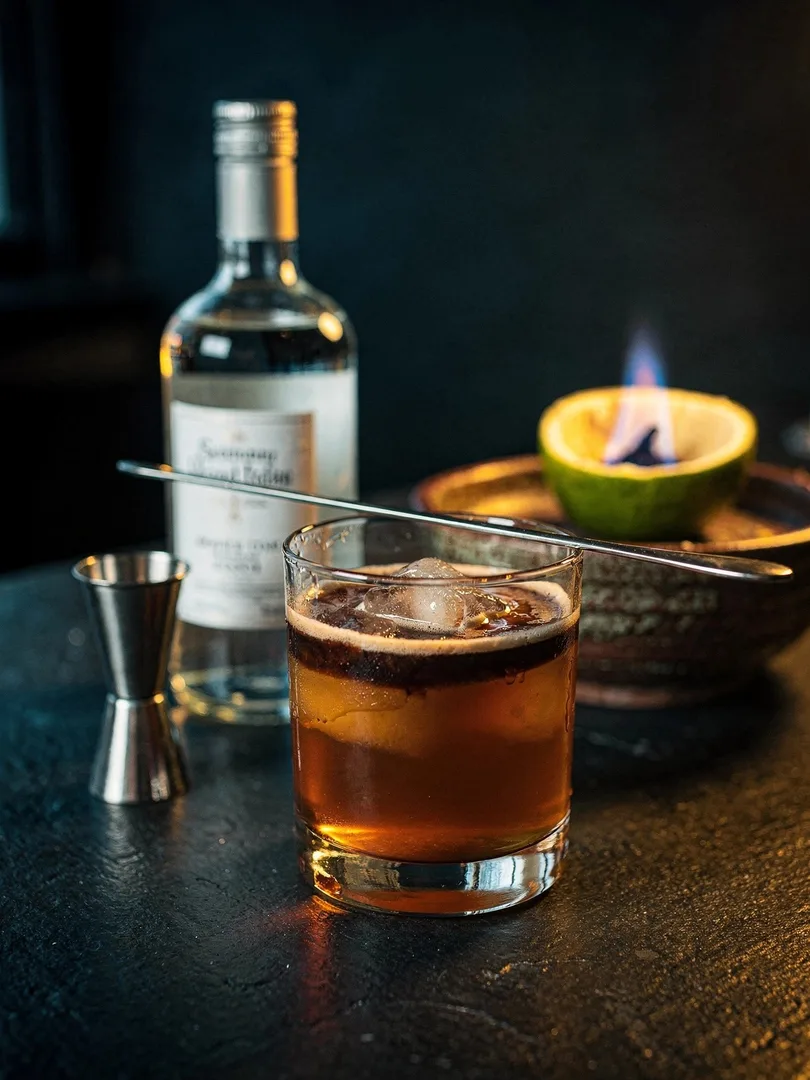
A float is a thin layer of rum on top of a finished drink. It's poured slowly over the curved back of a bar spoon so it doesn't mix in immediately. It floats because alcohol is lighter than water, and the sugary juice beneath is heavier still. The stronger the rum, the better the layer holds.
The float changes the drinking experience. The first sip is intense and smells strongly of rum, with the actual drink following underneath. Many Mai Tai variations get a float of dark rum, while some Zombie recipes use an overproof float. If you don't like the effect, just stir it once. The total amount of alcohol stays the same either way.
Flaming Drinks: Spectacle with Risk
Flaming drinks look spectacular and are among the most common accidents at the bar. The blue alcohol flame is barely visible in daylight. Anyone who tops up a glass thinking the flame has gone out risks a flare-up reaching all the way into the bottle. Bacardí equipped its 151 rum, at 75.5% ABV, with a metal screen in the bottle neck as a flame guard. In 2016, the bottling disappeared from the market without official explanation; consumers had previously filed complaints over burns.
A few rules reduce the risk. Never pour straight from the bottle into a flame—measure it out, seal the bottle, and set it aside before lighting. Work only with thick, heat-resistant glasses or bowls, since thin glass can crack. Smother the flame with a lid or plate rather than blowing it out, and don't move the glass. Only drink once the flame is out and the rim has cooled.
The same applies to Feuerzangenbowle. The high-proof rum, usually 54% ABV or higher, is poured over the sugarloaf with a ladle, never straight from the bottle.
What Does Overproof Mean for the Body?
Strong rum doesn't affect you differently than regular rum, just more concentrated. 2 cl at 75% ABV contains about 12 grams of pure alcohol, roughly the same as 0.3 liters of beer. In a tiki drink with several rums and an overproof float, you can easily end up with 25 grams or more, spread across a glass that mostly tastes of juice.
Neat, overproof rum is harsh and irritates the mucous membranes. Its aroma only opens up with a little water, which is why professionals taste it with a few drops added to the glass. In cocktails, the rule is: measure rather than guess, and treat overproof as a seasoning, not a base.