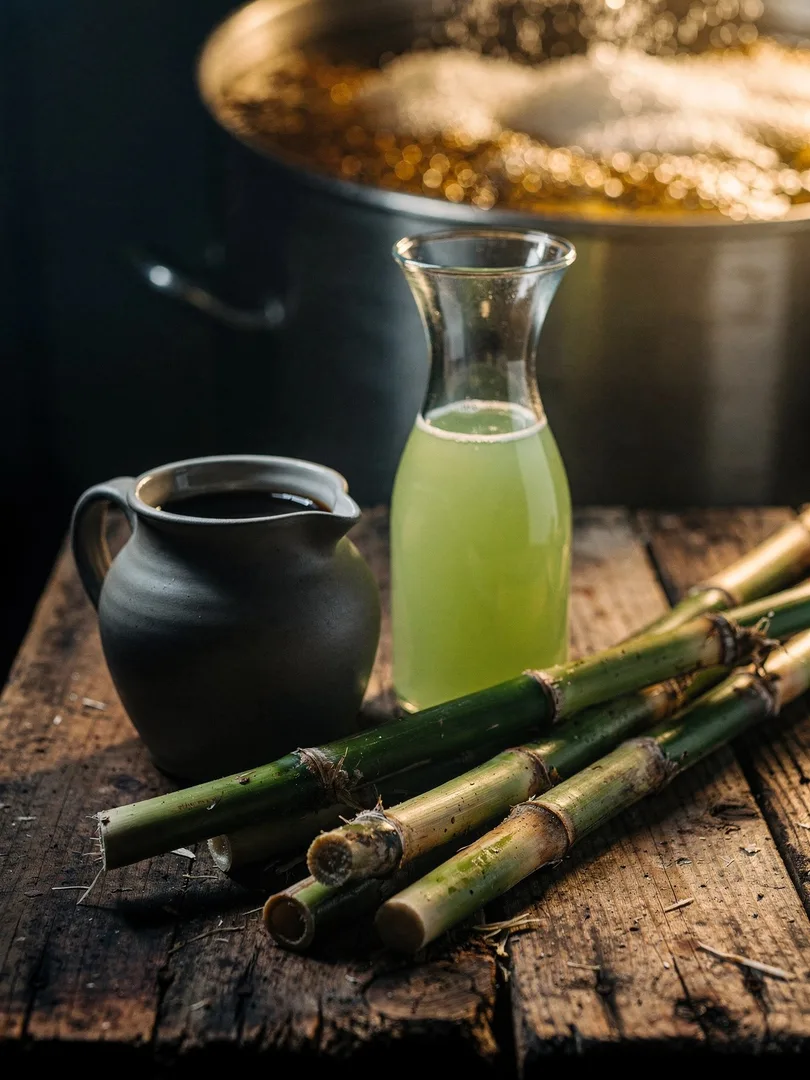
Fermentation Explained Simply
How does molasses or sugar cane juice become alcohol?
Molasses or sugar cane juice turns into alcohol because yeast ferments the sugar within into alcohol and carbon dioxide. After one to several days, you're left with a kind of sugar cane wine, usually six to eight percent alcohol. Only this liquid goes into the still.
Fermentation in Rum: What Yeast Does to Sugar
Sugar cane delivers mainly sucrose, ordinary table sugar. Yeast can't use this sugar directly. It first splits it with an enzyme called invertase into glucose and fructose. The yeast takes up these two simple sugars and breaks them down without oxygen into ethanol, the drinking alcohol, and carbon dioxide. Heat is released in the process, and the vat starts to bubble and foam.
Alongside the alcohol, hundreds of byproducts form in tiny amounts. These include higher alcohols, acids, aldehydes, and esters. Together they often make up less than one percent of the liquid, yet they carry almost the entire aroma. Whether a rum later smells of banana, grass, toffee, or glue is largely decided right here.
The still can only separate, concentrate, or discard these compounds. It barely creates meaningful new aromas on its own. That's why master distillers like to say that a good rum begins in the fermentation vat. A distillate from a thin, flavor-poor fermentation stays thin no matter how carefully it's distilled.
Fermenting Molasses: Diluting, Acidifying, Feeding
Molasses is the dark, sticky residue left over at the sugar factory once the sugar has been crystallized out. It still contains plenty of sugar, along with minerals and pigments. Undiluted, it won't ferment. The sugar is so concentrated that it draws water out of the yeast cell and paralyzes it.
That's why molasses is first diluted with water until a thin, sweet solution forms. In English it's called wash, in French often simply moût. Many distilleries lower the pH so unwanted bacteria struggle to grow. Some add nutrients for the yeast, such as nitrogen compounds, which spent molasses lacks.
The great advantage of molasses is its shelf life. It can be stored, shipped, and fermented year-round. That's why the vast majority of the world's rum comes from molasses. Many distilleries don't even own a sugar factory and simply buy in their molasses.
Fermenting Cane Juice: Fresh, Fast, Fragile
Fresh sugar cane juice, called vesou in the Antilles, behaves very differently. It carries the plant's full aroma but spoils within hours. That's why juice-based rum can only be made where the cane grows, and only during harvest season. The cane is cut, pressed, and the juice is set to ferment as quickly as possible.
AOC Martinique, the strictest rule for juice rum, lays down exact figures for this. The juice needs at least 14° Brix, meaning roughly 14 percent dissolved solids, mostly sugar, and a pH of at least 4.7. It's clarified only mechanically, without heating or liming. This preserves the fresh, grassy aroma that sets a rhum agricole apart from a molasses rum.
A third option is thickened juice, often called syrup or cane honey. It keeps like molasses but still contains all its sugar. Zacapa from Guatemala, for instance, markets such syrup as its raw material.
How Much Alcohol Does Fermented Cane Wine Have?
At the end of fermentation you're left with a cloudy, tart liquid with low alcohol content. The specification for Demerara Rum from Guyana calls for fermentation at around 32°C up to six to eight percent alcohol. AOC Martinique allows a maximum of 7.5 percent in the fermented juice. That's weaker than most wines.
Higher levels would be technically possible, but many distilleries choose not to go there. High sugar content and tropical heat stress the yeast, and stressed yeast produces unsettled, often unpleasant byproducts. A moderate strength ferments more evenly and leaves more room for the desired aromas.
Only now does the still come into play. Legally, the word rum hinges on this earlier step: the EU requires rum to be distilled exclusively from fermented molasses, fermented syrup from cane sugar production, or fermented sugar cane juice. Molasses from sugar beets therefore never yields rum, even if fermented and distilled the exact same way.