Yeast Shapes the Aroma
Wild Yeast or Pure Culture? Yeasts in Rum
Most rum distilleries today ferment with cultivated pure-strain yeast of the species Saccharomyces cerevisiae, because it works fast and predictably. Wild yeasts from the air, cane, and vats ferment more slowly and unpredictably, but often deliver more flavor. A special case is fission yeast, used for heavy rums.
Yeast in Rum: Why There's No Single 'Rum Yeast'
Yeasts are single-celled fungi. They live everywhere: on sugar cane leaves, in the air of a distillery, on wood and metal. For fermentation, one group matters most: those able to convert sugar into alcohol without oxygen. The best-known species is Saccharomyces cerevisiae, the same species that leavens bread and brews beer.
Within this species there are countless strains, lines with slightly different traits. One tolerates more heat, another more alcohol, a third produces especially fruity esters. From the very same molasses, two strains can therefore produce two audibly different distillates. Many distilleries guard their strain like a family recipe.
Pure-Culture Yeast: Predictable Fermentation for Consistent Rum
In pure culture fermentation, a single selected yeast strain is grown in the lab and added to the vat in large quantity. It instantly dominates any wild competitors. Fermentation starts quickly, runs similarly batch after batch, and finishes in a short time. For distilleries running large column stills, this is ideal, since they need the same quality every single day.
The best-known example is Bacardí. According to the company, founder Facundo Bacardí Massó isolated his own yeast strain from sugar cane in his region around Santiago de Cuba. This strain, the story goes, is still used today, kept chilled and under lock and key. The family reportedly smuggled it out of Cuba before the expropriation in October 1960. This is a company legend that can't be independently verified.
What is documented, however, is the underlying logic. Anyone producing a light, clean rum in huge volumes needs a yeast that reliably produces the same handful of aromas. Switching strains would be noticeable in the glass.
Wild Fermentation: Yeasts from the Surroundings
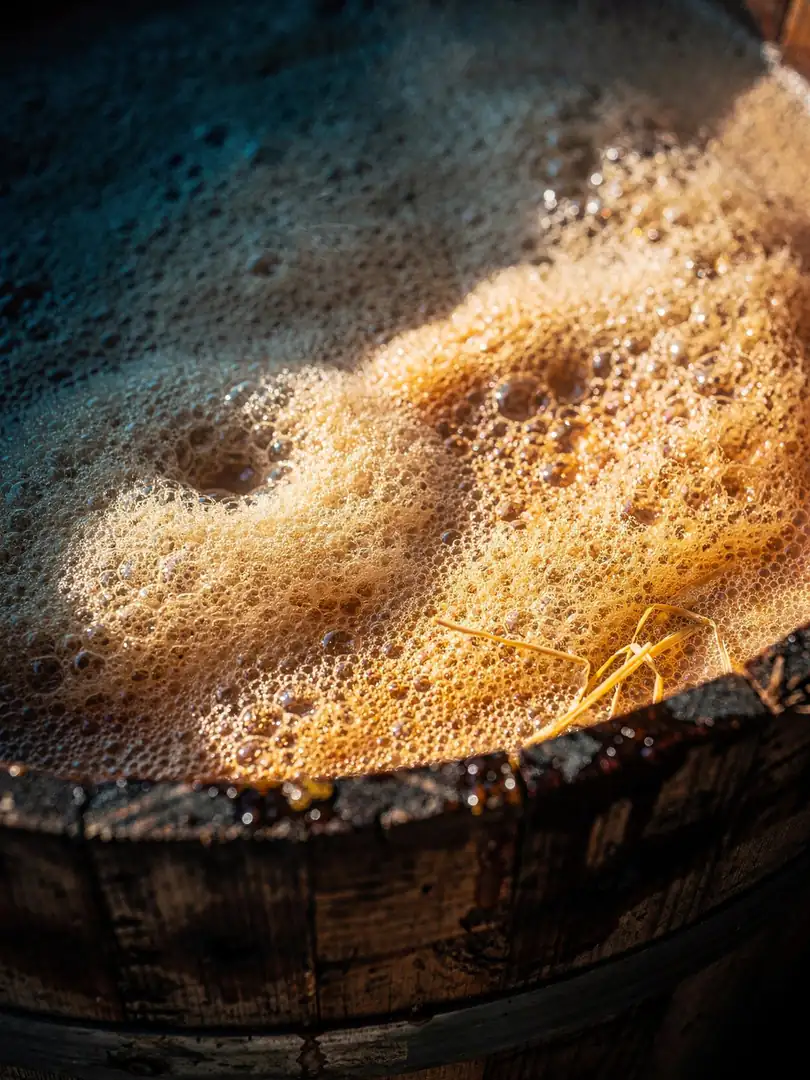
In spontaneous fermentation, nobody adds yeast. The microbes come from the cane, the air, and residues in the vats. At first, various wild yeasts often work side by side; eventually the most alcohol-tolerant one usually wins out. The result is more complex, but varies from batch to batch.
Haiti's Clairin is often cited as an example: small distilleries frequently ferment juice or syrup without any purchased yeast. Hampden in Jamaica, according to trade press reports, also works with wild yeast. The price is risk. A wild fermentation can stall, produce too much acetic acid, or yield off-flavors, and the alcohol yield is usually lower.
Fission Yeast Schizosaccharomyces pombe: The Outlier for Heavy Rum
One yeast stands out particularly in rum literature: Schizosaccharomyces pombe. It reproduces by splitting in two rather than by budding, hence the name fission yeast. It works more slowly than ordinary distiller's yeast and tolerates acidic, nutrient-poor conditions well, the kind found in long molasses fermentations.
Older technical texts describe it as the foundation of truly heavy rum. A 1985 study by Fahrasmane and colleagues found that fermentations with this fission yeast generally produced more esters than those with Saccharomyces cerevisiae. It's found, among other places, in wooden fermentation vats across the Caribbean. The Puerto Rican rum researcher Rafael Arroyo himself stressed that choosing the yeast must come at the very start of any distillery planning.
What matters is the interplay. Yeast supplies alcohol and some of the esters; bacteria supply acids; and from the combination of both, further esters form. How much bacterial activity is allowed determines whether the style turns out light or heavy. That's the subject of the entries on fermentation length, dunder, and fermentation vats.