Molasses and Pot Still
English Style: Rum from Jamaica, Barbados and Guyana
English style refers to rum from former British colonies such as Jamaica, Barbados and Guyana: distilled from molasses, wholly or partly in the pot still, with a bold, fruity character. Among the major rum traditions, it's the most aromatic.
What Defines the English Rum Style?
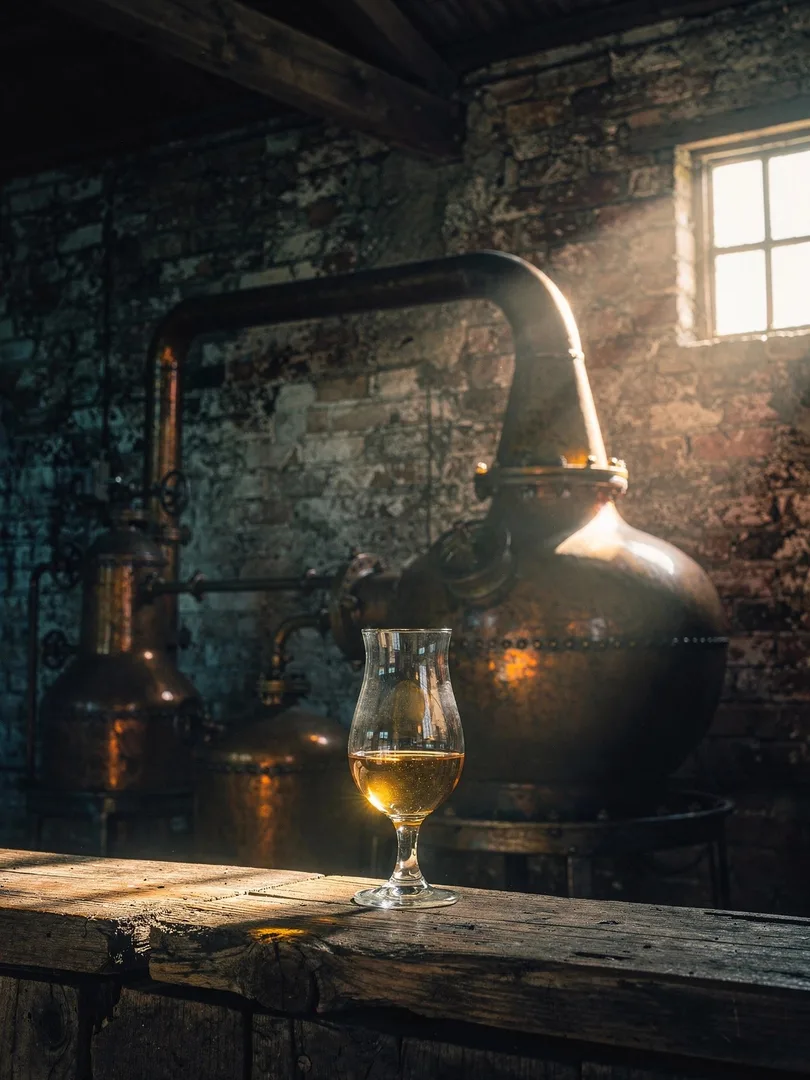
On the British sugar islands, rum had been a byproduct of sugar factories since the 17th century. Sugarcane there was grown and processed on plantations by enslaved people, and the remaining molasses was distilled into spirit for sailors, traders and export. This sugarcane spirit became known as rum in the 17th century on Barbados. The pot still, a kettle still modeled on British design, remains central to these distilleries to this day.
The style is therefore heavier than the Spanish one. It feels full-bodied and oily, with ripe banana, pineapple, molasses spice and sometimes a slightly glue-like note that connoisseurs call funk. Pot-still and column distillate are often combined in the same bottle. The English style is therefore neither a specific still nor a law. It's more of a family with shared origins and a similar aim: the rum should taste of its raw material, fermentation and still, not neutral.
Jamaican Rum: What Does the Boldest Style Taste Like?
Jamaica sits at the loud end of the scale. Long fermentations—sometimes with dunder, the residue from previous distillations—and double-retort pot stills, kettle stills with two attached secondary chambers, produce many esters. These are aromatic compounds formed from acid and alcohol that smell like overripe fruit. Distilleries such as Hampden in Trelawny or Appleton Estate in St. Elizabeth show the range from wild to elegant. How the fermentation behind this works is explained in the topic Fermentation and Esters.
Since 2016, Jamaica has protected its rum with its own geographical indication. It permits pot still and column, as well as blends of the two, requires aging on the island in barrels up to 250 liters, and allows only water and caramel coloring to be added after distillation. Sugar is therefore not permitted. In the glass, this means Jamaican rum tastes dry, even when it smells of fruit. Neat, it's often a surprise for beginners; in a cocktail, even a small amount carries far.
Barbados Rum: The Balanced Middle Path
Barbados is considered the birthplace of the name. The oldest record dates to 1651, when a planter wrote of rumbullion, a word for great tumult. Today only a few distilleries operate on the island, including Mount Gay, which traces its history back to a deed from 1703, as well as Foursquare and the West Indies Rum Distillery. Typical is a blend of pot- and column-still distillate from the same distillery, which the Gargano classification calls Single Blended Rum.
In the glass, Barbados rum feels rounder than Jamaican rum: vanilla and coconut from used bourbon barrels, banana, citrus peel, a soft body. It makes a good introduction to the English style, since it shows power without overwhelming. For years there's been debate on the island over an origin rule, including whether Barbados rum must age entirely on Barbados. Until then, each house decides for itself how to handle aging, sweetening and blending.
Demerara Rum from Guyana: Wooden Stills and Depth
Guyana brings a peculiarity found nowhere else. At Demerara Distillers in Diamond, today the country's only distillery, stills made from greenheart, a very hard tropical wood, are still in use. The double pot still Port Mourant, the single pot still Versailles, and the wooden Coffey column Enmore are considered the last of their kind. Each still produces its own marque, a distillate with its own profile, from which blenders compose their rums.
Demerara Rum is registered as a geographical indication in the EU register. The rules classify it by congener content into light, medium and heavy, and allow up to 20 grams of sweetening per liter. In the glass, Guyana often appears dark and deep, with molasses, licorice and dried fruit. Guyana has also traditionally supplied a typical share of the blends sold as Navy Rum. How strong such rums are is covered in the topic on Overproof and Navy Strength.