Fresh Juice
French Style: Rhum from Sugarcane Juice
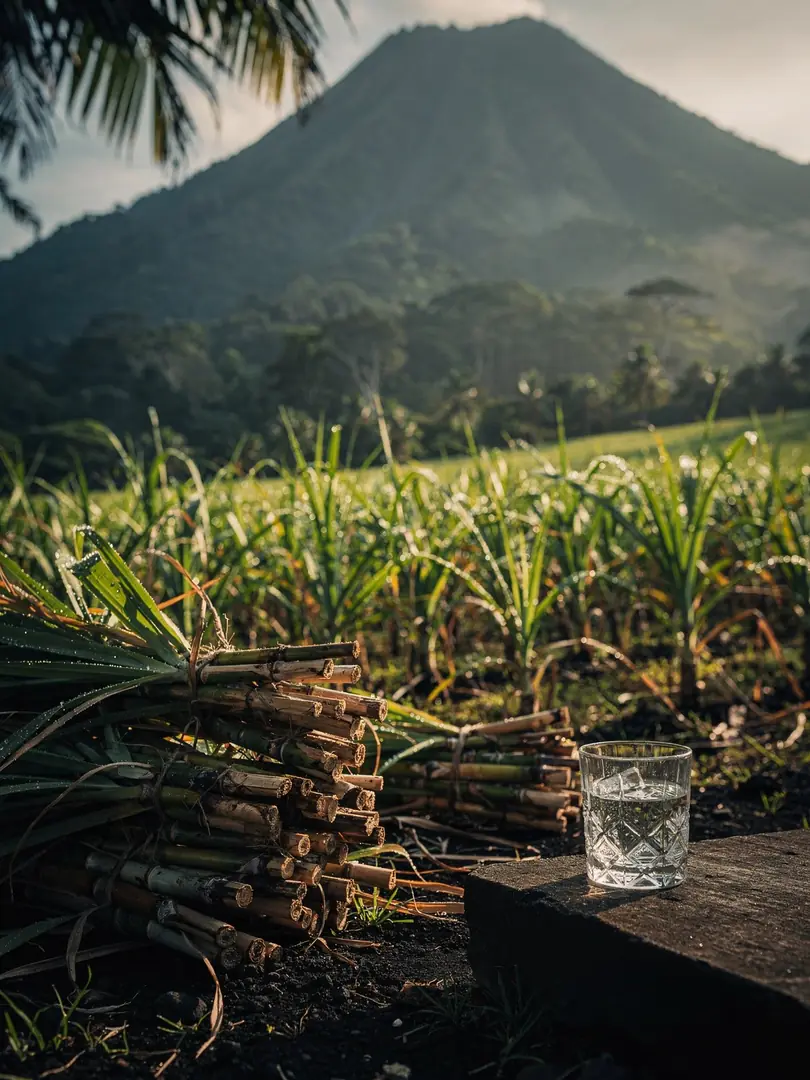
French style refers to Rhum made from fresh sugarcane juice, as distilled primarily on Martinique and Guadeloupe: fermented immediately after harvest, distilled in creole columns, grassy, peppery and fresh. On the label, it's called Rhum agricole.
Why Rhum from the French Islands Tastes Different
In the late 19th century, cane sugar fell into a severe crisis as cheap European beet sugar drove down prices. On Martinique, many plantations switched between 1884 and 1896: they pressed the cane and fermented the juice directly, instead of first boiling sugar. This marked the beginning of Rhum agricole, although individual juice-based rums are documented earlier. Martinique was at the time the world's largest rum producer, with over 220,000 hectoliters.
The raw material explains the flavor. Fresh juice, called vesou in French, contains sugars and plant compounds that are long since cooked away in molasses. The result is a rum that smells of the field: freshly cut grass, green banana, citrus, white pepper, sometimes olives and salt. Molasses rum, by contrast, tastes of caramel and dried fruit. When the two sit side by side in a glass, the difference is clear even without much practice.
Creole Column and Short Fermentation: How Rhum Agricole Is Made
The juice spoils quickly and must go into the fermentation tanks right away. On Martinique, the AOC, the controlled designation of origin, mandates open fermentation tanks and a maximum of 120 hours of fermentation. The fermented juice, at no more than 7.5% ABV, then goes into the colonne créole. This creole column was adapted from French technology used for beet alcohol and distills the spirit to only 65 to 75% ABV.
This low distillation proof is the key. The lower a column distills, the more aromatic compounds remain in the distillate. That's why Rhum agricole tastes robust, even though it comes from a column rather than a pot still. The season is limited: on Martinique, harvesting runs from January 1 to August 31, and distilling from January 2 to September 5. In the remaining months, the columns stand idle because there's no fresh juice.
Martinique, Guadeloupe, Réunion: Where Rhum Agricole Comes From
Martinique is the epicenter. Since 1996, the island's rhum has carried an AOC, the only rum in the world to do so. Seven distilleries are active there, including Neisson in Le Carbet, Depaz at the foot of Montagne Pelée, and JM at the northern tip near Macouba. Their rhums differ markedly by terroir, cane variety, and house style. For aged rhum, fixed categories apply: VO from three years, VSOP from four years, XO from six years in oak casks under 650 liters.
Guadeloupe, along with its neighboring island Marie-Galante, also distills cane juice rum, alongside plenty of molasses-based rum known there as rhum de sucrerie. There's no AOC here, only a geographical indication. White rhums from Marie-Galante are often bottled at more than 50% ABV. Réunion in the Indian Ocean produces mostly molasses rum, including the intensely aromatic Grand arôme. French style, therefore, mainly refers to the cane-juice tradition, not every bottle from a French overseas department.
Rhum agricole outside France: Madeira, Haiti, Mauritius
The word agricole is protected within the EU. It may only appear on rum with a geographical indication from a French overseas department or from Madeira. Madeira has distilled rum from cane harvested by hand on steep terraces since the 19th century, protected as Rum da Madeira. Cane-juice rums from Mauritius, Thailand, or Haiti follow the same principle but are not permitted to call themselves agricole within the EU.
Haiti takes its own path. Barbancourt, founded in 1862 by Dupré Barbancourt from the Charente region, double-distills cane juice in pot stills, similar to the Cognac region's methods. On Mauritius, cane-juice rum was long prohibited and, according to trade press reports, has only been permitted since a 2006 reform. These rums share their flavor profile with Martinique, but not the legal designation. How rhum agricole is regulated in detail is explained in the deep dive on Rhum agricole.