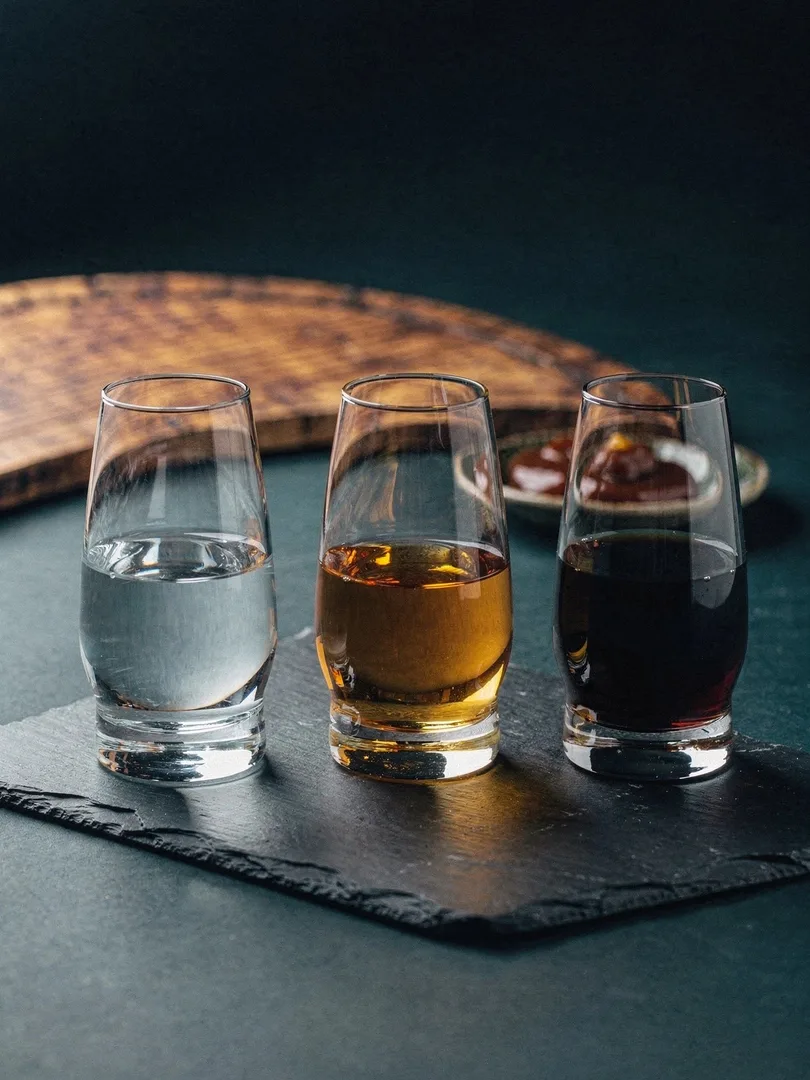
Color Isn't Age
White, Golden, Dark Rum: What Color Reveals and What It Doesn't
A rum's color says little about its age or quality: white rum can be aged and filtered, while dark rum can be young and colored with caramel. Color tends to reveal more about a rum's intended use than how long it spent in the cask.
Where Does Rum's Color Actually Come From?
Fresh off the still, every rum is colorless. Its color comes from two sources. The first is the cask: wood releases tannins, vanillin, and pigments over months and years, and depending on the cask, climate, and duration, the rum turns straw-yellow, amber, or mahogany brown. The second is caramel coloring, approved in the EU as E 150a. It's made from heated sugar and may be used to adjust a rum's hue.
Caramel coloring is a dye, not a sweetener. In the small amounts typically used, it noticeably changes the look in the glass but barely affects the flavor. Distilleries use it so that every bottling looks consistent, or to give a young rum a richer tone. Spirits aren't required to carry an ingredients list, but German law requires the note "with coloring" on the label for caramel coloring. The legal situation around coloring and sugar is explored further under Sugar and Additives.
White Rum: Young, Filtered, or Both
Many clear bottles are labeled Silver, Blanco, or Blanc. That doesn't necessarily mean the contents are unaged. Many Spanish-style rons age for one or more years and are then filtered through activated carbon until nearly all color disappears. Puerto Rico even mandates at least one year in white oak for all rum, including the clear kind. Filtering strips away some of the wood-derived aromas, though some of the roundness from the cask remains.
White rhum agricole is different. On Martinique, it rests for at least six weeks in tank and never touches wood. Unaged pot-still rums from Jamaica or Clairin from Haiti likewise skip the cask entirely. These are colorless because they're genuinely young, and they taste correspondingly intense, full of raw material and fermentation character. So "white" can mean two different things: gently filtered, or raw and unrefined. Only the label and style reveal which type is in the glass.
Golden Rum: Cask, Coloring, or Blend?
Golden bottles carry terms like Gold, Oro, Ambré, or Paille. None of these is backed by a uniform standard. A golden rum may have spent some time in cask, but it could equally be a young rum with a touch of caramel coloring added. Often it's a blend of aged and unaged distillate. Martinique, however, has one fixed category: élevé sous bois, meaning at least twelve months in oak, frequently in large casks.
In the glass, other cues matter more than color. An aged rum smells of wood, vanilla, spice, and often dried fruit. On the palate, you'll notice light tannins that leave the mouth feeling slightly dry. A young, colored rum, by contrast, smells fresh and alcoholic despite its golden appearance. Comparing color and aroma quickly reveals whether the two align, or whether the color promises more than the cask actually delivered.
Dark Rum: Is Darker Rum Older Than Lighter Rum?
Not necessarily. Very dark rums, often marketed as Dark or Black, frequently owe their color to caramel coloring. They're prized for cocktails and baking precisely because of this color and their slightly bitter caramel note. Such a rum can be young and still appear deep brown. Conversely, some long-aged rums remain pale because they matured in large, well-used casks that had little color left to give.
Only a genuine age statement is reliable. Within the EU, it must refer to the youngest rum in the blend. Numbers on solera-style bottles, by contrast, usually refer to the oldest component and aren't age statements in this sense. On Martinique, VO, VSOP, and XO are tied to minimum years, while elsewhere terms like Añejo, Reserva, or Extra Añejo remain without a uniform standard. Color, then, reliably answers only one question: what the rum looks like.