Byproducts and the Environment
Bagasse, Vinasse, Water: How Environmentally Friendly Is Rum?
During rum production, two main residues remain: bagasse, the pressed-out fibers of the cane, and vinasse, the stillage from the pot still. Bagasse usually fuels the boilers. Vinasse is the bigger problem, since every liter of alcohol produces about 10 to 15 liters of it.
Bagasse: fuel from the cane itself
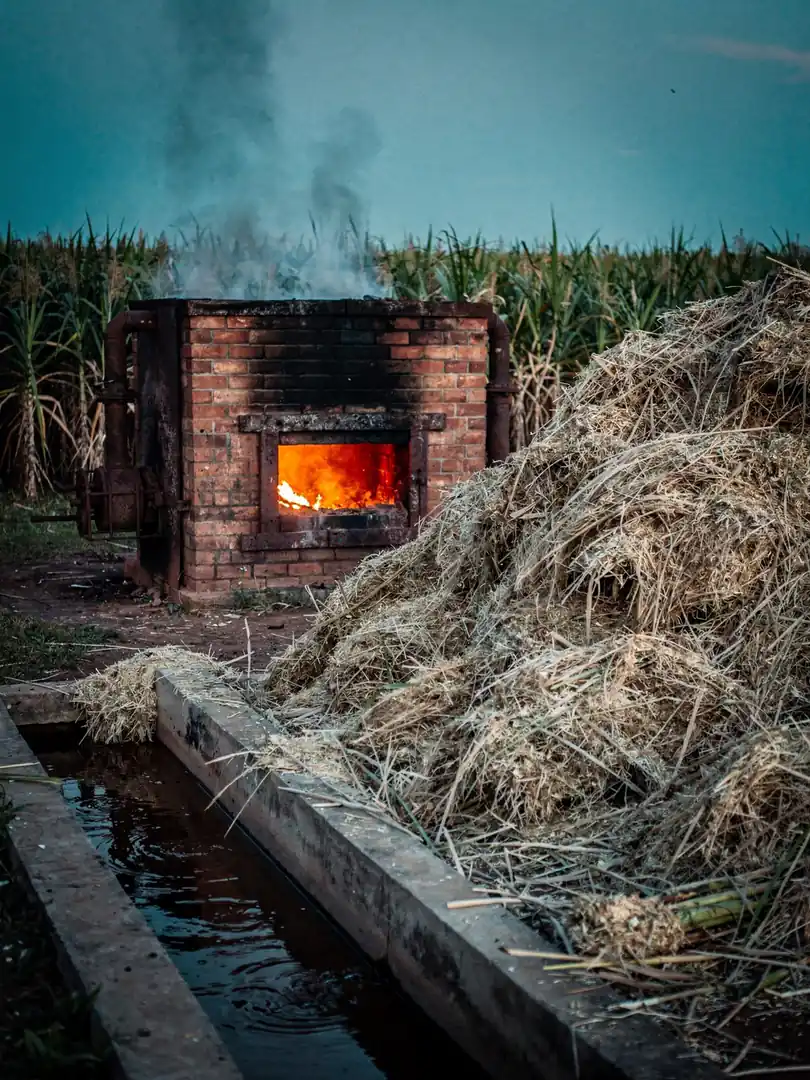
After pressing, a mountain of pale, moist fibers remains from the sugarcane. This residue is called bagasse and is produced in huge quantities. Sugar factories and many cane juice distilleries burn it in their steam boilers. The steam drives mills, heats evaporators and distillation columns, and some factories even generate extra electricity for the public grid.
So the cane covers part of the energy needed for its own processing. Still, this isn't automatically climate-neutral, since burning it produces smoke and ash, and fertilizer, machinery and transport keep consuming energy. Bagasse can also be processed into paper, panels or disposable tableware. For rum itself, what matters most is that a distillery with its own mill has its fuel right next to the fermentation vat.
A cane juice distillery with its own mill keeps all the fiber from the cane, since no sugar is handed over to a factory. A distillery processing purchased molasses, on the other hand, has no bagasse on hand. It needs other energy sources for steam and heat, such as oil, gas or electricity. So the raw material also determines how a distillery is heated.
Vinasse: the liquid remainder of distillation
Once the alcohol has been distilled from the fermented mash, a brown, acidic liquid remains. Experts call it vinasse or stillage. The rule-of-thumb figure of 10 to 15 liters of vinasse per liter of alcohol comes from Brazil's alcohol industry. With rum, the amount depends on the raw material, fermentation and distillation method, but the order of magnitude is similar.
The liquid contains a lot of potassium, along with nitrogen, phosphorus and a large amount of organic matter, and its pH sits around 4 to 4.5. If it reaches streams or coastal waters untreated, microbes consume the oxygen in the water as they break it down, harming fish and plants. That's why vinasse is an issue wherever distilleries sit near rivers or reefs.
Vinasse from molasses is generally darker and richer in salts than vinasse from fresh juice. Molasses has accumulated minerals from several boiling stages, and these end up almost entirely in the stillage after distillation. So the more a distillery relies on molasses, the more effort it takes to treat its residues.
What happens to the vinasse?
In Brazil, vinasse is usually returned to the sugarcane fields. This fertigation brings potassium and water back into the soil, but requires precise quantities, otherwise soils become salinized and groundwater suffers. Other operations ferment the stillage into biogas or concentrate it into fertilizer. Which solution a distillery uses rarely appears on the bottle.
Some rum traditions even use the residue within their own process. In Jamaica, the stillage is called dunder. It's added to the next fermentation, similar to the sour mash method used in American whiskey. Hampden also keeps muck, a bacteria-rich brew of residues, stillage and cane waste, in earthen pits. On Réunion, Grand arôme is made from molasses fermented together with vinasse. This reduces the waste volume somewhat, but doesn't eliminate it.
Field, water, transport: what else burdens rum
A large share of the environmental impact arises already in the field. Sugarcane is often grown as a monoculture, requiring fertilizer, pesticides and plenty of water during the growing season. Burning the fields before hand harvesting pollutes the air; Brazil's state of São Paulo phased this out on mechanically harvestable land by 2014. Distilleries also need cooling water for their condensers and water to bring the rum down to drinking strength.
Add to that glass bottles and long shipping routes to Europe. There's no independent seal that sums up all these points for rum. Anyone who wants to pay attention to this will find some producers providing information on bagasse boilers, vinasse treatment or organic farming. These are claims made by producers, and should be weighed against questions about actual measurements and certifying bodies.