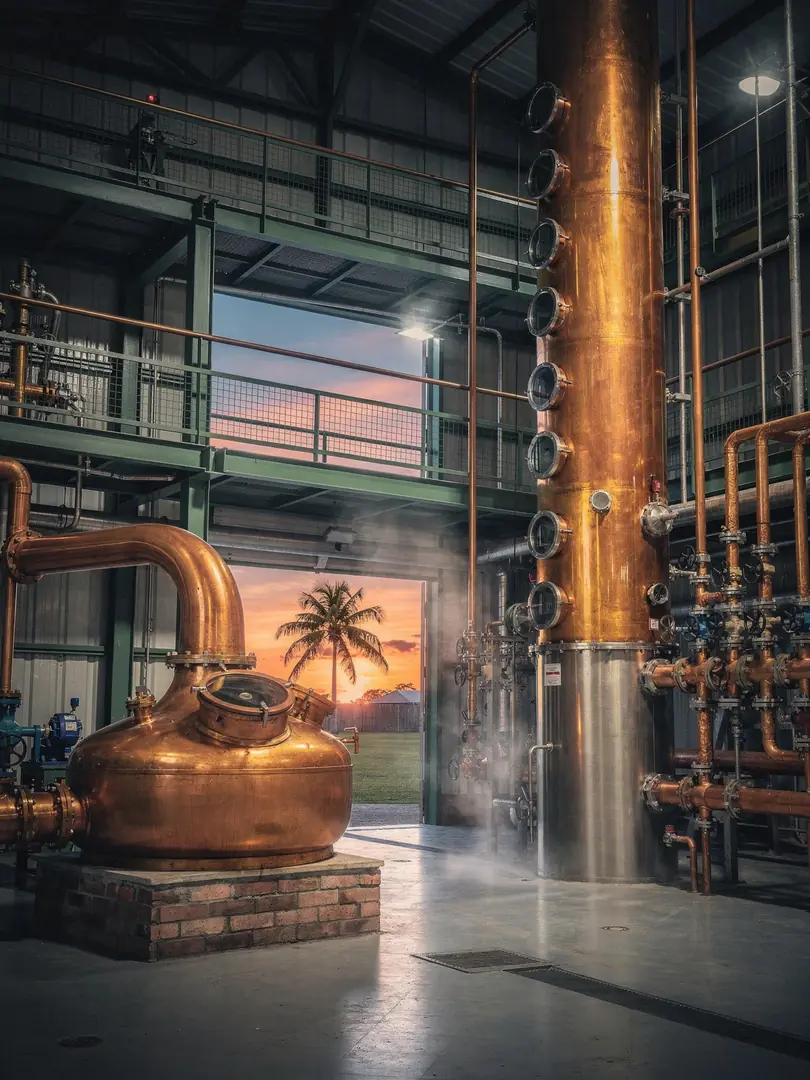
Column and pot
Distillation
The heart of a rum distillery is hot, loud, and made of copper. On Trinidad, it has two faces. In Laventille, Angostura, according to the company, works with a continuous multi-column still: the fermented wash flows in without interruption, and the alcohol collects at the top. The distillate rises column by column, growing ever finer.
In a column, steam rises through many plates, picking up alcohol and light flavour compounds along the way, while heavier congeners stay behind at the bottom. Several columns in sequence sharpen the result even further. Under EU law, the distillate must stay below 96 percent ABV so that it still tastes of rum. Water then brings it down to drinking strength.
Caroni distilled in a completely different way. According to trade press reports, cast-iron stills stood there first, later pot stills and columns. A pot still is a copper kettle that works batch by batch; it leaves many congeners in the distillate, and those are exactly what a bold, earthy, heavy rum needs. That is the recipe behind what connoisseurs call Heavy Trinidad.
Angostura's brands, such as 1919 and 1824, are based on the same column distillate and differ only through ageing and blending. Caroni, by contrast, is distinguished by vintage and strength. Velier bottled some casks without dilution: a 1982 Caroni went into the bottle at 62 percent ABV after 23 years.
Gargano and Seale privately classify rum by distillation method rather than colour. A modern multi-column still is simply called "rum" there, while a blend of pot still and column distillate from the same distillery is called "Single Blended Rum". Legally this is not a standard, but the classification helps distinguish the island's two faces.