Yeast and esters
Fermentation
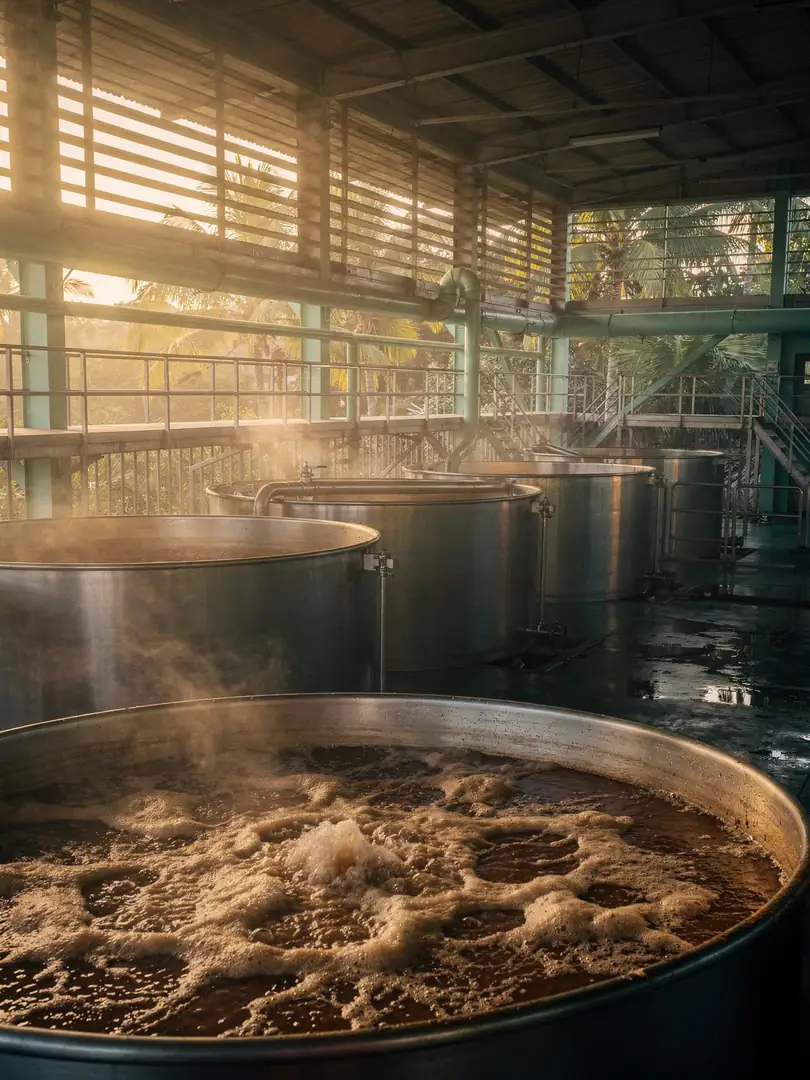
In the fermentation room of a molasses distillery, the air smells of bread, banana, and yeast. There, the molasses is diluted with water until a thin brown mash with just a few percent sugar remains. Then yeast is added, a fungus that consumes the sugar and releases alcohol, carbon dioxide, and flavour compounds in return. After a few days, a wash has formed that is barely stronger than a robust beer.
Yeast comes in two kinds. Wild yeasts live in the air and on the equipment, while cultured yeasts come from a laboratory. Wild yeasts produce a more varied but less predictable rum, cultured yeast delivers the same wash week after week. Large column distilleries therefore often rely on cultured yeast; Angostura describes its own fermentation as controlled.
During fermentation, acids and alcohol form esters, compounds that smell of fruit, blossom, or sometimes solvent. The longer and more acidic the fermentation, the more esters develop. Where a distillery keeps fermentation to a few days, the rum tends to stay lean; where it runs for over a week, ester levels climb.
How the fermentation vessels look matters less than one might think. Wood harbours its own microbes and gives them a home, while stainless steel can be kept low in germs and precisely cooled. Fermentation generates heat, and at excessive temperatures the yeast dies off or produces unwanted compounds. Control, then, is mainly about temperature management.
For Trinidad, this means: the heavy rums of Caroni owe their reputation to the interplay of molasses, fermentation, and still. The lighter rum of Angostura comes from a fermentation aimed at consistency and a column that filters much of it back out again. The very same molasses can thus lead to two entirely different rums.