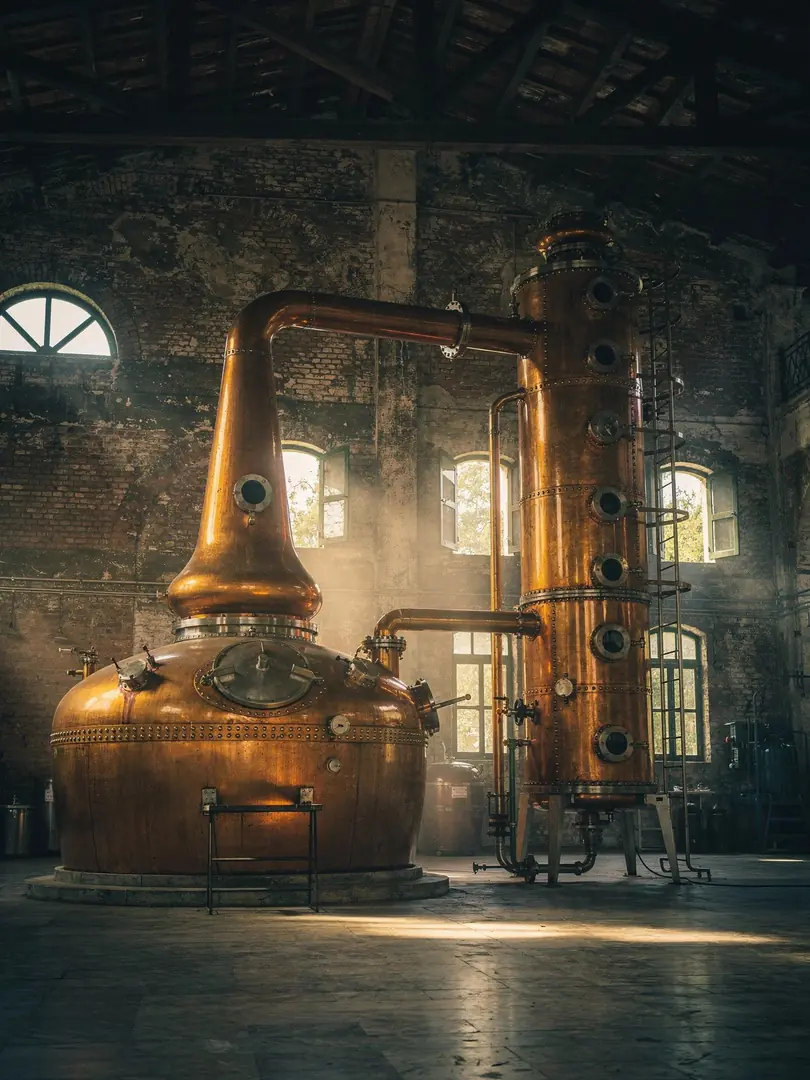
Pot and Column
Distillation
A pot still, or Kesselbrennblase in German, operates in batches. You fill it, heat it, collect the distillate, empty it, and start again. The result is bold and heavy, because many fermentation byproducts carry over into the spirit. Because the pot still retains more aroma, it's considered the tool for full-bodied rums, while the column shapes the lighter style.
A column still, by contrast, runs without pause. The wash flows in at the top, steam rises from below, and on the plates inside, alcohol and water separate step by step. The result is a pure, light distillate with a high alcohol content. For rum, the EU permits values no higher than just under 96% ABV. This means fewer congeners remain in the distillate, the rum tastes more neutral, and it needs the barrel to develop character.
When distilling in the pot still, the distiller divides the run. The heads, with their sharp, pungent compounds, are discarded, the heart goes into maturation, and the tails often go back into the next batch. These cuts matter enormously, as they determine how clean or powerful the rum will turn out.
According to the house, Hacienda Santa Teresa blends both types of distillate. Its solera rum Santa Teresa 1796 is made from rums produced on both pot and column stills. The hacienda's first stills, according to its history, arrived in El Consejo from Germany and France in 1896.
After distillation, a colorless, sharp distillate sits in the tank. It's only diluted to drinking strength later, once maturation is complete. For Venezuelan rums, the typical bottling strength ranges from 40% ABV to just above, while the legal minimum in the EU is 37.5% ABV.