Yeast and Time
Fermentation
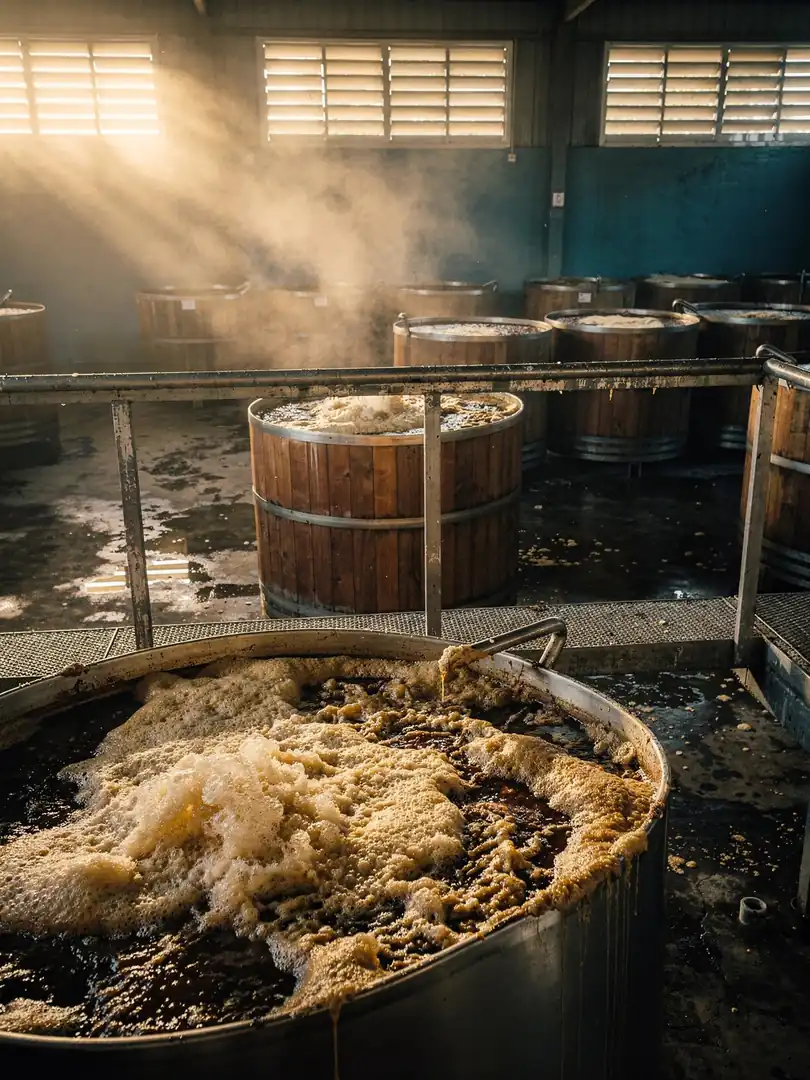
In the fermentation vats, sweetness turns into alcohol. The distillery dilutes the molasses with water and adds yeast. The yeast consumes the sugar, releasing alcohol and carbon dioxide, and the surface foams as if the mash were boiling. How high the alcohol level climbs is limited by the yeast itself: beyond a certain point, it dies off in its own byproduct, and fermentation comes to a stop.
How long this takes shapes the character of the rum. Hampden in Jamaica used to let its molasses ferment for nine to ten days, yielding aromas ranging from banana to glue. The Spanish style, to which Ron de Venezuela belongs, mostly favors shorter, cleaner fermentations. These produce a light distillate with little aroma of its own.
This comes down to esters. These are fragrant compounds that form when acids and alcohol combine. The longer and wilder a fermentation runs, the more of them develop, and the fruitier, sharper, or funkier the rum becomes. Venezuelan houses mostly aim for smoothness rather than intensity.
Yeast plays its part too. Cultured yeasts, propagated in a lab, ferment evenly and predictably. Wild yeasts from the stalks and the air are less predictable but lend the rum extra layers of aroma. Which strains a house like Hacienda Santa Teresa uses often remains a closely guarded trade secret.
Then there's the heat. In the tropical Valles de Aragua, fermentation runs fast, and the yeast generates its own heat in the process. Stainless steel vats can be cooled and cleaned easily, while wood interacts with its own resident microbes. Today, fermentation often takes place in stainless steel, since it delivers consistent results. After a few days, a beer-like wash with a few percent alcohol is ready, and the pot still takes over.