Solera in the Valley
Cask & Climate
Freshly distilled, the rum from Aragua is colorless and sharp. Only the wood turns it into an añejo, the term used in Spanish-speaking countries for aged rum. For Ron de Venezuela, the DOC requires a minimum of two years in oak barrels. A rum that hasn't matured that long may not carry this name, regardless of whether it ends up pale or dark in the glass.
The warm climate of the Valles de Aragua accelerates maturation. The wood stays active, the rum picks up color, vanilla, and tannins faster, and at the same time, a significant amount of alcohol and water evaporates through the pores of the staves. Trade publications often cite around eight percent per year for tropical aging, compared to roughly two percent in Scotland. This is known as the angel's share.
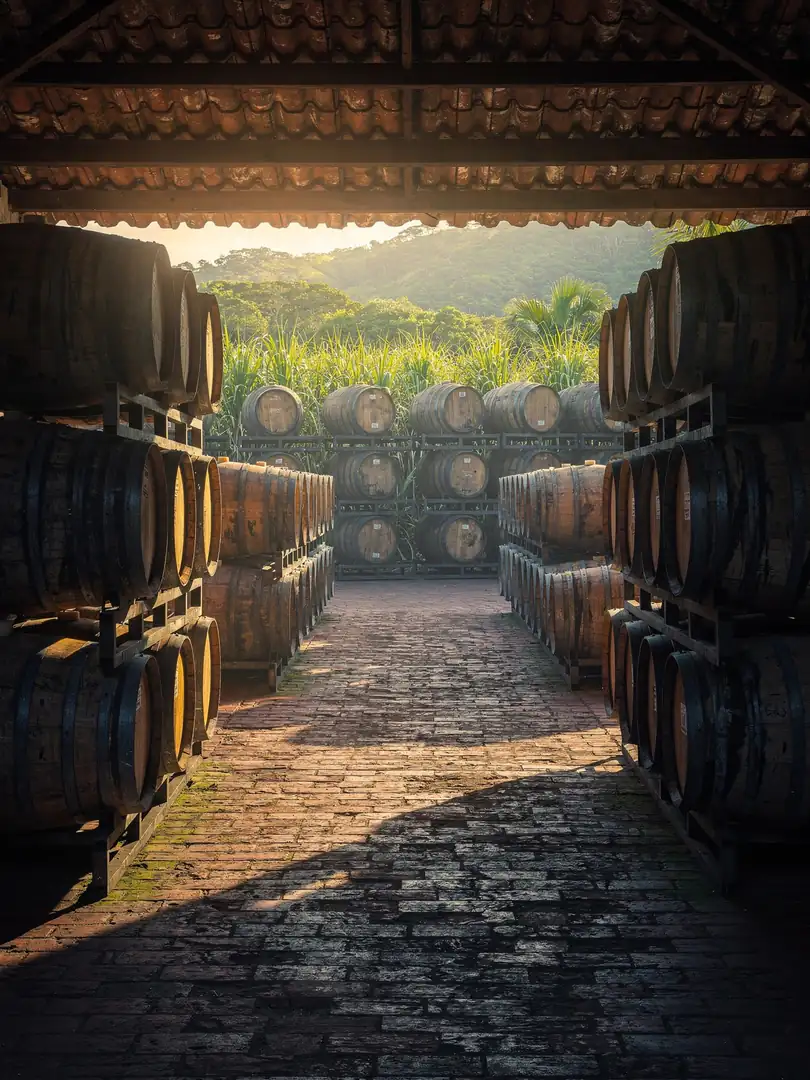
According to the house, Santa Teresa ages its 1796 rum using a solera system. The method originates from the sherry bodegas of Spain. The barrels are stacked in rows, and only a portion is drawn from the bottom row for bottling; what's removed is then replenished from the row above, which in turn is topped up from the next row up. According to the house description, a final maturation follows in large vats made of French oak.
The advantage of the solera system lies in its consistent flavor. Because the system is never fully emptied, old and young portions blend together year after year, so the bottle tastes the same today as it did in years past. The trade-off is the absence of vintages: a solera bottle contains rum from many years, never from a single one.
EU law governs what an age statement on the label actually means. It must refer to the youngest component in the blend, and the maturation must have taken place under excise supervision. The number in the name Santa Teresa 1796, by contrast, is a founding year, not an age statement. With solera numbers on other labels, it's always the oldest component that's referenced, not the average.