The Venezuelan Añejo
Rum Style
Venezuelan rum belongs to the Spanish school, in which rum is meant to be light, smooth, and approachable early on. It's distilled from molasses and aged in oak barrels, rather than from fresh cane juice as on Martinique. It's a world away from Jamaica's bold, ester-driven style.
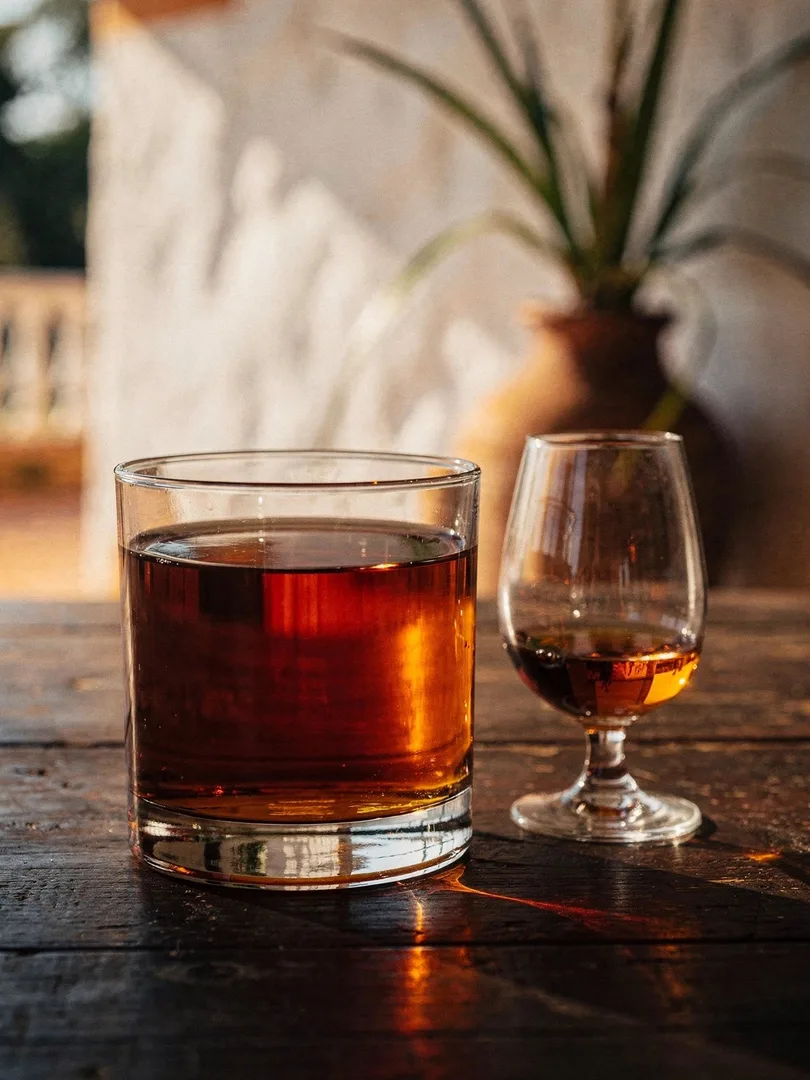
The defining style is called Ron de Venezuela. This isn't a brand but a protected designation of origin: to carry this name, producers must use Venezuelan raw materials and age the rum for at least two years in oak barrels. In the glass, it typically shows mild aromas of vanilla, caramel, dried fruit, and toasted notes, with little sharpness on the finish. Maturity shows in the color, but also in the woody character, which becomes more pronounced the longer the rum spends in the barrel.
A second defining style is the solera blend, exemplified by Hacienda Santa Teresa's rum 1796. Here, rums of various ages from both pot and column stills are blended together, and the result tastes round, spicy, and consistent. The brands Cacique and Pampero, by contrast, represent the rum Venezuelans know from everyday life.
When it comes to grade designations like Añejo, Reserva, or Gran Reserva, the DOC offers little guidance. These are trade terms without a uniform standard; only the minimum age of two years is fixed by the designation of origin. Anyone wanting to know how mature a rum truly is should read the age statement on the label and check whether it refers to the youngest component.
Because the DOC sets the minimum age, it serves as a useful guide. A Ron de Venezuela is always an aged rum; an unaged, crystal-clear rum may not carry this name. The difference from the rums of the neighboring Lara region lies not in the rules, but in the houses that apply them.
Ron de Venezuela (DOC)Molasses · Pot still and column still
- Alcohol
- 40–43 % vol
- Cask ageing
- 2–25 Years
Smooth and round, vanilla, caramel, dried fruit. Minimum two years in oak.