Island base wine
Base Wine & Cuvée
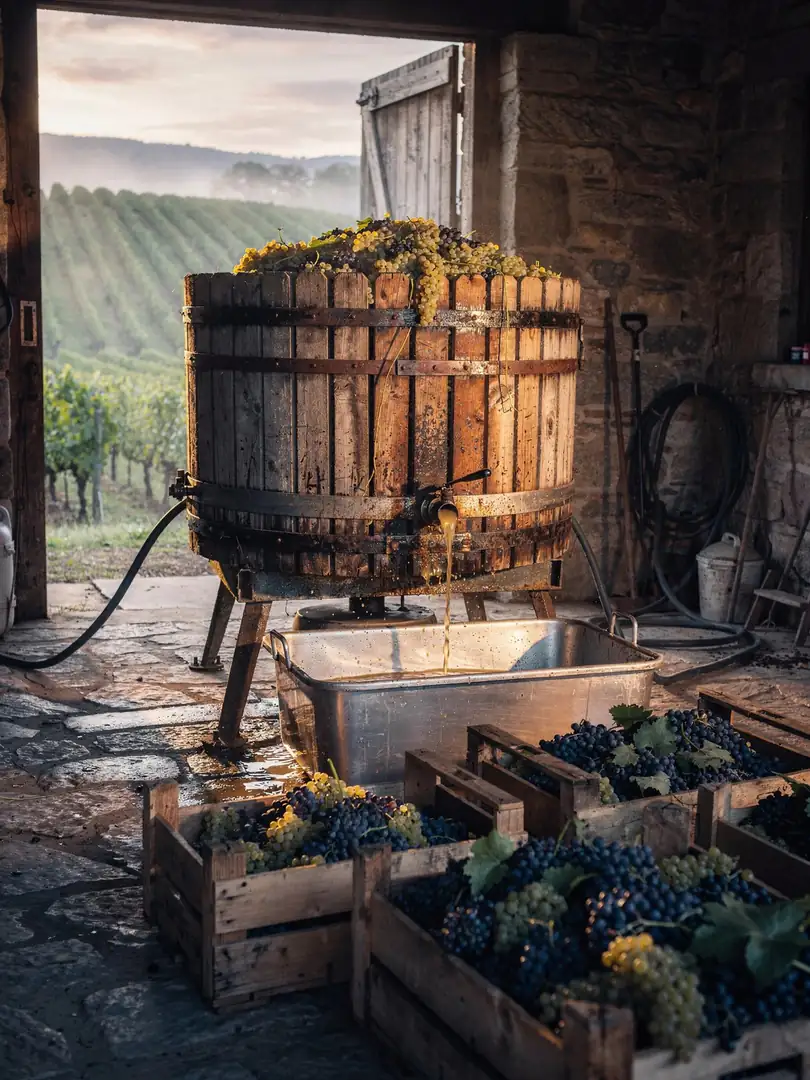
A Tasmanian sparkling wine begins as a still wine known as the base wine. The grapes are picked early so that acidity stays high and alcohol stays low, then gently pressed. The juice from the first pressing is considered the finest and is called the cuvée; the rest is the taille, which turns out stronger but coarser. Each house decides how much of each goes into the wine.
The following winter brings the assemblage, the blending of the base wines. From Chardonnay, Pinot Noir and, where used, Meunier, from different parcels and sometimes from several vintages, the house style takes shape. Older wines held back for this purpose are called reserve wines. They give a non-vintage wine its consistent character. Jansz calls its line "Premium Cuvée" and "Premium Rosé". Bay of Fires bottles a "Tasmanian Cuvée Brut" and a "Cuvée Rosé". Jansz's first wine was a vintage sparkling wine: the Vintage Cuvée 1989.
Vintage versus non-vintage: a vintage wine comes from grapes of a single year, meaning the conditions of that year are noticeable. A non-vintage wine, by contrast, blends several years in order to hit the same house style every time.
It's worth noting where the base wines go. According to reports, many mainland producers own their own cellar facilities on the island, where they make the base cuvée before transporting it to the main winery. Domaine Chandon and the group that makes Arras and Bay of Fires have, according to these reports, sourced their base wines from Tasmania for years. Chandon is the Australian arm of Moët & Chandon, part of LVMH. This shows just how sought-after the island's acidity is.
For anyone asking what distinguishes Blanc de Blancs from Blanc de Noirs: Blanc de Blancs is made only from white grapes—in sparkling wine, that means Chardonnay. Blanc de Noirs comes from red grapes, here Pinot Noir or Meunier, pressed to yield pale juice. Both can be made on the island from locally grown grapes.