Three Catalan Varieties
Macabeo, Xarel·lo, Parellada: The Cava Grapes
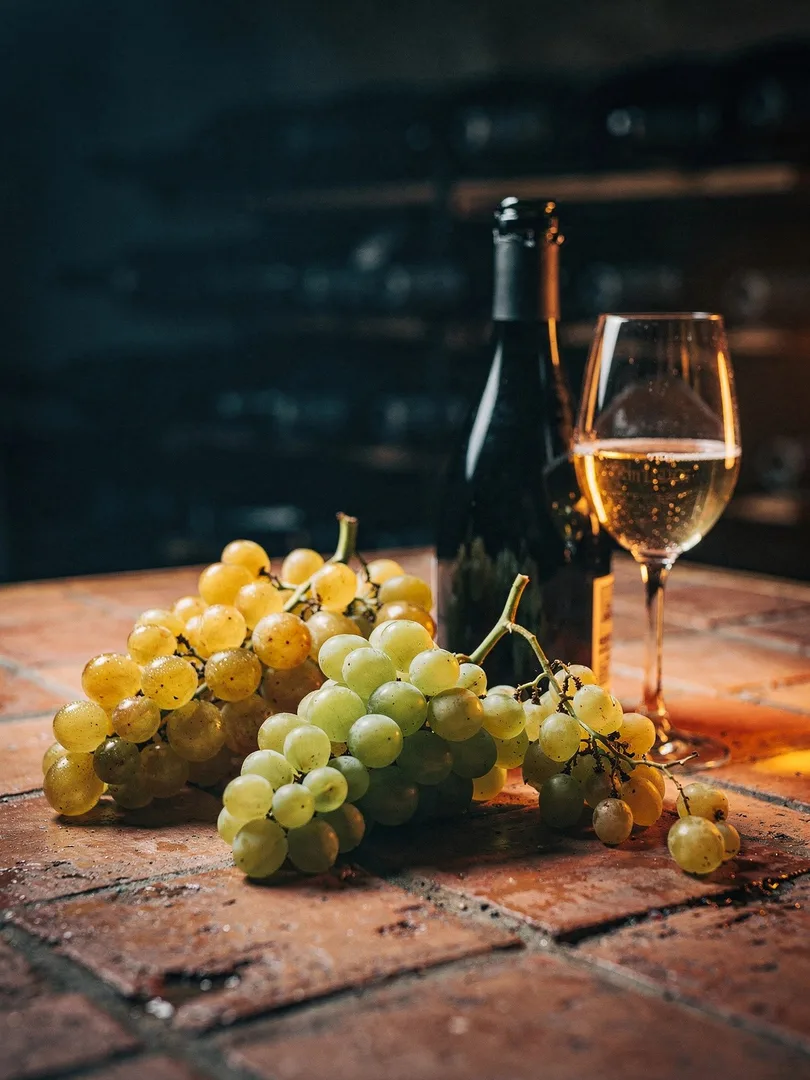
Cava is made mainly from three white varieties: Macabeo, Xarel·lo and Parellada. Together they accounted for around 82 percent of the 37,299 hectares of Cava vineyard area in 2025. They're complemented by Chardonnay, Pinot Noir, and for rosé, by Garnacha, Trepat and Monastrell.
Which Grape Varieties Go Into Cava?
The D.O. Cava figures for 2025 paint a clear picture. Macabeo covers 36.5 percent of the area, Xarel·lo 26 percent and Parellada 19.2 percent. Next come Chardonnay at 6.7 percent, Garnacha tinta at 5.2 percent, Trepat at 3.1 percent and Pinot Noir at 2.3 percent. Subirat Parent and Monastrell together make up less than one percent.
Here lies the difference from Champagne. There, one white and two red varieties dominate the vineyard area; in Cava, it's three white grapes that are barely known outside Spain. All three are native to Catalonia, especially the Penedès southwest of Barcelona; around 95 percent of Cava comes from the Comtats de Barcelona zone. Because Cava is always fermented in the bottle, Champagne and Cava are similar in method. In taste, however, they differ considerably, and much of that comes down to the grapes.
Macabeo: Fruit and Fullness
Macabeo, known as Viura in Rioja, is the most widely planted Cava variety. It grows in Catalonia as well as in the Cava zones along the Ebro. In the base wine, it provides fruit and fullness: ripe apple, pear, white blossoms and a pleasantly rounded mid-palate. Its acidity is moderate, its aroma restrained.
On its own, Macabeo would make a rather flat sparkling wine that also oxidizes easily, meaning it loses freshness quickly when exposed to air. In a blend, it ensures that a Cava tastes approachable and fruity from an early stage. This explains its high share in young Cavas, which are sold as Cava de Guarda after the minimum nine months on the lees. For long-aged Cavas, it needs a partner with more acidity and structure. Only when blended with the other two varieties does it become a balanced Cava.
Xarel·lo and Parellada: Backbone and Aroma
Xarel·lo, pronounced roughly "sha-rel-lo," is the most powerful of the three varieties. It provides acidity, structure and extract, meaning the non-volatile components that give a wine weight. Its aroma suggests citrus, green herbs and sometimes fennel. Because Xarel·lo ripens slowly and stays fresh for a long time, producers of long-aged sparkling wines from the Penedès often rely heavily on it. In the Alella area, it's known as Pansa Blanca.
Parellada is the counterpart. It prefers the higher, cooler sites of the Penedès and yields delicate, floral wines with fresh acidity and relatively low alcohol. It brings aroma and lightness to the blend. The classic Cava blend thus combines the fruit of Macabeo, the backbone of Xarel·lo and the aroma of Parellada. Each producer chooses the proportions; the D.O. doesn't prescribe a fixed formula. A Cava with a high share of Parellada comes across as lighter and more floral, while one with a lot of Xarel·lo feels more powerful and austere.
Chardonnay, Pinot Noir, Trepat: The Supporting Varieties
Chardonnay is today the most important non-Spanish variety in Cava. It lends the blend finesse and a note reminiscent of French sparkling wines. Some producers bottle it as a Blanc de Blancs, others add it in small proportions to the Catalan varieties. How much goes into the blend is up to each producer. Pinot Noir is used mainly for rosé and for white-pressed Cavas made from red grapes.
For Cava Rosado, mainly red varieties are used. Garnacha contributes ripe red fruit. Trepat, an old Catalan variety from the inland area around Tarragona, yields pale, fresh rosés with notes of strawberry. Monastrell is rare. In 2025, 13.98 million bottles of Rosado left the wineries, out of a total of 190.01 million bottles of Cava. How Cava zones and aging tiers are structured is explained in the theme journey on types of sparkling wine.