Spontaneous Fermentation
Fermentation & Distillation
No sooner is the Tzawarmishky collected than it begins to change. Still sweet and honey-colored straight from the plant, it tips toward acidity within a few days. This begins as soon as yeasts from the air and from the agave itself start to work.
Most of this fermentation happens wild and spontaneously, carried by microorganisms that have settled in place, in vats and containers. Some more modern operations now add selected yeasts deliberately, to make the result more consistent. In essence, it's the same process that turns agave sap into pulque in Mexico. With Miske, this fermented sap is then distilled as well.
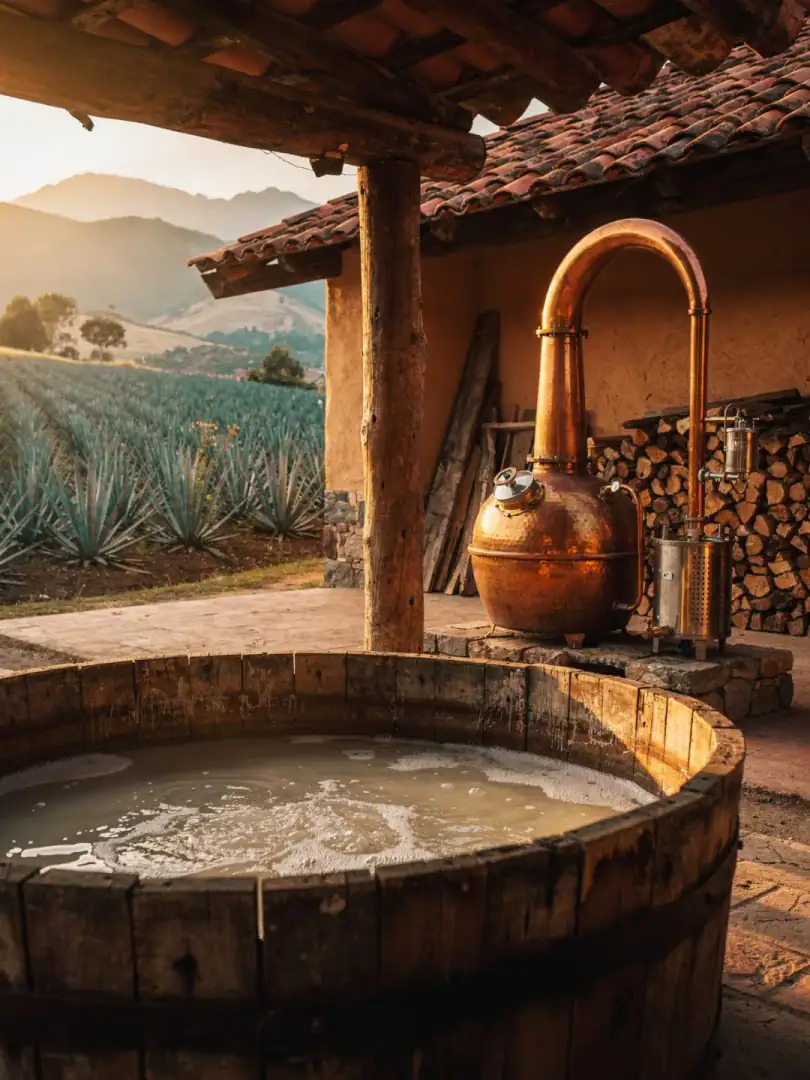
Once fermentation is complete after a few days, the mash goes into the still. This is usually made of copper or stainless steel, depending on what a producer can afford. Unlike tequila, where at least two distillation runs are mandated, no regulation sets a fixed number for Miske. Smaller producers often distill only once. Larger ones, like Chawar or Casa Agave, distill the mash a second time. This removes harshness and clarifies the aromas.
The first run comes out of the still with considerably more alcohol than ends up in the bottle. The second run serves mainly to capture this raw spirit and bring it to drinking strength. How strong a Miske ends up being is decided by each producer individually. A binding upper or lower limit, as exists for tequila, does not yet exist for the Miske designation of origin.
In many family-run operations, the still still stands in the same courtyard where the sap is collected during the day. It's a short path from field to bottle, with no intermediate storage, no large trucks. This differs markedly from the industrial facilities of some tequila brands.