Locro Instead of Lime
Food & Drink
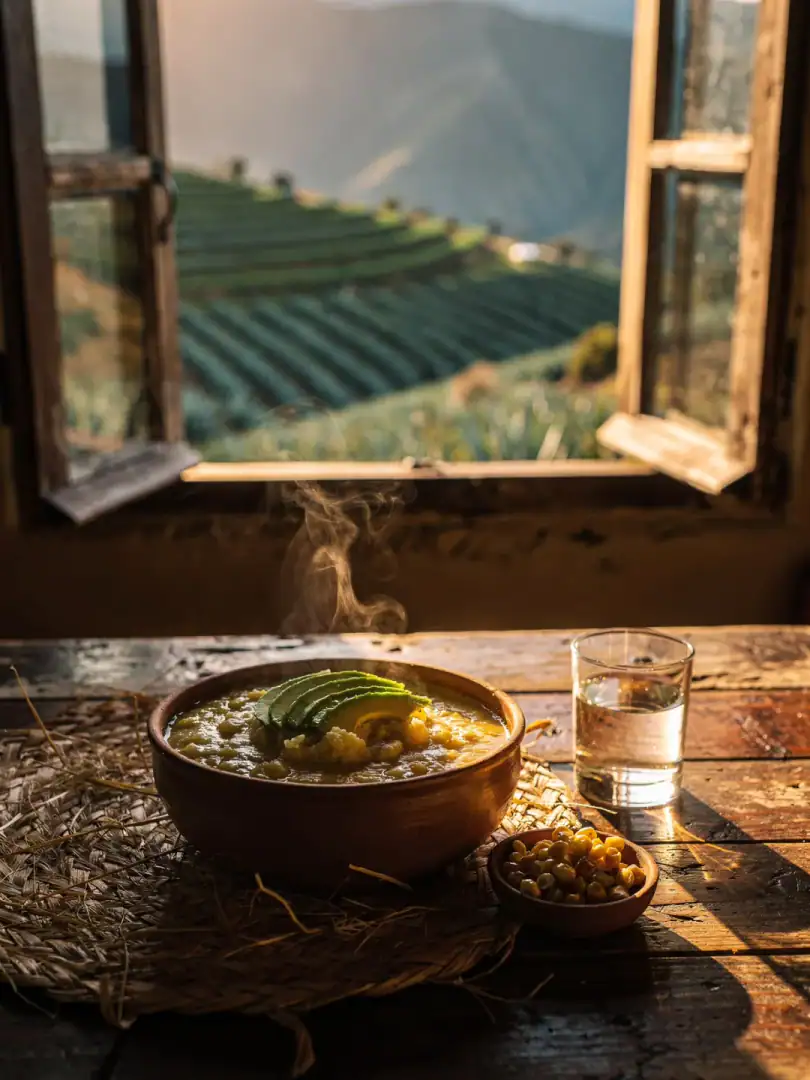
Locro de papa steams in shallow bowls before anyone even thinks about drinking. It's a thick potato soup with melted cheese, served with avocado. From Cotopaxi to Chimborazo, it's one of the cornerstones of Andean cuisine.
At festivals and weekly markets, Hornado often joins in, a whole pig, slow-roasted in the oven. It's served as soon as the skin turns crisp and bursts open, usually with corn kernels and potato pancakes. It's a dish for many hands, meant for sharing, not for a quick plate alone.
Only once a year, during Holy Week before Easter, Fanesca is cooked in many Andean households. It's a soup made from twelve types of grains and legumes with salted cod. The twelve ingredients are meant to recall the twelve apostles. Outside these weeks, it's hardly available, even to order.
Miske has no fixed place at the table in this cuisine, the way wine does in Europe. It's drunk more at the edges of such occasions: after the harvest, at family celebrations, and also when the day's work in the fields is done. In the communities that still grow the Tzawar themselves, it's often the same circle of people. They've harvested during the day and distilled in the evening. For many, a round of drinks at the edge of the field counts for more than a feast.
What connects Locro, Hornado, and Fanesca to Miske is less the plate than the origin. Potatoes, corn, beans, and agave grow in the same valleys, often cultivated by the same families. Whoever understands one ingredient usually understands the other, too.