Green Instead of Smoke
Tasting
Smoke is often expected when someone tries Miske for the first time, and it doesn't show up. A certain sharpness, familiar from young tequila, is also often anticipated. Because nothing is roasted or cooked in Miske production, the toasted note that many people automatically associate with agave spirits is simply absent.
Instead, herbaceous, slightly earthy tones set the tone. At times, a floral or fruity side joins in, depending on how ripe the Tzawar was at harvest and how long fermentation lasted. It's a flavor that stays closer to the raw sap of the agave than any other agave spirit. Between plant and bottle, there is simply no fire.
A Blanco from Casa Agave in Pomasqui shows this particularly clearly: clear, vegetal, no detours. Chawar from Yaruqui, with its internationally awarded bottlings, strikes a somewhat more polished note without losing its green core character. Both distilleries lie just under an hour's drive from Quito and can even be visited by appointment, right in the middle of their own agave fields.
A significant share of the raw material for Chawar comes from Mishkita, a collective of women from the area around Cayambe. They collect the Tzawarmishky and deliver it to the distillery daily. For many of them, this has become a steady income and, in quite a few families, the most important one of all.
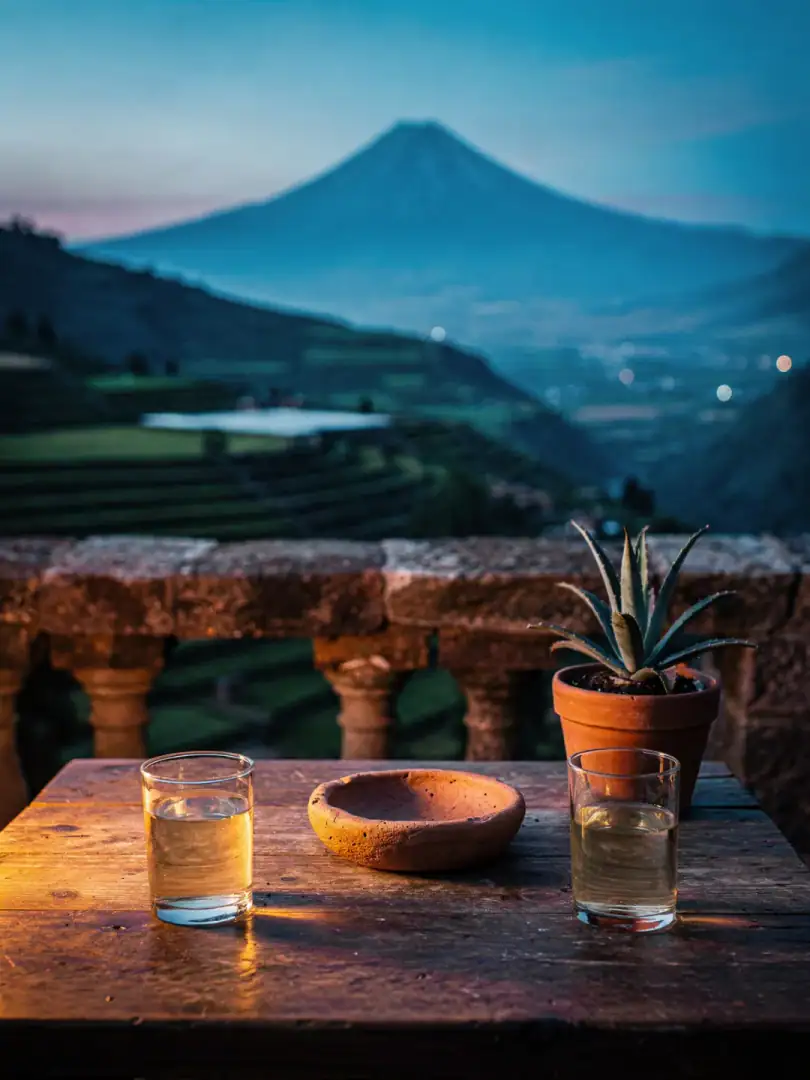
Miske is tasted neat, in a small glass, at room temperature. This allows the fine, green notes to unfold before ice or mixers cover them up. It's meant as a brief moment on its own, not as an ingredient for a long night of cocktails.