Protected Agave Juice
Region & History
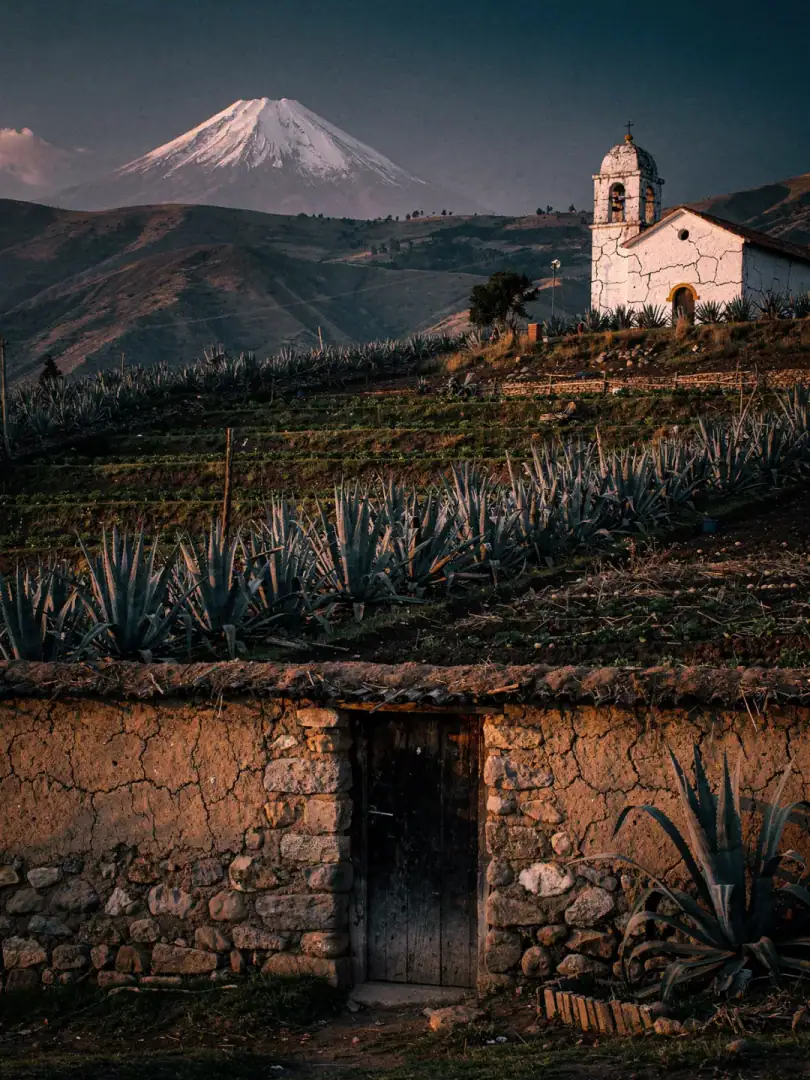
Long before anyone in Ecuador thought about alcohol, the people of the Andean corridor around Quito knew the sweet juice of the agave. They called it Tzawarmishky, from the Kichwa words for agave (Tzawar) and sweet (Mishki). It was drunk fresh or lightly fermented, serving as both a sweetener and a staple food.
Only around 1970 did individual families begin distilling this juice instead of simply fermenting it. What had been a kitchen beverage slowly turned into a spirit, distilled in small batches, mostly for personal use. It wasn't until the 2010s that the first distilleries, such as Casa Agave and Chawar, began selling it commercially. A niche tradition became a trade good.
This step was driven by Anagavec, the national association for the value chains of Penco and Kabuja, the agave fiber. The association today counts over 140 members, smallholder farmers, indigenous and mestizo alike, spread across the entire Andean corridor. Together with the intellectual property office SENADI, it secured the designation of origin for Miske, officially declared by the office in March 2023. It is the seventh designation of origin Ecuador has ever granted, and to this day the only one for an alcoholic beverage.
The protection defines what every bottle bearing this name must fulfill. The sugar must come 100 percent from mature Tzawar, with no dilution or additives allowed. This is exactly what separates Miske from Tequila and Mezcal, both in process and in name. Anyone who cooks the piña, the heart of the agave, in an oven or autoclave, makes Tequila or Mezcal. Anyone who instead taps the raw juice from the living plant, then ferments and distills it, makes Miske. That drink may bear no other name.
Production remains small to this day. Most operations are family businesses. Some still deliver the juice daily by the bucketful, while others have since planted their own agave fields. For the Kichwa communities of the Sierra, this protection means more than a quality seal. It legally recognizes a centuries-old practice that was long dismissed as mere folklore.