Heat, Frost, Drought
Altitude & Climate
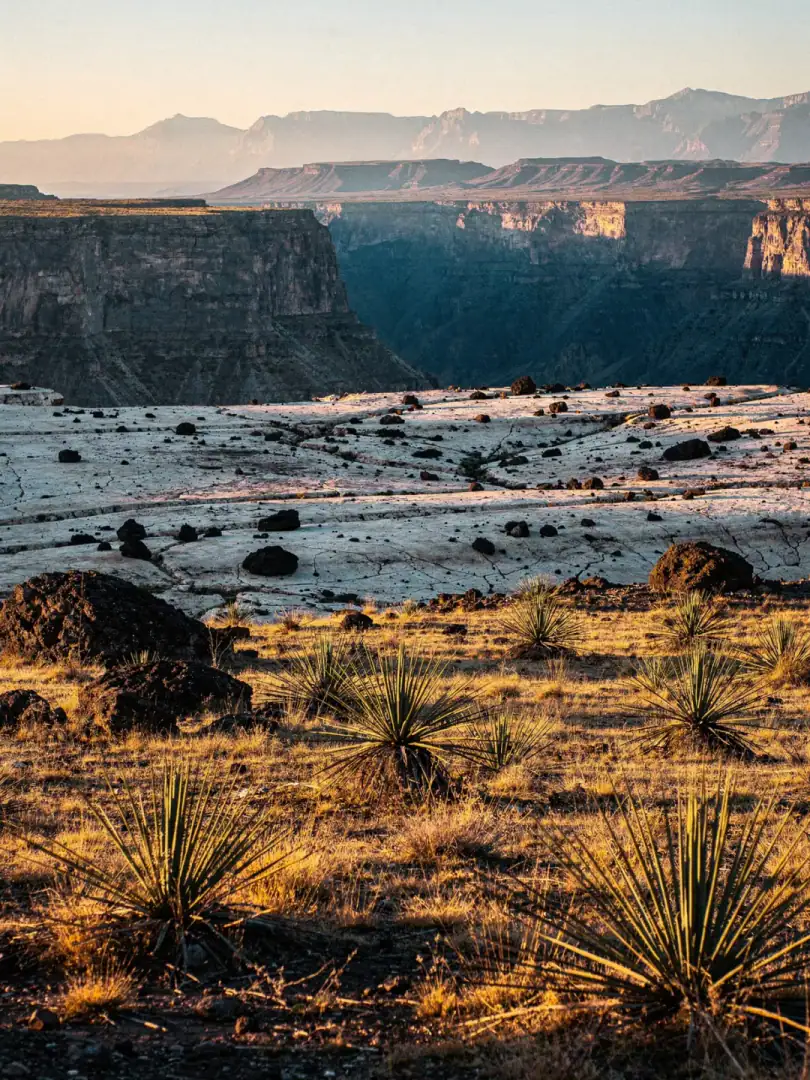
The city of Chihuahua sits at roughly 1,400 meters (4,600 feet) above sea level. The surrounding desert stretches from flat highlands to the deep canyons of the Sierra Madre Occidental, including the Barrancas del Cobre. Scree, cacti, and the sprawling rosettes of Dasylirion define the landscape there.
Rain falls rarely and unevenly. Across much of the Chihuahuan Desert, annual rainfall totals less than 500 millimeters (about 20 inches), most of it concentrated in the summer months of July and August. In some years, rain fails to appear at all for months on end.
In summer, temperatures climb above 38°C (100°F). In winter, the thermometer drops below freezing at higher elevations. Year after year, Dasylirion stands between heat stress and frosty nights. Neither extreme fazes the plant.
This constant back-and-forth shapes the plant. During the brief rainy weeks, it barely grows at all. During the long dry spells, it stores sugar in its root bulb instead, to survive the next drought. Over twelve to fifteen years, this accumulates into a dense, mineral-rich sugar core.
You can taste this slow build-up in the finished Sotol. The flavors show less fruity sweetness than agaves ripened in more tropical climates, but more minerality, dry herbs, and an earthy edge. This particular flavor is hard to find in wetter regions.
Even the Sierra's canyons change little. The higher elevations of the Barrancas del Cobre bring cooler nights, but no reliable rainfall. For Dasylirion, the desert remains the rule, not the exception. To understand the plant, you first have to understand the scarcity of water.