Earthen Pit or Steam
Cooking & Milling
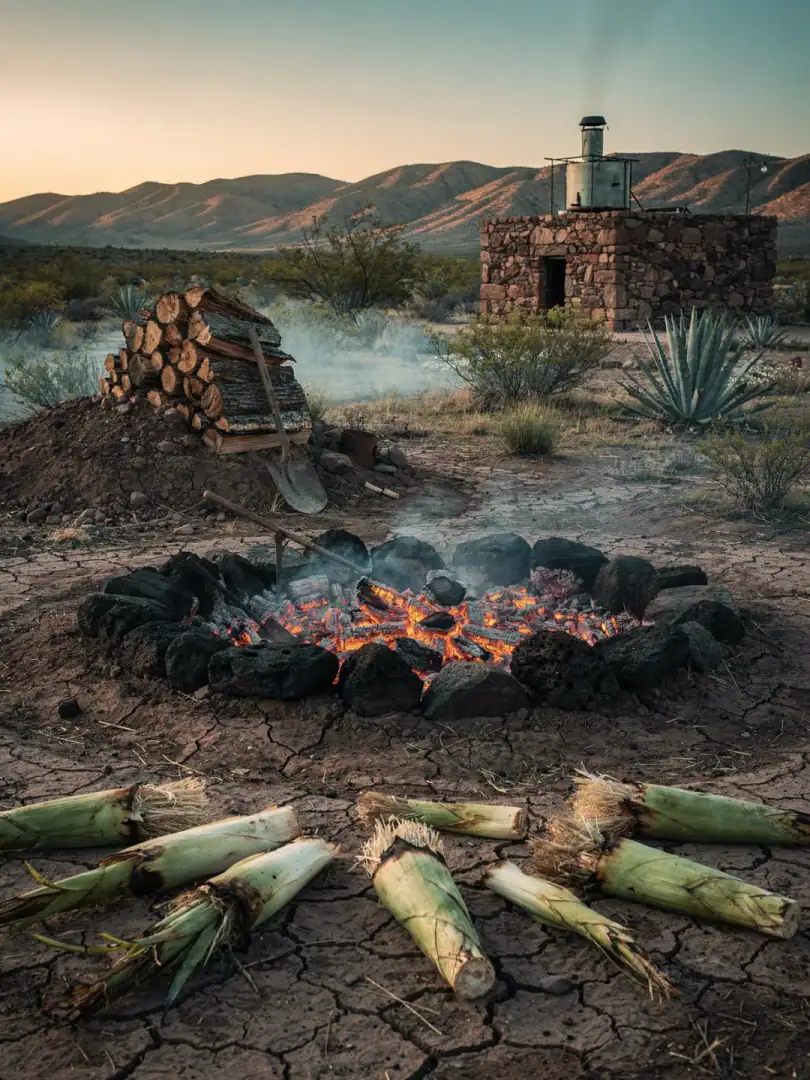
Cooking begins in the ground. Many Sotol producers clear away the spiny heart of the plant. They then place it in a pit lined with stones and cover it with earth and firewood. There, the hearts roast for three to four days at a steady heat.
This is how, for example, the family behind Sotol Por Siempre works in the Sierra Madre. The hearts are roasted underground, then broken down by hand with axes until only fibrous, sweet pulp remains.
Larger operations like Hacienda de Chihuahua in Delicias instead rely on steam-heated ovens. Inside, the hearts cook more slowly and evenly, without the smoky flavor imparted by the earthen pit. Both methods are permitted for Sotol. For tequila, by contrast, the autoclave is technically allowed, but the horno de mampostería is considered traditional.
After cooking, the pulp is milled, still most often by hand with an axe or with simple mechanical mills. Less commonly, a stone tahona is used, as is customary for mezcal. The crushed fibers, along with their juice, then go straight into the fermentation vats.
Which of the two cooking methods a producer chooses determines the character of the finished Sotol. Earthen pit means smoke and earth in the glass; steam oven means clarity and pure plant flavor. Neither kitchen produces tequila or mezcal, since both require a different plant and a different region.
Anyone visiting the producers of the Clande cooperative sees both worlds side by side. Family recipes using earthen pits stand next to more modern neighbors who have switched to steam for greater consistency.