Blanco to Añejo
Aging
When it comes to aging, Sotol takes its cues from the familiar categories of agave spirits. Its own regulations, though, are less strictly defined than those for tequila or mezcal. Unaged and clear, the young bottling is usually called Plata or Blanco.
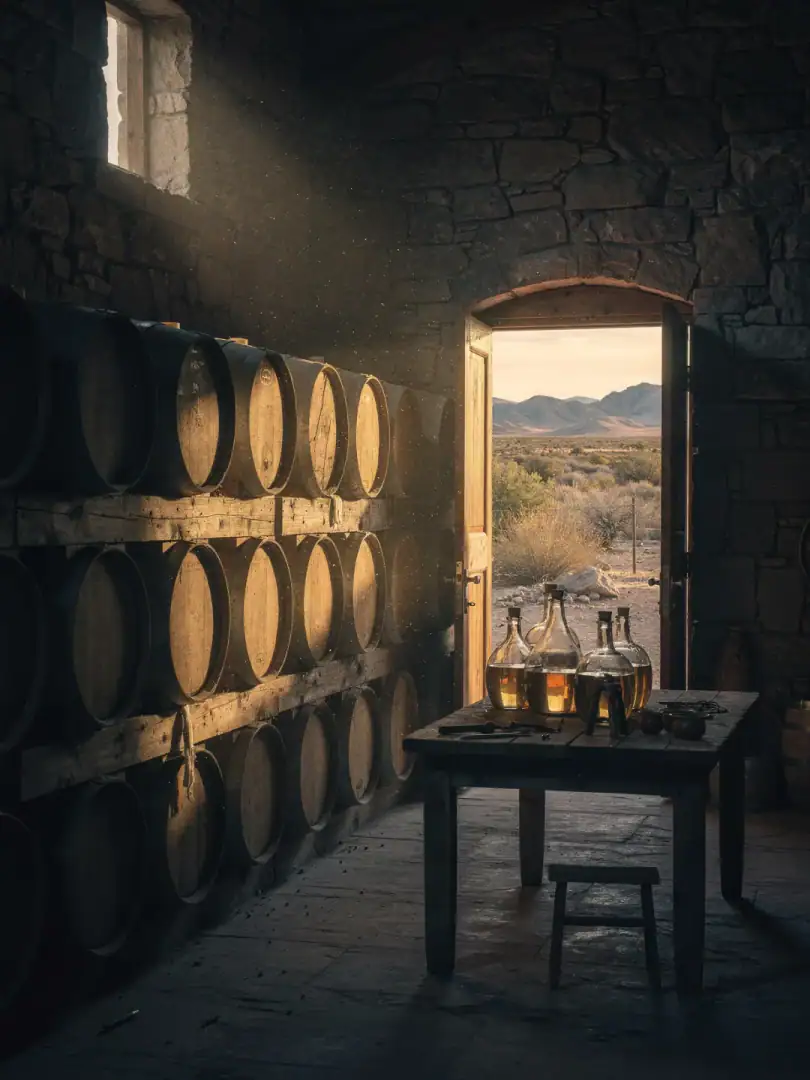
Hacienda de Chihuahua, for example, offers a Reposado and an Añejo alongside its Plata. Both age in oak barrels. According to the distillery, barrel aging brings vanilla and caramel notes to the distillate, which already tastes bold and earthy on its own. A Rustico bottling, left unfiltered, also belongs to the lineup, said by the producer to stay especially close to the raw material.
Many smaller producers, like Sotol Por Siempre or the operations behind Clande, deliberately stick with Blanco instead. Unaged and straight from the copper still, this lets the flavor of the desert plant itself take center stage, rather than the wood.
On reputable labels, you'll find the name of the aging category, along with the Sotol designation of origin and a reference to the Dasylirion plant. Slapping a mezcal or tequila label on it would be mislabeling; in both of those regions of origin, it would simply be prohibited.
A separate category like mezcal's glass-aged Madurado has yet to become common for Sotol. What matters more here is the choice between untouched Blanco and wood-aged expressions. Both represent the same raw material, the desert plant, not the agave.
For collectors, this means: tasting a Sotol Blanco alongside an Añejo reveals mostly one contrast, raw desert plant meeting what oak wood makes of it over months. What you won't taste is two different regions of origin, since only this one region produces it.