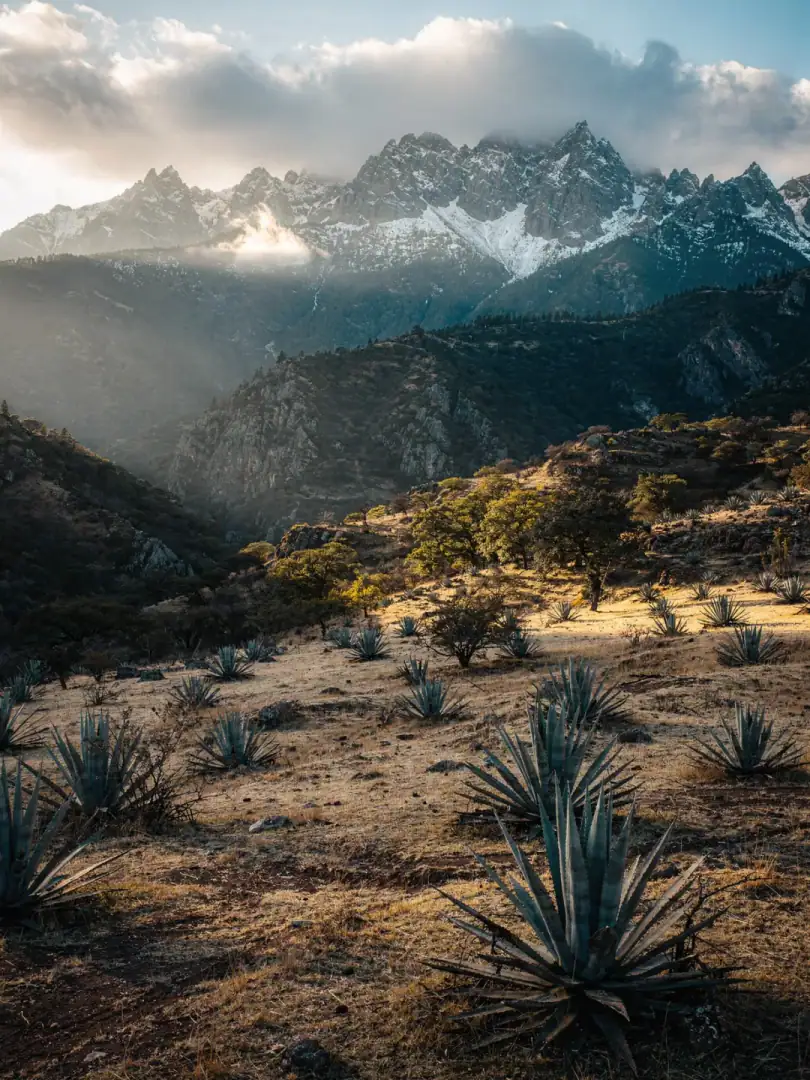
Altitude Meets Dryness
Altitude & Climate
Nombre de Dios sits at roughly 1,750 meters above sea level, in the middle of a basin enclosed like a wall by the Sierra Madre Occidental.
Further south, in the Municipio Mezquital, the land climbs above 2,000 meters. At the border with the Municipio Durango, the Cerro Pánfilo even reaches 3,180 meters. Between valley floor and peak often lie only a few kilometers, but entire worlds of climate.
In the valleys, it's dry and warm, while the Sierra brings cold winters, sometimes snowy, and heavy rain in summer. For the Cenizo, this means long dry spells, which it survives through its thick leaves, interrupted by short, intense downpours.
These extremes force the plant to grow slowly and store sugar over many years, rather than shooting upward quickly. Mezcaleros consider this very slowness one of the reasons wild Cenizo tastes more intense than agave from mild, irrigated cultivation.
Frost is no rarity in the Sierra. Where snow falls, young agaves risk freezing, though mature plants with their leathery leaves tend to withstand it better. Anyone harvesting here must keep the short windows between cold snaps and the rainy season firmly in mind.
This span between valley heat and mountain cold exists in only a few of Mexico's Mezcal regions, most of which lie lower and enjoy more even temperatures. It makes Durango one of the most demanding growing regions for agave in the entire country.
Rain falls almost exclusively between June and September; the rest of the year stays dry. For the region's agriculture, and for the agave, this brief rainy season is the most important stretch of the entire year.