Community Over Hacienda
Region & History
In Chilapa de Álvarez, Thursday smells of two things. Green pozole from the courtyards, and wood smoke from the palenques on the edge of town, where mezcal is made from wild agave. Since November 28, 1994, Guerrero has been one of the first five Mexican states, alongside Oaxaca, Durango, San Luis Potosí, and Zacatecas, to hold a Denominación de Origen for mezcal.
This means the following: only those distilling from mature agave in Guerrero's designated communities, without adding foreign sugars, may label their spirit "mezcal." Tequila remains reserved for a single agave species and a different region, far to the north in Jalisco. Anyone in Guerrero printing "tequila" on a label violates protected designation of origin rules, no matter how good the mezcal tastes.
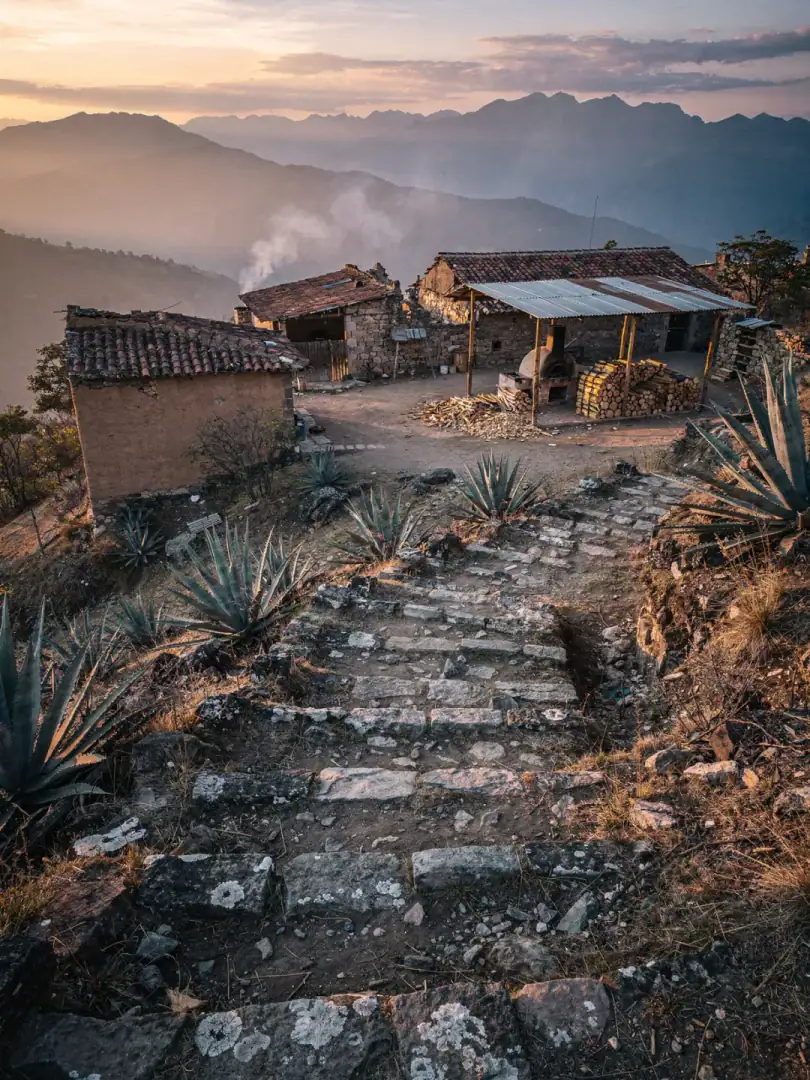
The grand haciendas that shaped tequila's history are nowhere to be found in Guerrero. Mezcal here comes from over 80 villages across 18 municipalities in the Centro, Norte, Costa Grande, and Tierra Caliente regions. Among them are Mazatlán near Chilpancingo (not to be confused with the port city of the same name in Sinaloa) and the highlands around Chichihualco in the municipality of Leonardo Bravo. As early as 2008, Guerrero's palenques were processing around 252.5 tons of agave on just 67 hectares of cultivated land.
One example of this collaborative approach is Sanzekan Tinemi, an alliance of mezcal makers from Chilapa de Álvarez, Zitlala, Ahuacuotzingo, and Tixtla, founded roughly three decades ago. Rather than clearing forest for new agave fields, they reforest and protect the springs that supply their water and firewood. In 2022, the state government began certifying and supporting 21 mezcal brands from operations like these.
The road here hasn't been easy. Violence in parts of the sierra has made work difficult for some palenques in recent years. Even so, Guerrero today ranks among Mexico's most important mezcal-producing states, second only to Oaxaca.