Herbs and Cinnamon
Tasting
Mezcal from the Papalote agave tastes less smoky than many expect. The nose is intense, almost floral. The palate stays gentler: connoisseurs describe notes of fresh herbs, cooked agave, and a hint of cinnamon.
A fine example comes from Sanzekan Tinemi, the collective from Chilapa de Álvarez, Zitlala, Ahuacuotzingo, and Tixtla. Its mezcal ages in glass demijohns rather than barrels. In Mochitlán, the women's cooperative Tepolzito, working with its own alambique since 1992, shows how an operation can be built from just a few hands.
Also in Mochitlán, a group of 39 women runs the "Taberna del Rincón de la Vieja," a community palenque. It sells its mezcal directly on-site. All three examples show just how much Guerrero's mezcal depends on families and collectives, not big brands.
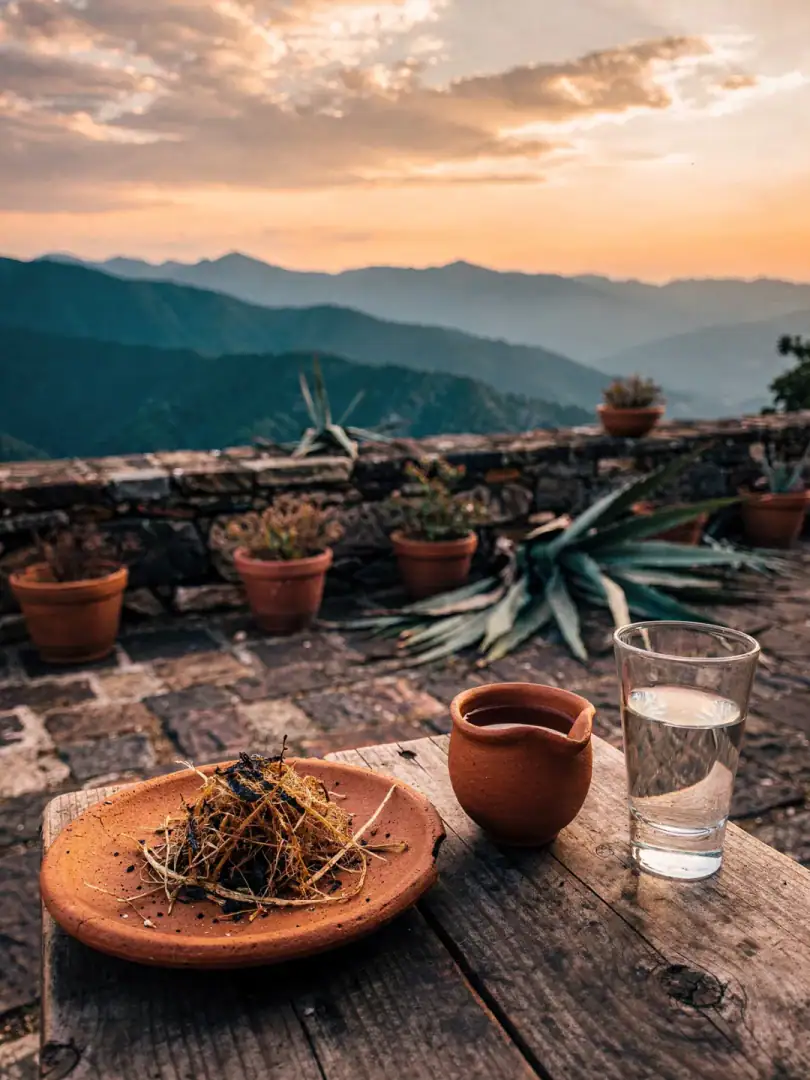
Traditionally, mezcal is drunk from the jícara, a small bowl made from dried gourd shell. The caballito, a narrow glass, is also common. Anyone wanting a more refined tasting uses a copita, a small, rounded glass that concentrates the aromas before they reach the nose.
A short sip is usually enough to capture the full range. There's the smoke from the earthen oven, along with the herbs of the sierra. And there's the long maturation of the wild agave, which makes Guerrero's mezcal utterly distinctive.
Mezcal in Guerrero is typically served at room temperature, never chilled, so the delicate herbal notes aren't lost. Anyone who lets the mezcal sit in the glass for a few minutes before tasting often notices even more of them.