Glass Instead of Barrel
Aging
Most mezcal from Guerrero leaves the palenque as Blanco, clear and unaged, straight from distillation. Anyone wanting to taste the Papalote agave in its purest form reaches for this class. This way, it reveals its aroma without the detour through wood.
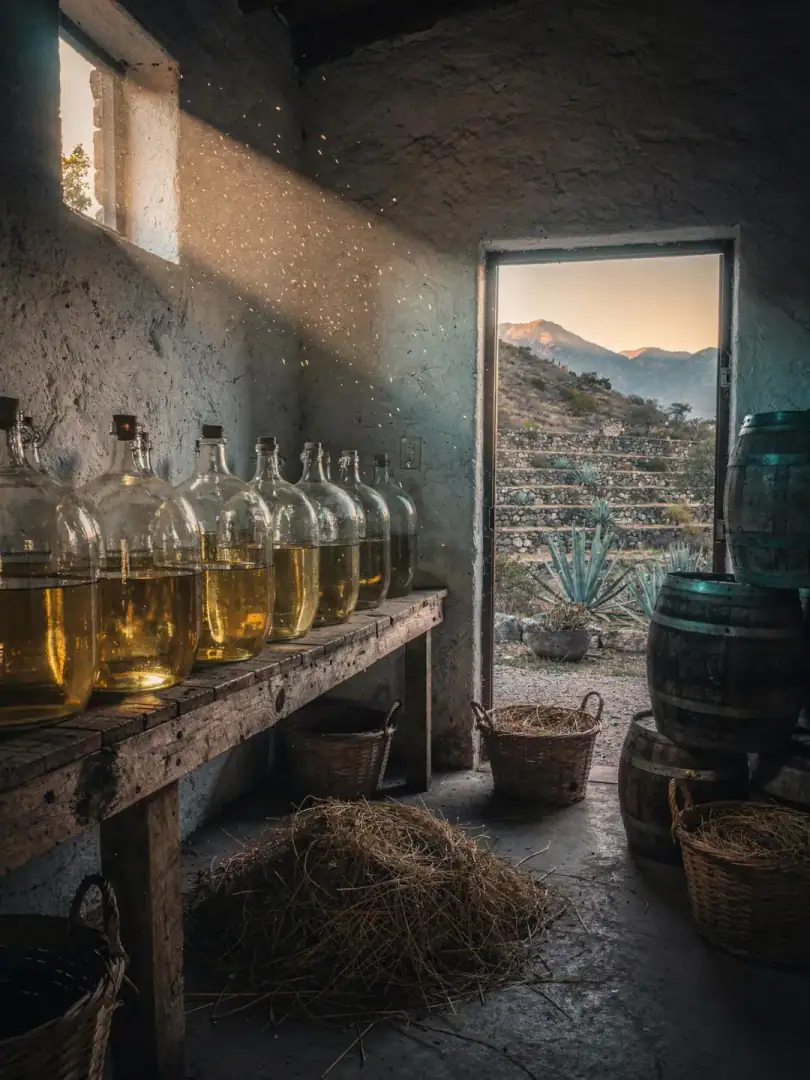
Some producers, like the Sanzekan Tinemi collective, age their mezcal instead in large glass demijohns, called "Madurado en Vidrio." Glass barely changes the flavor. Over months it rounds out the spirit slightly, without adding the wood notes a barrel would bring.
Anyone wanting wood in Guerrero usually finds Reposado, aged at least six months in wood barrels, and Añejo, aged one to four years. Extra Añejo, as offered by some tequila brands, remains the exception here so far.
A Guerrero specialty are the flavored classes: Pechuga, Borrego, and Almendrado. For Pechuga, a raw chicken breast hangs above the vapor during the final distillation; for Borrego, a piece of lamb; for Almendrado, almonds steep alongside. All three count as "Destilado con" under NOM-070, mezcal with a co-distilled addition.
The label must state which class is in the bottle, and that it's 100% agave, since unlike tequila, mezcal has no mixto category. Without this information, the bottle cannot be called "mezcal."
In Mochitlán, collectives like Tepolzito often sell their mezcal directly on-site as Blanco. Only a smaller portion, aged in barrels, makes its way into broader distribution, usually as Reposado.