Freedom at the Oven
Cooking & Milling
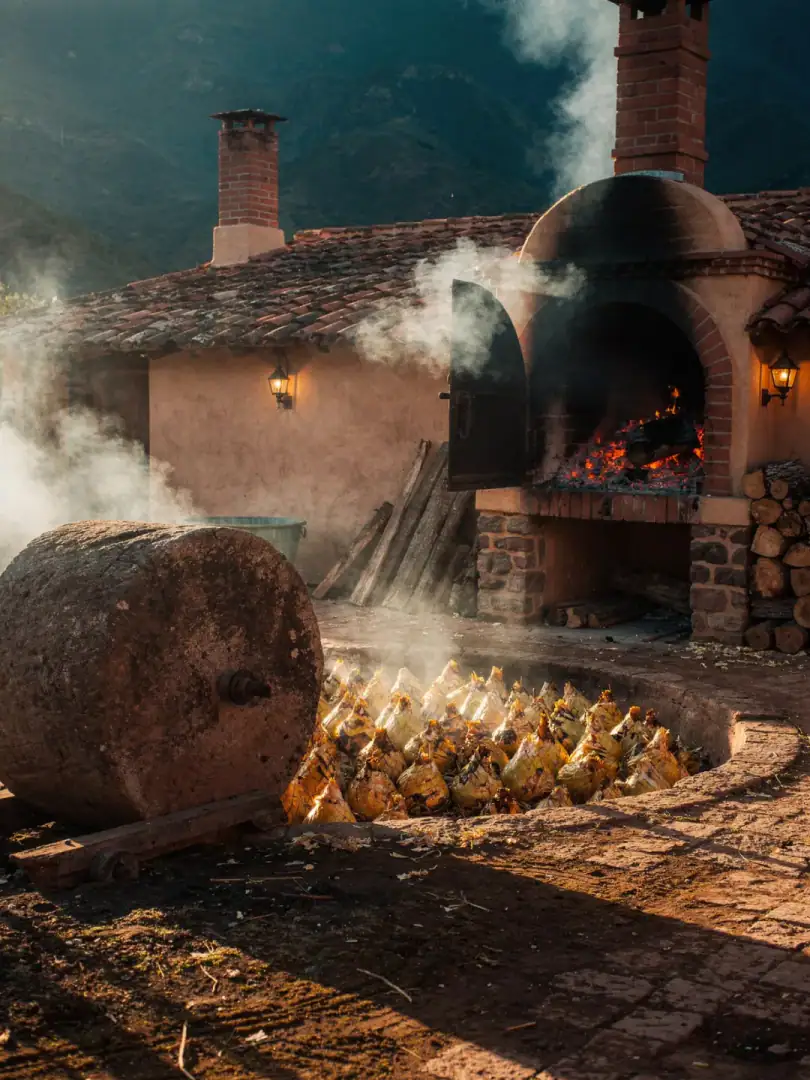
At Siete Leguas in Atotonilco el Alto, a brick-built oven is still in use today. The piñas are steamed inside it, then crushed with a tahona: a stone wheel weighing tons, pulled in circles by a mule, that crushes the cooked agave hearts. In Los Altos, this is now the exception rather than the rule for most distilleries.
Tequila law prescribes no particular type of oven. Horno de mampostería, autoclave or diffuser are all permitted, regardless of whether the label reads Mixto or 100% Agave. This is exactly where Tequila differs from Mezcal, where the choice of oven and mill helps determine whether a spirit may be called "Ancestral", "Artesanal" or simply "Mezcal".
This freedom explains why such different operations can coexist side by side in Los Altos. Old family businesses like Siete Leguas stand alongside large, modern facilities like Hacienda Patrón. Both are entitled to call themselves Tequila, even though their kitchens could hardly be more different. One cooks in brick ovens and crushes with a mule; the other relies on autoclaves that process large quantities of piñas in just a few hours.
What matters in the end isn't the technique in the kitchen. What counts is the origin of the agave and the territory where the spirit is distilled. Meet those two conditions, and you're free to cook the way your family always has—or just as freely follow the recommendations of the engineers at a brand-new facility.