Haciendas & Protection
Region & History
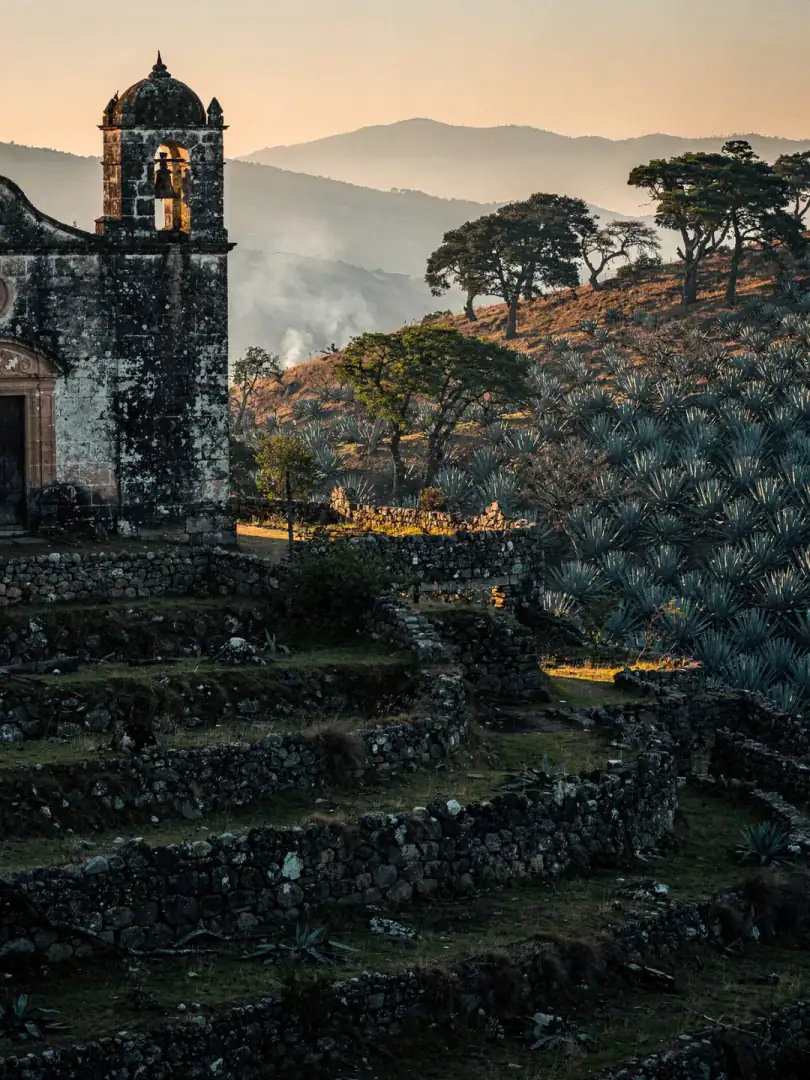
Ask about mezcal in Morelia, and you'll often get a question back first: from Etúcuaro or from Tzitzio? Both towns lie in the east of Michoacán, where the mountains drop down into the hot Tierra Caliente. Agave has been cooked and distilled here for generations, long before anyone asked whether the result was even allowed to be called mezcal.
Before the colonial era, the Purépecha of the region used wild agave mainly for pulque, the fermented but undistilled agave juice. The Spanish crown temporarily banned the indigenous population from distilling, in order to protect the import of wine and brandy from Spain. Even so, a distilling tradition already emerged in eastern Michoacán in the 17th century, surviving in small villages far from the major trade routes.
Unlike neighboring Jalisco, no large hacienda operations with shareholders and export contracts grew up here. The distilleries remained family businesses, passed down from one generation to the next. In Michoacán, they're still called tabernas to this day, and their masters taberneros, not palenques and palenqueros as in Oaxaca. The word alone reveals how independently the region views its craft tradition.
When the Mexican state declared the first Denominación de Origen for mezcal in 1994, Michoacán was left out, despite centuries of distilling here. Only after years of effort by producers, universities, and the Asociación Michoacana de Productores de Mezcal did the state of Michoacán gain official recognition in 2012. Before that, taberneros could sell their distillate, but weren't allowed to call it mezcal.
The 2012 protection finally gave the tabernas around Etúcuaro and Tzitzio a name for what they had long been producing. Today, the area around Etúcuaro alone counts more than 250 producers and supplies around 80 percent of Michoacán's mezcal. Michoacán is also the only Mexican state with three protected spirits: Charanda, Mezcal, and Tequila. That's exactly the confusion this journey aims to clear up, because just a few mountain ranges further west, in the same state, Tequila territory begins.