Chino and Alto
Agave & Soil
In the forests around Etúcuaro, agave mostly grows wild among pines and oaks, not in orderly rows like the blue agave further west. Two species define the harvest: Agave cupreata and Agave inaequidens.
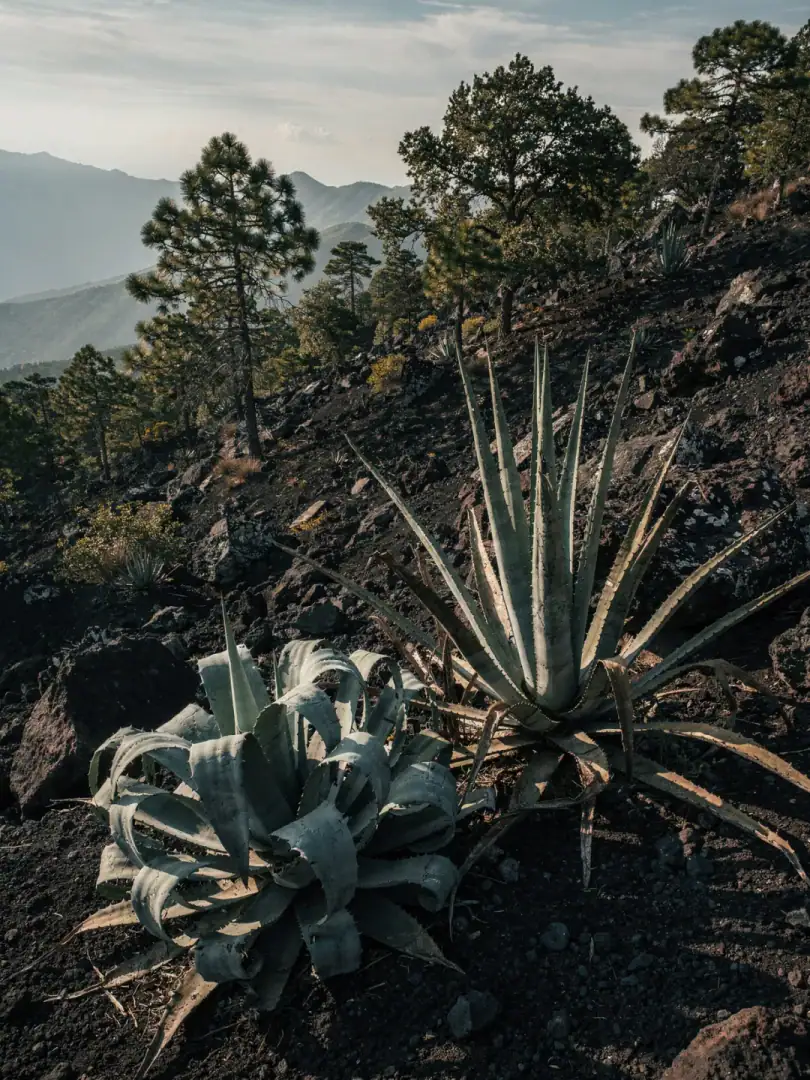
In popular speech, Agave cupreata is called chino, because its leaves curl loosely like curly hair. It's the most common species in the region and grows wild at altitudes between 1,200 and 1,800 meters, mainly in Michoacán and neighboring Guerrero. It takes eight to twelve years before a plant is mature enough to harvest.
Noticeably taller and slimmer than the chino, Agave inaequidens grows, which is why it's popularly called alto. Its scientific name means unequal teeth, describing the irregular spines along the leaf edge. Taberneros typically gather both species from the wild, using the coa, the broad digging blade used all over Mexico to cut piñas.
The soil beneath these agaves is volcanic, as in much of the Neovolcanic Belt that cuts across Michoacán. Dark, ash-rich earth lies over compacted tepetate, and beneath that, solid basalt. Wild agaves often root directly into cracks in this rock, drawing out minerals that later show up in the distillate.
Because both species mostly grow wild and take a long time to mature, they aren't inexhaustible. Some taberneros now let individual plants flower, allowing nocturnal bats to pollinate them, as sustainable agave-growing initiatives are now calling for across Mexico. Others deliberately replant young offshoots to ease pressure on wild populations.
Dark, loose soil formed from weathered volcanic ash with a high organic content.
The root: Here, young agaves draw water and nutrients for their first years.