Young and Honest
Aging
Most bottles from Etúcuaro and Tzitzio leave the taberna just as they come out of the alambique: clear and unaged. Under the NOM-070 standard, this category is called Joven or Blanco. In Michoacán, it's by far the most common, since it shows the agave in its purest form.
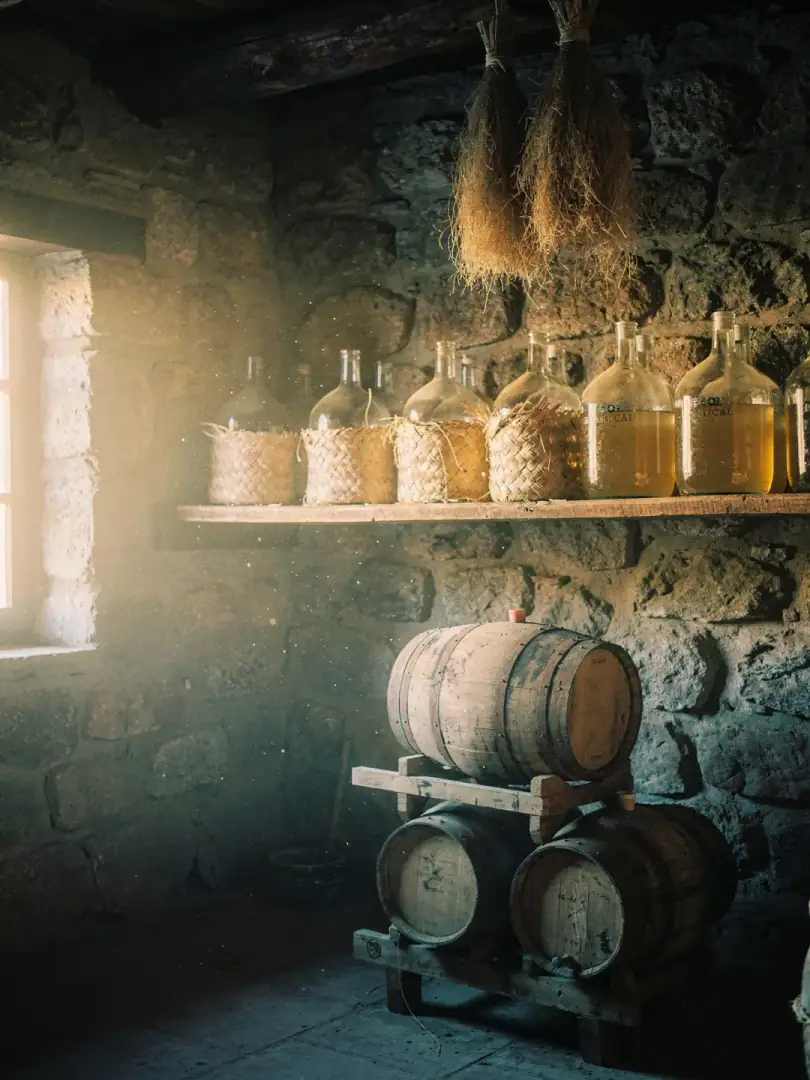
The standard also recognizes five other classes. Madurado en Vidrio ages in glass demijohns, not wood. Reposado gets a brief stint in barrel, while Añejo spends at least a year in a wooden cask. Destilado con and Abocado con refer to mezcal that has had flavors added during or after distillation.
Barrel aging is rare in Michoacán. It would mask the flavor of the wild agave, which is exactly what many taberneros and drinkers are looking for. Where aging does happen, it's usually in used, neutral barrels, not new American oak casks like those used for Tequila.
The label must state the agave species used. Also required are the category—Mezcal, Mezcal Artesanal, or Mezcal Ancestral—and the alcohol by volume. This sets mezcal clearly apart from simple Tequila, which is allowed to be blended with other sugars.
For buyers, this means: a young, clear mezcal from Michoacán shows the agave and the volcanic soil unfiltered. The vanilla and caramel notes of an aged Tequila are entirely absent.
If you do find an aged bottle, you can assume it's a small batch. Most tabernas sell their mezcal as soon as it's cool enough to bottle.
One reason lies in the agave's own maturation time. After waiting eight to twelve years for the piña, no one wants to hide its flavor behind wood and vanilla.