Copper and Wood
Fermentation & Distillation
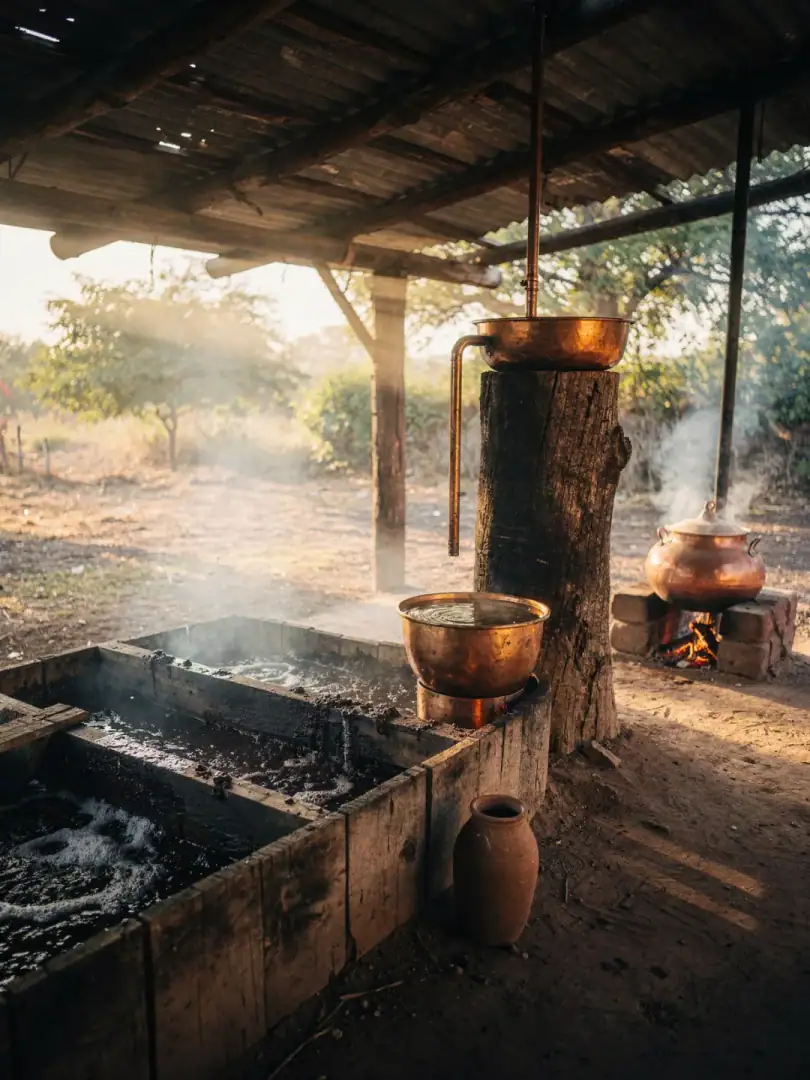
After milling, the fibrous, sweet mass goes straight into the fermentation vats. These are often pits dug into the ground, their walls lined with pine wood. Added yeast is rarely used in the tabernas around Etúcuaro. Wild yeasts from the air and wood do the work on their own.
Depending on the taberna, the mash ferments with or without fibers. This takes three to eight days, until it smells of ripe fruit and earth rather than sweet agave. Exactly how long depends on the weather and the experience of the maestro in charge.
Two techniques exist side by side for distilling in Michoacán: the classic copper still and the Alambique Filipino. The latter has a still made from a hollowed-out log. At the bottom sits a copper pot over the fire, and at the top a copper vessel filled with cold water, on which the alcohol vapor condenses. The technique arrived in Mexico during the colonial era via the Pacific trade, presumably brought by Filipino sailors and missionaries. It survives to this day in a few tabernas in Tzitzio.
Distillation is usually done twice. The first run yields a cloudy, weak distillate. The second separates heads, hearts, and tails. Afterward, the alcohol content typically sits between 45 and 50 percent.
Whether copper still or wooden alambique, both result in a Mezcal Artesanal under the standard, as long as the cooking and milling also stayed traditional. Neither device can produce Tequila, since the right agave and the right territory are both missing here.